
 AUS
AUS
 NZ
NZ
 UK
UK
 CA
CA
 USA
USA
 IND
IND






Highlights
- Deere returns to focus after strong business momentum.
- Construction and forestry demand supports market attention.
- Leadership transition adds a new watch point.
Heavy machinery demand, construction strength, automation, and farming technology are shaping market attention, while execution and finance discipline remain central to the company’s outlook.
Deere & Company (NYSE:DE) is drawing fresh market attention as its rebound highlights renewed confidence in heavy machinery, construction equipment, and agricultural technology. As a constituent of the S&P 500, the company remains one of the leading industrial manufacturers in the broader U.S. equity market. The company is a global manufacturer of farm machinery, construction equipment, forestry machines, precision agriculture tools, and equipment financing services. Its latest momentum comes as demand across construction, infrastructure, automation, and farming equipment remains important for the broader industrial market. With stronger segment performance and a finance leadership transition underway, Deere’s business story now centres on execution, equipment demand, and long-cycle industry growth.
Machinery Momentum
Deere has long been seen as one of the most recognized names in American machinery. Its equipment supports farmers, contractors, forestry operators, road builders, and infrastructure developers. The company’s green agricultural machines and yellow construction equipment are widely associated with productivity across farms, job sites, and industrial projects.
The latest market focus reflects more than a simple share movement. It points to improving confidence around Deere’s business mix. Agriculture has faced a period of adjustment after earlier strength, while construction and forestry have provided a stronger support base. This balance across different end markets gives the company a wider operating footprint than a pure farm equipment maker.
Deere’s ability to serve both farming and construction customers helps it remain relevant in changing economic conditions. When agricultural equipment demand cools, construction activity or infrastructure projects may offer support. When construction demand moderates, farming replacement cycles and precision technology can continue to shape customer activity.
Construction Strength
Construction and forestry have become key areas of focus for Deere. The segment serves roadbuilding firms, quarrying operators, contractors, timber companies, and infrastructure developers. Demand in this area has been supported by public works projects, commercial construction, energy infrastructure, and site preparation linked to data centre expansion.
This is important because construction equipment demand can signal confidence in broader physical development. Excavators, loaders, graders, compactors, and forestry machines are used before roads, bridges, logistics sites, and industrial facilities take shape. As infrastructure and private development continue to require heavy equipment, Deere’s construction business remains closely watched.
The forestry side adds another dimension. Timber harvesting and managed forestry require specialized machinery designed for demanding environments. Deere’s equipment range allows it to support logging, land management, and wood supply chains. This gives the segment exposure to markets that do not always move in the same direction as general construction.
Agriculture Recovery
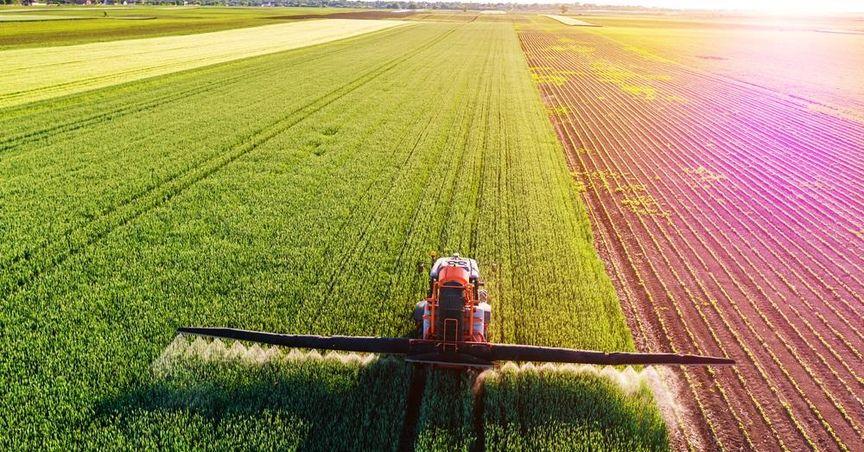
Agriculture remains central to Deere’s identity. The company provides tractors, combines, planters, sprayers, turf equipment, and digital farming tools used across major farming regions. Its agricultural business has been navigating a more balanced cycle after a period of elevated equipment demand.
Farmers often make equipment decisions based on crop prices, income visibility, financing conditions, weather expectations, and the age of existing machinery. Even when replacement cycles slow, demand for efficient and technology-enabled equipment can remain important.
Deere’s precision agriculture platform strengthens its position in this market. Tools such as automated guidance, field mapping, machine control, and data-supported farm planning help operators improve efficiency. These systems can reduce waste, improve timing, and support more accurate field work.
The shift toward smarter farming has become a major theme in the Industrial Stock category. Deere’s machines are no longer only mechanical assets. They increasingly combine hardware, software, sensors, automation, and data services.
Automation Focus
Autonomous equipment is becoming a major part of Deere’s long-term direction. Farming faces labour pressure in many regions, and large-scale operators are searching for ways to complete work more efficiently during narrow planting and harvesting windows.
Autonomous tractors, precision planting systems, and AI-supported crop monitoring tools can help address those challenges. These technologies may allow farm operators to reduce manual workload while improving field accuracy. For Deere, automation also deepens customer relationships because digital platforms can become part of daily farm operations.
Once machinery, software, and data tools are linked within a farming system, switching to another platform can become more difficult. This creates a stronger connection between Deere and its customers across equipment life cycles, maintenance needs, and future upgrades.
Finance Arm
Deere’s financial services division is another important part of the business. Heavy machinery is expensive, and many customers rely on financing, leasing, and credit support to access equipment. The finance arm helps dealers and customers manage equipment purchases across agricultural and construction markets.
This division supports the wider equipment ecosystem by making large machinery more accessible. It also gives Deere deeper visibility into customer activity, credit conditions, replacement trends, and used equipment values. That information can be useful in understanding demand patterns across different regions and product categories.
However, financial services also require disciplined credit management. Equipment loans and leases must be monitored carefully, especially when farm income, construction activity, or interest-rate conditions change. Strong underwriting and used equipment market knowledge are important for maintaining stability.
Leadership Change
Deere is also managing a finance leadership transition. This comes at a time when the company is balancing technology investment, equipment cycles, manufacturing discipline, and global demand shifts. For a machinery business with large capital needs, financial strategy matters closely.
The leadership change adds a fresh watch point, but continuity remains important. Deere’s future progress depends on how effectively it manages spending, product development, customer financing, and supply chain demands. The company must keep funding innovation while staying disciplined through cyclical market conditions.
This balance is especially relevant as Deere invests in automation, precision agriculture, and smarter equipment. These areas require long-term planning and strong execution, not just near-term market enthusiasm.
Market Context
Deere’s renewed attention reflects wider interest in companies tied to infrastructure, agriculture, and industrial productivity. Machinery makers operate at the intersection of economic activity, public development, food production, and technology adoption.
The company also connects with broader market themes such as data centre construction, energy infrastructure, transportation upgrades, and modern farming. These themes support demand for equipment that can handle large-scale physical work.
While the latest rebound has placed Deere back in focus, the larger story is about whether the company can maintain momentum across multiple business lines. Construction and forestry strength, agricultural technology, automation, and disciplined finance operations all remain central to the outlook.
What Matters Next?
Going forward, Deere & Company (NYSE:DE) performance will likely depend on customer demand, margin discipline, production planning, and adoption of smarter equipment. Construction strength may continue to support sentiment, while agriculture could remain more selective depending on farm economics.
The company’s broad equipment base gives it several growth channels, but it also faces cyclical pressures. Machinery demand can shift with economic conditions, financing costs, commodity trends, and infrastructure activity.
Deere’s current market focus shows how industrial companies are being judged not only by earnings performance, but also by technology leadership and business resilience. For readers tracking the machinery space, Deere remains a key name in the conversation around automation, agriculture, construction, and industrial productivity.
