
 AUS
AUS
 NZ
NZ
 UK
UK
 CA
CA
 USA
USA
 IND
IND





Highlights
- Deere & Company manufactures agricultural and construction machinery
- The company integrates advanced precision technologies into equipment
- Market positioning aligns with companies tracked in the Russell 1000
Deere & Company (NYSE:DE), widely recognized through its John Deere brand, operates as a global manufacturer of agricultural, construction, forestry, and turf care equipment. Headquartered in the United States, the company develops machinery and digital solutions designed to support farming operations, infrastructure development, and land management activities. Its participation among major listed enterprises reflects alignment with benchmarks such as the Russell 1000, which includes large-cap companies across multiple industries. Deere & Company continues to maintain a strong presence within industrial manufacturing through its extensive equipment portfolio and integrated technological capabilities.
Agricultural Equipment Drives Core Operations
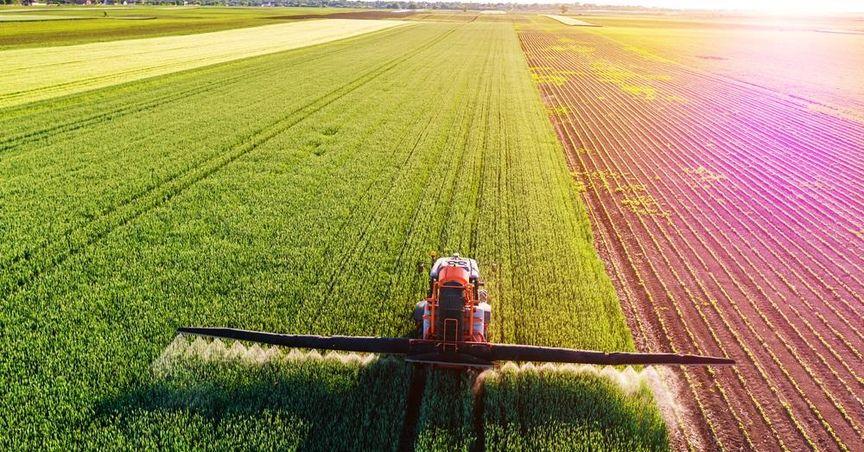
Deere & Company maintains a central role in agricultural machinery manufacturing, offering equipment that supports modern farming practices across diverse environments. Its product portfolio includes tractors, combines, planters, sprayers, and harvesting systems designed to assist agricultural producers in managing field operations efficiently.
The company’s agricultural equipment integrates advanced technologies such as telematics and data-driven systems that allow farmers to monitor field conditions, equipment performance, and crop development. These technologies support optimized decision-making within agricultural operations while maintaining consistent productivity.
Equipment produced by Deere & Company is widely used across global farming regions, supporting crop production systems that rely on mechanization and digital integration. By combining traditional machinery with modern data capabilities, the company contributes to evolving agricultural practices that emphasize efficiency and precision.
Construction Equipment Expands Industrial Reach
In addition to agricultural machinery, Deere & Company develops construction equipment used in infrastructure development, urban planning, and large-scale building projects. This segment includes excavators, loaders, bulldozers, and road-building equipment designed to support construction activities in varied environments.
Construction equipment produced by the company enables contractors to manage earthmoving, material handling, and site preparation tasks. These machines are engineered to operate under demanding conditions, ensuring durability and performance across projects involving infrastructure expansion and urban development.
The company’s construction segment complements its agricultural business by diversifying operational exposure across industrial markets. This diversification supports consistent engagement across sectors requiring heavy equipment solutions.
Precision Technology Enhances Equipment Performance
Deere & Company has incorporated precision technology into its machinery to enhance operational accuracy and productivity. Precision agriculture tools allow equipment to operate with guided navigation systems that improve planting, fertilization, and harvesting processes.
Telematics systems integrated into machinery enable remote monitoring of equipment performance, allowing operators to track usage patterns and maintenance requirements. These systems also support fleet management by providing data that helps optimize equipment deployment across large-scale operations.
Precision technologies extend beyond agriculture into construction equipment, where digital controls improve operational efficiency and safety. By embedding data-driven capabilities into machinery, Deere & Company aligns with technological advancements shaping modern industrial operations.
Financial Structure Reflects Operational Scale
Public disclosures indicate that Deere & Company maintains financial indicators reflecting its position within large-scale manufacturing. Market capitalization places the company among prominent industrial enterprises operating globally. Liquidity measures outline the relationship between current assets and operational obligations, demonstrating the company’s ability to manage short-term requirements.
Leverage metrics provide insight into how the company balances debt with equity financing to support capital-intensive manufacturing operations. Moving averages and valuation measures offer historical context regarding market activity without implying directional interpretation.
Dividend distribution practices indicate structured capital return approaches consistent with established industrial companies. These financial characteristics reflect the company’s ability to maintain operational continuity while supporting manufacturing and technological development initiatives.
Institutional Participation Reflects Market Engagement
Large asset management firms and financial institutions maintain positions in Deere & Company, reflecting its status among widely followed industrial companies. Ownership participation by major financial entities aligns with the company’s scale and operational significance within manufacturing and equipment production.
Portfolio adjustments by large capital managers represent routine allocation decisions across diversified holdings. Deere & Company’s inclusion within widely recognized equity benchmarks supports its presence in institutional portfolios that track broad market segments.
Within discussions surrounding diversified equity benchmarks such as the Russell 1000 Index, industrial equipment manufacturers contribute to sector representation alongside technology, healthcare, and financial services companies. This positioning highlights the role of manufacturing enterprises within broader market structures.
Equipment Demand Linked To Global Activity
Demand for agricultural and construction equipment is closely connected to global activity in food production, infrastructure development, and land management. Deere & Company’s machinery supports farming operations that produce essential agricultural outputs and construction projects that develop transportation networks and urban infrastructure.
Agricultural demand is influenced by factors such as crop production cycles, land utilization, and mechanization trends. Construction demand is shaped by infrastructure expansion, urbanization, and industrial development projects.
The company’s diversified equipment portfolio enables it to address demand across these sectors, supporting consistent operational engagement within global markets. By providing machinery for essential activities, Deere & Company maintains relevance within industries that sustain economic development.
Technology Integration Supports Digital Ecosystems
Digital integration has become a defining feature of Deere & Company’s equipment offerings. Machine connectivity enables equipment to communicate with centralized platforms that collect and analyze operational data. These systems support decision-making processes across farming and construction operations.
Data generated by connected equipment provides insights into performance, maintenance requirements, and operational efficiency. This information allows operators to optimize resource usage and improve overall productivity.
Integration with digital ecosystems also supports predictive maintenance strategies, where potential issues can be identified before they impact equipment performance. Through these capabilities, Deere & Company contributes to the broader transition toward data-driven industrial operations.
Competitive Landscape Within Equipment Manufacturing
Deere & Company (NYSE:DE), operates within a competitive environment that includes global manufacturers specializing in agricultural and construction machinery. Competition centers on product performance, technological integration, durability, and service support.
The company differentiates itself through its strong brand recognition, extensive dealer network, and integration of advanced technologies within its equipment. These factors contribute to its standing within the equipment manufacturing industry.
By maintaining a broad product portfolio and focusing on technological advancement, Deere & Company continues to operate within a competitive industrial landscape characterized by evolving customer requirements and innovation-driven development.
