
 AUS
AUS
 NZ
NZ
 UK
UK
 CA
CA
 USA
USA
 IND
IND






Highlights
Rotork share records a fresh fifty two week high following progress on its buyback programme
Company operates in the flow control and industrial automation sector serving energy and infrastructure markets
Rotork remains a constituent of the Ftse 100 and Ftse 350 indices within the broader FTSE landscape
Rotork reaches a fresh yearly high after updating its buyback programme, reinforcing its standing within the FTSE 100 and FTSE 350 industrial automation sector.
Rotork plc (LSE:ROR) operates in the flow control and industrial automation sector, supplying mission critical equipment and services to global energy, water, power, and industrial markets. As a constituent of the Ftse 100 and Ftse 350 indices, the company holds a recognised position within the United Kingdom’s large capitalisation industrial segment. Its inclusion in the FTSE futures framework places it alongside established engineering, energy, and infrastructure businesses tracked by domestic and international market participants.
The company’s share recently touched a fresh fifty two week high following an update relating to its ongoing share buyback programme. This development has drawn attention across the industrial segment of the Indexftse Ukx, where engineering and automation companies form part of the benchmark’s diversified composition. Rotork’s activities reflect broader trends in infrastructure investment, maintenance cycles, and digital transformation across regulated industries.
Business Model and Global Industrial Footprint
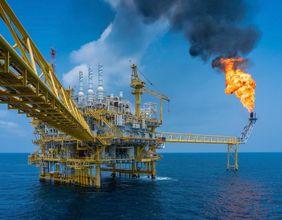
Rotork (LSE:ROR) designs and manufactures actuators, valve control systems, gearboxes, and associated instrumentation used to regulate the flow of liquids, gases, and powders. These products are installed in oil and gas pipelines, offshore platforms, water treatment facilities, power generation plants, and large scale industrial processing sites. The company’s solutions are essential for operational safety, efficiency, and regulatory compliance in sectors where uninterrupted performance is critical.
The business operates through distinct divisions, including electric actuators, fluid power systems, and gear technologies. Each division supports specialised applications across upstream, midstream, and downstream energy infrastructure, as well as utilities and manufacturing operations. Alongside equipment supply, Rotork maintains a significant aftermarket services operation, providing maintenance, spare parts, diagnostics, and field support.
Geographically, Rotork serves customers across Europe, the Americas, Asia Pacific, the Middle East, and Africa. This global presence enables participation in a diverse range of infrastructure projects and maintenance programmes. Within the FTSE all share environment, companies with international revenue exposure often reflect the interconnected nature of energy and industrial supply chains.
Digitalisation continues to influence the automation sector. Rotork has integrated intelligent control systems into its actuator platforms, enabling real time monitoring and remote asset management. These capabilities align with broader industrial shifts toward connected infrastructure and operational efficiency. Utilities and energy operators increasingly deploy digital tools to monitor asset health, enhance safety standards, and manage environmental compliance.
Share Buyback Programme and Capital Allocation Framework
Rotork (LSE:ROR) recently communicated progress on its share buyback programme, a capital allocation mechanism used by many companies within the FTSE universe. Under such programmes, companies repurchase their own shares in the open market through authorised brokers in line with regulatory guidelines. These transactions are disclosed periodically in accordance with listing requirements on the London Stock Exchange.
The update coincided with the company’s share reaching a fresh fifty two week high, placing Rotork in focus among industrial constituents of the Ftse 100. Share repurchase initiatives are typically structured within predefined financial parameters and timeframes. They form part of broader capital management strategies that may also include dividends, reinvestment in operations, and selective acquisitions.
Within the Ftse 350, industrial engineering firms often adopt disciplined approaches to capital deployment. Rotork’s framework reflects its established balance sheet structure and recurring revenue streams from service contracts and installed equipment support. As a recognised name among FTSE dividend stocks, the company has historically maintained dividend distributions alongside other capital return initiatives.
Regulatory standards require transparency around daily repurchase volumes and cumulative totals. These disclosures ensure alignment with governance expectations applicable to companies within the Indexftse Ukx. The buyback programme forms part of Rotork’s structured financial policies, executed under existing shareholder authorities.
Financial Structure and Operational Resilience
Rotork’s operational profile is shaped by exposure to essential infrastructure sectors. Oil and gas remains a significant end market, particularly for pipeline automation and offshore installations. Water utilities represent another key segment, where automated valve systems are deployed in treatment plants and distribution networks. Power generation facilities, including renewable energy projects, also utilise actuator systems for safe and efficient operations.
Revenue generation is supported by a combination of new equipment orders and recurring aftermarket services. Maintenance contracts and spare parts supply contribute to ongoing income streams, particularly in regulated industries where periodic inspection and servicing are mandatory. This blend of equipment and service revenue enhances operational continuity within the company’s portfolio.
Supply chain coordination and manufacturing flexibility remain important components of Rotork’s operational framework. The company operates production and assembly facilities across multiple regions, allowing it to address local demand while managing logistics and component sourcing. Industrial groups within the FTSE often emphasise resilience and efficiency in supply chain management, especially amid global infrastructure expansion.
Technological development is another focal area. Intelligent actuators and network enabled devices form part of Rotork’s product offering, integrating with plant wide control systems. These digital solutions enable operators to gather performance data, track maintenance schedules, and manage compliance documentation. As infrastructure systems evolve, automation providers continue adapting to meet higher performance and safety expectations.
Within the broader FTSE landscape, companies operating in essential industrial services are closely linked to public and private infrastructure expenditure. Water network upgrades, energy security initiatives, and renewable capacity installations influence demand for automation equipment and associated services.
Position Within FTSE Indices and Industrial Market Trends
Rotork (LSE:ROR) remains an established constituent of the Ftse 100 and Ftse 350, both of which sit under the broader FTSE umbrella representing leading United Kingdom listed companies. The Indexftse Ukx captures large capitalisation businesses across sectors including mining, energy, financial services, consumer goods, and industrial engineering.
Engineering and automation companies within these indices often reflect trends in capital expenditure cycles and infrastructure modernisation. Rotork’s installed base spans decades of industrial development, positioning it as a long standing supplier to energy operators, utilities, and manufacturing groups.
Energy transition efforts continue to shape infrastructure planning. Projects involving hydrogen transport, offshore wind, carbon management systems, and enhanced water treatment capacity require reliable valve control and automation technology. Rotork’s product range supports these applications, contributing to operational control in diverse environments.
The FTSE all share index captures a wider spectrum of companies across market capitalisations. Within this context, established engineering groups provide components and services essential to large scale infrastructure networks. Rotork’s international reach and service network allow it to maintain equipment across multiple decades of asset life cycles.
Industrial market trends also include heightened attention to environmental standards and operational efficiency. Automated systems support leak detection, emission control, and system reliability in energy infrastructure. Water utilities rely on precision valve actuation to regulate treatment processes and maintain supply consistency.
Sector Dynamics and Corporate Governance Standards
The industrial automation sector continues to evolve in response to technological integration and regulatory expectations. Rotork (LSE:ROR) combines mechanical engineering expertise with digital control capabilities, aligning its portfolio with changing customer requirements. Investment in product development supports compatibility with modern supervisory control systems and remote asset management platforms.
Corporate governance standards applicable to companies within the Ftse 100 require structured reporting, board oversight, and adherence to listing rules. Rotork’s periodic updates, including disclosures relating to its buyback programme, reflect compliance with these regulatory frameworks. Transparent communication forms part of the governance expectations associated with large capitalisation listings.
Infrastructure resilience remains central to industrial demand. Energy networks, water systems, and industrial facilities require dependable control mechanisms to ensure safety and continuity. Rotork’s actuator systems are designed to operate in high pressure, high temperature, and hazardous environments, reinforcing their role in essential services.
Within the FTSE structure, capital allocation discipline is closely observed across sectors. Industrial companies frequently balance internal investment with shareholder distributions under established policies. Rotork’s buyback initiative operates within this structured framework, alongside dividend payments recognised within the FTSE dividend stocks category.
The fresh fifty two week high reached by Rotork (LSE:ROR) places the company in focus among engineering constituents of the Indexftse Ukx. Industrial automation remains integral to infrastructure expansion, energy system upgrades, and utility network maintenance across domestic and international markets.
