
 AUS
AUS
 NZ
NZ
 UK
UK
 CA
CA
 USA
USA
 IND
IND




_07_03_2026_03_50_21_133108.jpg)

Summary
- Sustainable fashion can be defined as clothing designed, manufactured, distributed, and used in ways that are environmentally friendly.
- The fashion industry follows a linear model: take, make, dispose, which is very much against the concept of sustainability.
- Many global companies, like H&M, have set up recycling systems that encourages textile recycling.
Fashion and fashionable clothes are something we all love. But knowing the manufacturing process of garments we wear every day; one can say that it has a devastating effect on the environment and forced labour, to name a few. Currently, our fashion industry follows a linear model: take, make, dispose, which is very much against the concept of sustainability and preservation of our ecology. Here comes what we call sustainable fashion.
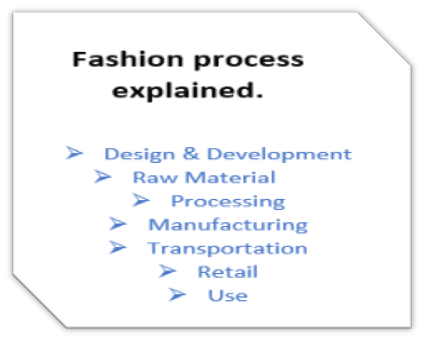
Sustainable fashion can be defined as clothing designed, manufactured, distributed, and used in ways that are environmentally friendly. In practice, this means mindfully improving all stages of cloth production, from design, raw material production, procurement, production, transport, storage, marketing, sale, and delivery of products. In terms of environment and carbon footprint, sustainable fashion means clothes that have been produced with minimum damage to the environment and can be reused, repaired, remade, and recycled along with their components.
Copyright © 2021 Kalkine Media
Fast fashion and environmental hazards
Fast fashion can be defined as the production of clothing in large volumes with low or inferior quality material, whose production is done at a very fast pace. An average American discards 60-80 pounds of used clothing in their lifetime. Choosing not to go fast fashion reduces waste significantly since fewer clothes will need to be produced. Less production means fewer textiles and fabrics will end up in enormous piles in a landfill. Today, only 20% of all clothing is recycled.
Copyright © 2021 Kalkine Media
We can define sustainability as something which is sustainable or something that can continue working for years and decades to come.
Also read: Do G7 nations favour investment in fossil fuels over green energy?
In the world of fashion, production has several issues, like water consumption, energy emissions, chemical usage, and total waste creation. Sometimes the production of clothing requires multiple gallons of water. Like the production of denim requires a lot of water. By producing less clothing, the quality of our oceans and water usage can be conserved.
Fast fashion also affects the oceans and seas as some fabrics, such as polyester, do not decompose in water. These textiles and fabrics stay intact — damaging, hurting, or even killing the natural ecosystem affecting flora and fauna.
Switching to sustainability
When we switch to sustainable fashion, the goal is to have a system that works without leaving a negative footprint. The use of natural materials such as hemp, linen, cotton, silk, wool, leather, and cellulose fibres are being preferred over the use of petroleum-derived synthetics like polyester, acrylic, and nylon. The natural fibres are biodegradable and can compost cleanly back into the soil. All strategies promoting more environmentally, socially, and ethically conscious production and consumption are counted as ways to make the industry sustainable.
Also read: Explained: Climate Change and the Role of Mining Industry
One can break this down to ensuring efficient and careful use of natural resources like water, energy, land, soil, plants, biodiversity, and others. Choosing sustainable energy sources, like wind, solar at every stage. Encouraging repair, remake, reuse, and recycling of products.
Many global companies, like H&M, have set up recycling systems that encourage textile recycling. Others are gradually adopting joint production with a recycling partner to manufacture clothes with certified textiles as per environmental labels to promote more conscious consumption patterns.
Some global fashion companies are offering fashion as second-hand or have initiated rental systems for leasing clothes and accessories. Others are focusing on creating fashion that is of high quality and timeless design, i.e. of long-lasting style and durability.
