
 AUS
AUS
 NZ
NZ
 UK
UK
 CA
CA
 USA
USA
 IND
IND

_07_03_2026_03_50_21_133108.jpg)
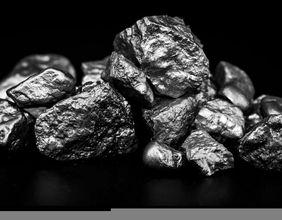




Great Southern Copper plc (LSE:GSCU) has announced significant channel sampling outcomes from the Monolith Target within its Cerro Negro Prospect in Chile, confirming extensive copper-silver mineralisation spanning approximately 700 by 400 metres. The exploration involved 20 channel traverses over 409 metres of outcrop with 214 samples, revealing copper and silver concentrations substantially above background levels. Noteworthy intervals include 56 metres averaging 28.5 g/t silver and 1,745 ppm copper, and 78 metres at 10.1 g/t silver and 736 ppm copper. These findings enhance the Monolith Target’s potential, situated just 400 metres southeast of Great Southern Copper’s Mostaza copper-silver discovery, establishing it as a key focus for upcoming drilling campaigns.
Key Points
- Great Southern Copper plc (LSE:GSCU) is a UK-listed exploration firm targeting copper-gold-silver deposits in Chile's coastal metallogenic belt.
- Channel sampling at Monolith encompassed 20 traverses totaling 409 metres with 214 samples, delineating a mineralised zone approximately 700 by 400 metres in size.
- Significant assay intervals include CH021-A: 56m at 28.5 g/t Ag and 1,745 ppm Cu (with 6m at 81.5 g/t Ag and 7,890 ppm Cu); CH041: 78m at 10.1 g/t Ag and 736 ppm Cu; and CH035-D: 24m at 38.9 g/t Ag and 969 ppm Cu (including 2m at 100.0 g/t Ag and 6,970 ppm Cu).
- Plans are underway to integrate these results with geological and geophysical data to refine drill targets, with scout drilling anticipated at Monolith in the near term.
Monolith Channel Sampling Defines Extensive 700 by 400 Metre Mineralised Zone
Great Southern Copper completed a detailed surface channel sampling programme at the Monolith Target within the Cerro Negro Prospect, significantly advancing understanding of the mineralisation’s extent and characteristics. The campaign included 20 channel traverses across exposed bedrock, collecting continuous chip samples typically over 1 to 2 metre intervals. In total, 409 metres were sampled with 214 individual samples submitted to ALS Laboratories in Santiago, Chile, and ALS Lima, Peru, for comprehensive multi-element assays.
All channel samples showed anomalous copper and silver values over broad intervals, outlining a mineralised zone approximately 700 metres along strike and 400 metres across strike. The mineralisation occurs within silica-clay altered dacitic to rhyodacitic volcanic rocks, interpreted as part of a resurgent dome complex. The hydrothermal system features a complex network of quartz veinlets, crackle breccias, stockworks, and larger quartz-baryte veins within extensive silica-clay alteration zones, indicating a well-developed system with multiple mineralisation pathways.
Notable High-Grade Intervals in CH021-A and CH035-D Channels
Several intervals exhibit exceptional copper-silver enrichment. Channel CH021-A returned the highest average silver grade over a broad 56-metre interval, averaging 28.5 g/t silver and 1,745 ppm copper. Within this, a 40-metre sub-interval averaged 39.2 g/t silver and 2,174 ppm copper, and a 6-metre peak interval assayed 81.5 g/t silver and 7,890 ppm copper, indicating zones of higher-grade mineralisation within the broader stockwork.
Channel CH035-D yielded a 24-metre composite grading 38.9 g/t silver and 969 ppm copper, including a 2-metre peak interval at 100.0 g/t silver and 6,970 ppm copper. Similarly, CH035-C returned 10 metres at 32.4 g/t silver and 2,026 ppm copper, with a 2-metre interval matching the peak assay values. These results confirm discrete zones of elevated silver grades consistent with vein-hosted mineralisation along quartz-baryte structures.
Longest Traverse CH041 Reveals Extensive Low-Grade Copper-Silver Mineralisation
The longest channel traverse, CH041, extended 78 metres and returned a composite grade of 10.1 g/t silver and 736 ppm copper. Within this interval, two 12-metre zones showed elevated grades: one at 27.2 g/t silver and 831 ppm copper, the other at 31.0 g/t silver and 1,459 ppm copper. These higher-grade zones lie within a broader lower-grade envelope, supporting the stockwork mineralisation model.
The continuous 78-metre anomalous mineralisation highlights the lateral persistence of the hydrothermal system. Even at lower average grades, these values are highly anomalous compared to background host rock assays, which show only 10 to 20 ppm copper and 0.05 g/t silver, confirming the geochemical significance of the mineralisation.
Surface Leaching Evident; Prospect for Higher Grades at Depth
The channel sampling results show copper and silver values greatly exceeding background levels, with copper concentrations reaching several hundred times and silver values typically over 100 times background. This strong geochemical contrast confirms the presence of a robust hydrothermal mineralising system.
Field observations revealed copper oxides on fractures and quartz veinlets, along with limonite-goethite boxworks indicative of extensive weathering and surface leaching of primary sulphides. This suggests that the outcropping mineralisation has been partially depleted near surface, implying that higher-grade, less oxidised primary sulphide mineralisation likely exists at depth beneath the weathering profile, representing an important exploration upside for drilling.
Monolith Positioned 400 Metres from High-Grade Mostaza Cu-Ag Discovery
The Monolith Target lies within the Cerro Negro Prospect, approximately 400 metres southeast of Great Southern Copper’s Mostaza copper-silver discovery. Their proximity suggests both may belong to the same mineralised system or hydrothermal event. The Mostaza deposit is a high-grade copper-silver discovery, and the similar geological setting at Monolith indicates potential for analogous ore-forming processes across the prospect.
Great Southern Copper holds 100% ownership rights to the Cerro Negro Prospect, including Mostaza and Monolith. The prospect benefits from low elevation, excellent infrastructure access, and proximity to major copper mines and projects within Chile’s coastal metallogenic belt, enhancing its development potential.
Especularita Project Situated in Chile’s Highly Prospective Coastal Metallogenic Belt
The Especularita Project, encompassing Cerro Negro and Monolith, is located within Chile’s Cretaceous coastal metallogenic belt, a globally significant copper province hosting major mines such as Carmen de Andacollo and El Espino. The project lies along a northwest-southeast structural trend connecting it to large porphyry copper-gold deposits including Los Pelambres, Altar-Piuquenes, and El Pachon.
Chile’s coastal belt offers world-class geology, infrastructure, skilled workforce, and efficient permitting, making it the world’s leading copper producer and exporter. The Especularita Project is within 50 kilometres of over 50 million tonnes of contained copper in existing mines and advanced projects, situating Great Southern Copper’s assets in a proven metallurgical district with diverse deposit types, including porphyry, IOCG, and newly identified intrusive-related copper-gold systems like Monolith and Mostaza.
Robust Channel Sampling and Assay Procedures Ensure Data Integrity
The channel sampling campaign followed rigorous protocols to ensure data quality and representativeness. Continuous chip samples were collected over 1 to 2 metre intervals, with locations recorded via GPS in WGS84 / UTM Zone 19S coordinates and samples uniquely identified for traceability. Samples were delivered to ALS Laboratories in Santiago for preparation, then pulps sent to ALS Lima for multi-element assays.
Gold was assayed using 30-gram fire assay with ICP-AES finish (ALS method Au-ICP21), while copper, silver, and other elements were analysed via four-acid digest and ICP-MS (ALS method ME-MS61). ALS Laboratories are internationally recognised, providing confidence in the accuracy and reproducibility of results reported by Great Southern Copper.
Integration of Geological and Geophysical Data to Optimize Drill Targeting
Great Southern Copper plans to combine channel sampling results with detailed geological mapping, structural analysis, and geophysical data to update the Monolith geological model and refine drill targets. This integrated approach aims to enhance drill success by correlating surface geochemistry with subsurface geophysical signatures and structural controls, focusing on continuity of crackle-stockwork zones and mineralisation extensions south and west of sampled areas.
Additional geophysical surveys, likely including induced polarisation and 3D magnetic methods, are planned to delineate subsurface mineralised zones before scout drilling. The company intends to test the hypothesis that higher-grade primary sulphide mineralisation exists at depth beneath the oxidised surface zone.
Ongoing Soil and ASD Sampling Across La Colorada Lithocap
Beyond Monolith, Great Southern Copper continues systematic exploration across the Cerro Negro portion of the La Colorada lithocap with soil and advanced spectral detection (ASD) sampling programmes. These methods help identify hydrothermal alteration and elemental anomalies at a regional scale, complementing detailed channel sampling at specific targets.
Soil sampling efficiently covers large areas to detect geochemical anomalies linked to buried mineralisation, while ASD spectroscopy identifies mineral phases indicative of hydrothermal alteration halos. These ongoing programmes demonstrate Great Southern Copper’s comprehensive approach to unlocking the full potential of the Especularita Project and may generate additional drill targets.
CEO Sam Garrett Highlights Scale and Depth Potential of Monolith Mineralisation
Sam Garrett, CEO of Great Southern Copper, emphasized the importance of the Monolith results within the company’s exploration strategy. He stated that the channel sampling "further demonstrates the scale potential at the Monolith target and significantly enhances the prospectivity of the Cerro Negro prospect and the Mostaza deposit specifically." He noted that broad anomalous intervals confirm mineralisation within extensive quartz-vein crackle and stockwork zones inside the dacite dome, supporting the geological model.
Garrett also highlighted the exploration significance of the oxidised surface environment, stating: "Despite being in the oxidised leached surface environment, intervals including 78 metres at 10.1 g/t silver and 736 ppm copper, and 56 metres at 28.5 g/t silver and 1,745 ppm copper, are highly anomalous compared with background values of only 10-20 ppm copper and 0.05 g/t silver in unmineralised and unaltered dacite, suggesting higher grades likely occur at depth below the weathering profile." This underscores the key exploration hypothesis to be tested by forthcoming drilling.
This article is for informational purposes only and does not constitute investment advice. The information is based solely on Great Southern Copper plc's regulatory announcement dated 22 July 2026 and should not be the sole basis for investment decisions. Exploration-stage mineral companies carry significant technical, financial, and regulatory risks, and exploration results do not guarantee economically mineable mineralisation. Readers should conduct independent due diligence and consult qualified financial, legal, and technical advisors before making investment decisions or trading securities mentioned.
