
 AUS
AUS
 NZ
NZ
 UK
UK
 CA
CA
 USA
USA
 IND
IND







Summary
- The Fall Economic Statement, released on Monday, revealed the government’s new expenditure plans starting 2020-2021 regarding combating COVID-19 and other economic steps.
- The S&P/TSX Composite Index dropped 1.17 per cent on Monday morning ahead of the announcement of the new spending plans.
- The broad index, however, jumped 0.62 per cent at 17,296.93 on Tuesday, following the release of the fall economic document.
- The Fall Economic Statement, which is Chrystia Freeland’s first financial planning document as the finance minister, made a number of proposals for investments.
The Canadian government published the much-awaited Fall Economic Statement on Monday, November 30, updating its spending plans and COVID-related emergency support measures.
The document projected that Canada’s budget deficit could reach a mark of C$ 381.6 billion in 2020-2021, motored by the additional cost of new coronavirus emergency aid plans. The latest deficit forecast is higher than the C$ 343.2-billion deficit the government had estimated back in July, said the report.
HOW DID THE NEW SPENDING PLAN IMPACT STOCK MARKETS?
Canada’s main stock index, the S&P/TSX composite index, dropped 1.17 per cent on Monday morning ahead of the announcement of the new spending plans.
The broad index, however, jumped 0.62 per cent at 17,296.93 on Tuesday, December 1, following the release of the fall economic document. It is currently up 1.37 per cent this year.
The Toronto Stock Exchange’s S&P/TSX Capped Energy Index climbed 0.05 per cent at 85.58, while its capped information technology index spiked 0.12 per cent at 176.55 on Tuesday.
The S&P/TSX Venture Composite Index, which is a broad market indicator for the Toronto Stock Exchange Venture Exchange, registered a jump of 0.89 per cent at 757.11 on December 1. The broad index is up over 31 per cent this year.
WHAT ARE THE PLANS DISCUSSED IN CANADA’S FALL ECONOMIC DOCUMENT?
A number of new investment plans were announced in the Fall Economic Statement for 2020-2021. The fiscal year begins on April 1 of a year in Canada and end on March 31 of the following year.
In the Fall Economic Statement, which is Chrystia Freeland’s first financial planning document as the finance minister of the country, made the following proposals for investments:
COVID-19 AND HEALTH CARE
The Fall Economic Statement earmarked C$ 565.4 million for Health Canada and the Public Health Agency of Canada. The amount is to make sure that laboratories in the country receive sufficient testing supplies and to eventually support the release of new and innovative ways to rapid tests for COVID-19.
The Trudeau government allotted C$ 150 million to Infrastructure Canada for the next three years to work of improving the ventilation systems in public buildings in order to help reduce the spread of the coronavirus.
Up to C$ 1 billion would be kept aside for the Safe Long-Term Care Fund which would help local governments support Canadians for long-term care and in preventing the spread of the infection.
An additional amount of C$ 93 million have been marked to strengthen distress centers and support the Wellness Together Canada portal further in order help people in terms of mental health amid the pandemic in 2020-21.
COVID PROGRAM FOR INDIGENOUS COMMUNITY
The government marked an additional support of C$ 631.6 million for public health response to the novel coronavirus in Indigenous communities for the following two years.
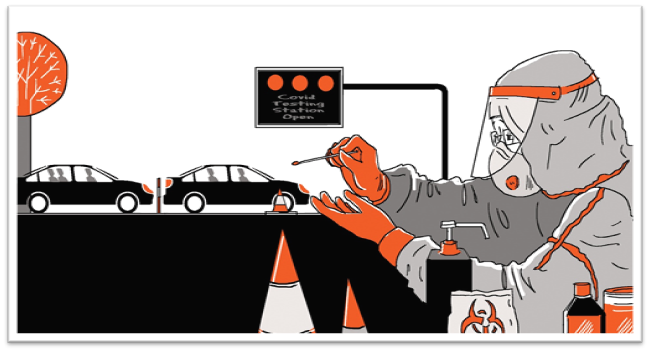
The Trudeau government released its new expenditure plans for combating COVID-19 and other economic steps on Monday, November 30 (©Kalkine Image).
CHILDCARE
Freeland proposed an investment of C$ 20 million over the next five years on childcare plans. She added that an amount of C$ 4.3 million would be earmarked every year for governments, experts and stakeholders to collaborate and come up with a new childcare vision for the country.
An amount of C$ 70 million for the next five years and C$15 million ongoing would be invested to support the Indigenous Early Learning and Child Care Secretariat.
The document also proposed a temporary support of up to C$ 1,200 for every child under the age of six coming from low- and middle-income families, who are entitled to Canada Child Benefit (CCB), for year 2021.
CLIMATE
The Trudeau government, which has shown special interest in fighting climate change since coming to power in 2015, allotted up to C$ 3.16 billion for planting two billion trees in the country, protection of forests and creation of jobs over the next 10 years.
An amount of C$ 2.6 billion will be spent over the next seven years to improve home energy efficiency, the document said. The government plans to provide about 700,000 grants to come up with energy-efficient advancements. The document also mentioned setting about 1 million free EnerGuide energy assessments and supporting the recruitment and training of EnerGuide energy auditors.
TRAVEL AND TOURISM
The tourism industry was left pretty much in ruins by the coronavirus pandemic this year. Keeping that in mind, the government said it would be providing a support of over C$ 500 million through June 2021 to local tourism businesses across the country.
