
 AUS
AUS
 NZ
NZ
 UK
UK
 CA
CA
 USA
USA
 IND
IND


.jpg)



Highlights
- North American railway operator announces notes offering linked to corporate financing activities.
- Rail transport network spans Canada, the United States, and Mexico across an integrated freight corridor.
- Market attention reflects developments within the transportation infrastructure sector.
Rail freight corridors connecting Canada, the United States, and Mexico place Canadian Pacific Kansas City within focus across transportation companies represented by the S&P TSX 60 index.
Rail transportation remains a central component of continental logistics networks, supporting large scale freight movement across industrial supply chains. Within Canada’s equity landscape, companies operating major rail systems appear in prominent benchmarks such as the S&P TSX 60 Index. Canadian Pacific Kansas City Limited operates one of the primary rail networks linking Canada, the United States, and Mexico, providing freight transportation services for commodities, manufactured goods, and agricultural products.
Recent corporate developments involving a substantial notes offering have drawn attention to financing activity associated with the railway operator. Announcements regarding refinancing arrangements and corporate funding plans highlight ongoing financial management within the transportation infrastructure sector. Canadian Pacific Kansas City Limited (TSX:CP) continues to operate a cross border freight network that supports trade across North America.
North American Rail Freight Network
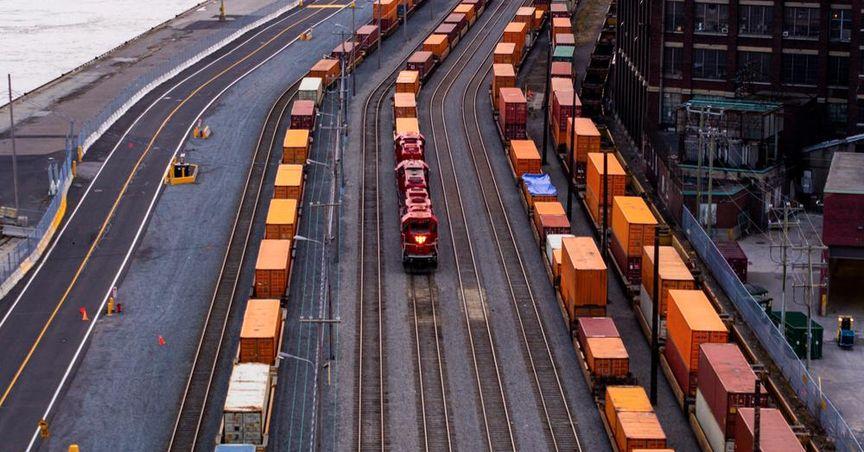
Railways form a vital part of the North American transportation system, connecting industrial regions, agricultural production areas, ports, and distribution hubs. Freight trains transport large volumes of commodities including grain, minerals, energy products, and manufactured goods across long distances.
The rail network operated by Canadian Pacific Kansas City Limited spans major corridors that link western Canadian resource regions with central North American manufacturing centers and southern trade routes. Rail infrastructure typically includes track systems, signaling equipment, maintenance facilities, and freight terminals designed to support continuous transportation activity.
Freight trains provide an efficient method of moving bulk commodities across long distances. Rail systems allow heavy cargo such as grain shipments, potash, and industrial materials to travel between production sites and export terminals. These networks also support the movement of consumer products, vehicles, and energy related commodities.
Integration of rail networks across national borders plays a significant role in facilitating trade between Canada, the United States, and Mexico. Rail corridors allow goods produced in agricultural and industrial regions to reach manufacturing centers and shipping ports located across the continent.
Notes Offering and Corporate Financing Activity
Recent announcements outlined the issuance of corporate notes intended to support refinancing and general corporate funding purposes. Debt instruments are commonly used by infrastructure companies to manage capital structures and support large scale operational systems.
Railway operators maintain extensive infrastructure including rail tracks, locomotives, maintenance yards, and freight terminals. Maintaining and upgrading these systems often requires significant financial resources. Funding arrangements allow companies to refinance existing obligations while supporting operational and infrastructure requirements.
The notes offering announced by Canadian Pacific Kansas City Limited (TSX:CP) includes instruments with different maturity timelines, reflecting typical financing structures used by large transportation companies. Such arrangements may align with broader corporate funding strategies associated with infrastructure maintenance and network operations.
Railway companies frequently access financial markets to manage long term capital requirements related to transportation systems. Infrastructure improvements, locomotive fleets, and network upgrades require sustained capital allocation across multiple operational segments.
Freight Transportation and Key Commodity Flows
Rail transport networks carry a wide range of cargo types essential to industrial and agricultural supply chains. Agricultural commodities represent a significant portion of freight activity within North American rail corridors.
Grain shipments from farming regions move toward export terminals located near coastal ports, where agricultural products enter international trade routes. Rail transport enables large volumes of grain to travel efficiently from inland production zones to maritime shipping facilities.
Energy related commodities also move across rail networks, including refined fuels and liquefied petroleum products. These materials travel between production facilities, storage hubs, and industrial consumers across the continent.
Industrial goods such as metals, vehicles, and construction materials represent another segment of rail freight traffic. Manufacturing supply chains rely on rail transportation to move raw materials and finished products between production sites and distribution centers.
The rail network operated by Canadian Pacific Kansas City connects multiple economic regions that produce and consume these commodities. Freight services therefore support a diverse mix of industrial sectors operating across North America.
Cross Border Rail Integration
Cross border transportation systems play an important role in facilitating trade among North American economies. Rail corridors linking Canada, the United States, and Mexico enable efficient movement of goods across international boundaries.
Rail operators maintain connections with other transportation providers, including trucking companies, port terminals, and intermodal logistics centers. Intermodal systems allow cargo containers to transfer between trains, trucks, and ships, creating flexible supply chain routes.
Canadian Pacific Kansas City Limited (TSX:CP) operates an integrated network designed to connect freight flows across the continent. Rail infrastructure supports cross border transportation through coordinated operations that link production regions with industrial markets.
Intermodal terminals located along rail corridors allow cargo to transition between transportation modes. Containers arriving by ship at coastal ports may move inland by train before transferring to trucks for regional distribution.
The development of interconnected logistics systems reflects the increasing complexity of global trade networks. Rail transportation remains a central element within these systems due to its capacity to move large cargo volumes efficiently.
Transportation Infrastructure and Canadian Market Context
Transportation infrastructure companies represent an important segment within Canada’s equity landscape. Rail operators, pipeline companies, and transportation service providers support the movement of commodities and goods essential to economic activity.
Within benchmarks such as the s and p tsx 60, large infrastructure companies maintain a presence alongside firms operating in financial services, energy, and materials industries. Transportation networks play a significant role in linking resource production regions with global markets.
Rail infrastructure contributes to national economic connectivity by supporting trade between provinces and across international borders. Freight railways also interact with other transportation systems including ports, highways, and inland logistics centers.
The role of rail transport extends beyond commodity shipments, supporting supply chains used by manufacturing, retail distribution, and energy industries. As economic activity expands across multiple regions, transportation infrastructure remains a foundational component of trade and logistics systems.
Canadian Pacific Kansas City Limited (TSX:CP) operates within this environment as a railway company whose network spans major North American corridors. Developments related to financing arrangements and operational updates continue to draw attention to the broader transportation infrastructure sector.
