
 AUS
AUS
 NZ
NZ
 UK
UK
 CA
CA
 USA
USA
 IND
IND

_07_03_2026_03_50_21_133108.jpg)




Highlights
- Canadian Pacific Kansas City operates a transnational freight railway across North America.
- Rail corridors connect Canadian, United States, and Mexican markets through a continuous network.
- Freight transportation services support logistics and supply chain movement across major industrial regions.
Canadian Pacific Kansas City manages a continent spanning railway system that transports commodities and manufactured goods across North America within the industrial sector linked to the S&P TSX 60 Index.
Canadian Pacific Kansas City (TSX:CP) operates within the transportation and rail logistics sector, forming part of the industrial landscape represented by the S&P TSX 60 Index. The company manages an extensive railway network connecting Canada, the United States, and Mexico through a continuous freight corridor. Rail infrastructure maintained across this network supports cargo transportation between ports, industrial centers, agricultural regions, and manufacturing hubs.
Transnational Rail Network Operations
Rail transportation forms the core operational activity associated with Canadian Pacific Kansas City (TSX:CP). The railway system spans a wide geographic area linking multiple economic regions across North America. Rail corridors connect coastal ports, inland distribution centers, agricultural territories, and industrial zones through integrated track infrastructure.
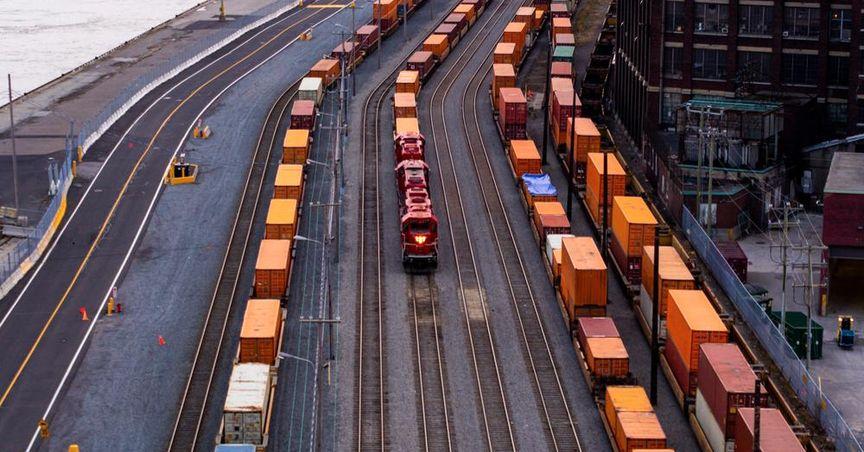
Freight trains move commodities, manufactured goods, agricultural products, and energy related materials across the rail network. Rail yards, switching facilities, and maintenance depots coordinate the movement of cargo trains along designated routes. Locomotive fleets and freight cars operate along these corridors under centralized scheduling systems that coordinate departures, arrivals, and cargo transfers.
The rail network extends through multiple national jurisdictions, requiring coordination across regulatory environments and transportation standards. Cross border freight movement occurs through rail gateways that connect rail lines between Canada, the United States, and Mexico.
Freight Transportation and Cargo Movement
Railways play a central role in transporting large volumes of freight across long distances. Bulk commodities such as grain, fertilizers, minerals, and energy resources move through specialized freight cars designed for specific cargo types. Containerized goods also travel along rail corridors, connecting ports with inland distribution centers.
Canadian Pacific Kansas City (TSX:CP) manages freight operations through coordinated train scheduling and cargo handling procedures. Intermodal terminals transfer cargo containers between railcars and trucks, enabling goods to travel efficiently across transportation modes. Rail logistics services facilitate movement of goods between agricultural regions, manufacturing facilities, and global shipping routes.
Rail infrastructure supports the movement of both raw materials and finished products across the continent. Industrial sectors including agriculture, energy production, manufacturing, and consumer goods distribution rely on rail transportation networks for large scale cargo movement.
Rail Infrastructure and Operational Systems
Railway infrastructure includes track systems, bridges, tunnels, signaling equipment, and rail yards that enable safe and efficient freight transportation. Continuous maintenance ensures that tracks remain aligned and structurally stable under heavy train loads. Track inspection systems evaluate rail conditions through both manual and automated monitoring technologies.
Locomotive fleets pull freight trains across the rail network using diesel powered engines designed for long distance transport. Maintenance facilities conduct routine mechanical inspections and repairs to maintain operational reliability across locomotive fleets and railcars.
Signaling systems coordinate train movement along rail corridors. Centralized control centers monitor rail traffic, track conditions, and train positions across the network. Digital communication technologies assist dispatchers in coordinating train routes and scheduling operations across multiple rail segments.
Role Within the s and p tsx sixty
Participation within the s and p tsx 60 reflects representation of large Canadian companies operating across major sectors including transportation, finance, natural resources, and communications. Rail transportation companies contribute infrastructure that supports trade and industrial distribution throughout North America.
The presence of Canadian Pacific Kansas City within this index highlights the role of freight rail systems in supporting continental supply chains. Rail networks transport commodities and manufactured goods between regions connected through international trade corridors.
Economic activity across agricultural, industrial, and resource sectors frequently depends on efficient transportation infrastructure. Railways provide large scale freight movement capabilities that complement trucking, maritime shipping, and port operations.
Integration of North American Trade Routes
Rail corridors operated by Canadian Pacific Kansas City connect major shipping ports located on both Atlantic and Pacific coastlines. These connections link ocean shipping routes with inland freight transportation systems, enabling cargo movement between global markets and continental distribution centers.
Intermodal facilities situated along rail routes transfer cargo containers between ships, trains, and trucks. These facilities serve as logistics hubs where goods transition between transportation modes while maintaining cargo integrity and scheduling coordination.
Rail links between Canada, the United States, and Mexico support the movement of goods across continental trade routes. Agricultural commodities from prairie regions, industrial materials from manufacturing centers, and consumer goods from port terminals travel along these rail corridors toward destination markets.
Rail Logistics and Supply Chain Connectivity
Railways function as a central component of supply chain logistics across North America. Freight transportation networks link production sites with distribution centers, retail facilities, and international shipping terminals. Rail corridors provide long distance cargo movement capabilities that support industrial and agricultural production systems.
Logistics coordination across rail networks involves cargo scheduling, route planning, and terminal operations. Rail yards serve as switching centers where freight cars are reorganized according to destination routes. These operational hubs ensure that cargo reaches appropriate transportation corridors across the network.
Rail transportation infrastructure connects inland production regions with maritime shipping terminals, enabling international cargo movement through port facilities. These connections support global trade flows linking North American goods with markets around the world.
