
 AUS
AUS
 NZ
NZ
 UK
UK
 CA
CA
 USA
USA
 IND
IND






Highlights
- Canadian National Railway operates within North America’s rail transportation and logistics sector.
- The company maintains an extensive rail network linking Canada with key United States regions.
- Its operations reflect the scale and industrial relevance of companies within the S&P/TSX 60 benchmark.
Canada’s transportation sector plays a central role in supporting trade, supply chains, and industrial activity. Canadian National Railway Company (TSX:CNR) functions within this sector as a major rail transportation provider connecting multiple regions across North America. Companies of this scale are often associated with key benchmarks such as the S&P/TSX 60, which represents prominent corporations across industries including transportation, energy, and financial services. The inclusion of rail operators within such benchmarks highlights the essential function of logistics infrastructure in facilitating economic activity.
Canadian National Railway Company operates a rail network that spans Canada from coast to coast while extending into the United States. This network links the Atlantic and Pacific coasts with inland industrial regions and major ports. Through these connections, the company supports the movement of goods across long distances, enabling the distribution of natural resources, manufactured items, and consumer products.
Extensive Rail Network Across North America
Rail transportation remains one of the most efficient methods for moving bulk goods across large geographic areas. Canadian National Railway Company maintains a network that connects major Canadian cities with key United States regions including the Midwest and the Gulf Coast. This connectivity supports cross border trade and facilitates access to ports and industrial centers.
The rail network serves as a backbone for freight transportation, linking production sites with distribution hubs and export terminals. Goods transported across this system include agricultural products, energy resources, forest products, automotive materials, and consumer goods. The integration of these transport routes supports a continuous flow of commodities across North America.
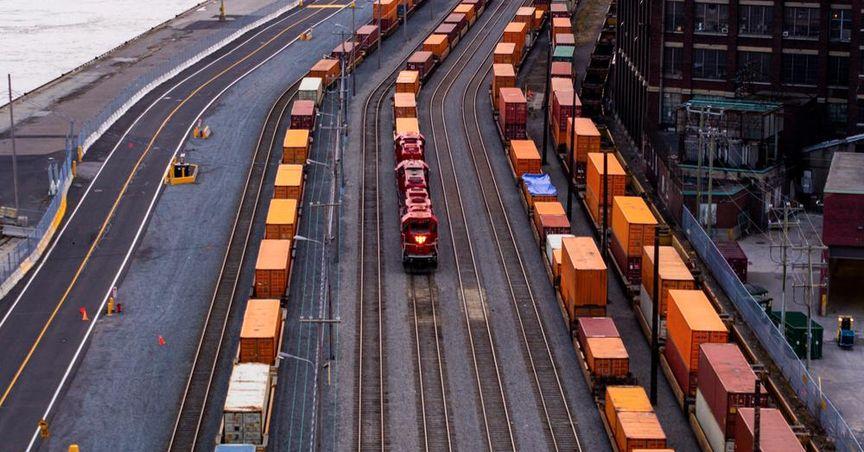
Rail infrastructure includes tracks, terminals, switching yards, and maintenance facilities. These components work together to ensure the efficient movement of trains across long distances. Operational coordination involves scheduling systems, freight management processes, and logistical planning to optimize the use of rail assets.
Freight Transportation and Supply Chain Integration
Rail operators play a critical role in connecting various segments of supply chains. Canadian National Railway transports raw materials from extraction sites to processing facilities, as well as finished goods from manufacturing plants to distribution centers. This integration supports industries such as mining, agriculture, manufacturing, and energy.
Freight services provided by rail networks often include intermodal transportation, where goods are transferred between rail, truck, and shipping vessels. Intermodal systems enable seamless movement of cargo across different transportation modes, improving efficiency within supply chains.
Transportation of bulk commodities forms a significant component of rail operations. Natural resources such as grain, coal, and petroleum products are transported over long distances to domestic and international markets. Rail systems provide a reliable method for moving these materials while supporting large scale industrial production.
Representation in Canadian Market Benchmarks
Large transportation companies form part of major Canadian market indicators such as the Tsx 60 benchmark. This benchmark includes corporations across sectors including finance, energy, telecommunications, and transportation. Rail operators contribute to this representation due to their role in supporting national and international trade networks.
The inclusion of transportation companies within such benchmarks reflects the importance of logistics infrastructure in maintaining economic activity. Rail networks enable efficient movement of goods across vast geographic areas, supporting industries that rely on large scale transportation systems.
Canadian National Railway continues to operate as a central component of North America’s freight transportation system. Its network connections, infrastructure, and logistics capabilities support the movement of goods across regions while contributing to the broader transportation framework within Canada and the United States.
Economic Role of Rail Transportation in Canada
Rail transportation serves as a key component of Canada’s trade and economic structure. The ability to move large volumes of goods across long distances supports export activity and industrial production. Canadian National Railway plays a role in facilitating trade by connecting resource producing regions with export terminals and international markets.
The transportation of goods across the rail network contributes to supply chain efficiency within multiple industries. Agricultural producers rely on rail systems to transport grain and other commodities, while manufacturing sectors depend on reliable logistics to distribute finished products.
Rail infrastructure also supports regional economic development by connecting remote areas with major urban centers. These connections enable access to markets, transportation services, and industrial opportunities across different regions.
Operational Infrastructure and Logistics Systems
Rail transportation requires a complex infrastructure network designed to manage large volumes of freight. Canadian National Railway Company (TSX:CNR) operates terminals equipped with loading and unloading facilities, storage areas, and maintenance systems for rail equipment. These facilities support continuous movement of goods across the network.
Logistics systems used within rail operations include scheduling platforms, cargo tracking systems, and route optimization tools. These systems enable efficient coordination of train movements and freight deliveries. Advanced technologies support real time monitoring of shipments and infrastructure performance.
Railway operations also involve maintenance programs designed to ensure the reliability of tracks, locomotives, and rolling stock. Regular inspections and infrastructure upgrades contribute to the safe and efficient operation of rail networks across diverse geographic conditions.
