
 AUS
AUS
 NZ
NZ
 UK
UK
 CA
CA
 USA
USA
 IND
IND





Highlights
- Drilling technology name in Canada’s energy services space moved above a longer-term trend line during the latest session
- Trading activity showed firm demand as the shares pushed through a widely watched technical marker
- Business remains centred on integrated drilling data tools used to capture, transmit, and interpret wellsite information
Pason Systems operates in the energy services space, supporting upstream drilling activity through digital tools used at the wellsite and in office workflows. The company’s work sits at the intersection of oilfield operations.
Pason Systems Inc (TSX:PSI) operates within Canada’s energy services arena, delivering industrial technology that blends on-site hardware, dependable connectivity, and specialized software to streamline how drilling data is captured, transmitted, and organized across field and office teams. Companies in this space are often viewed in the context of broader resource activity, and overall market direction is frequently referenced through the TSX Composite Index, which reflects performance trends across a wide range of domestically listed sectors, including energy services and field technology.
What Triggered The Trend Break?
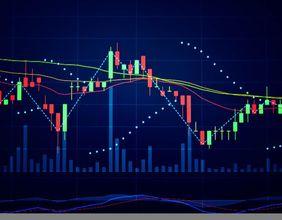
During the latest session, Pason Systems crossed above a longer-term moving average, a technical level many market participants track to gauge direction and momentum. This type of move is commonly read as a sign that recent trading has strengthened enough to overtake the longer trend, even if only temporarily.
The move occurred as the shares traded with active participation and maintained levels above that trend line through the session. In technical terms, this can be described as a shift in near-term tone relative to the longer baseline, especially when the move is sustained rather than quickly fading back below the same marker.
How Do Moving Averages Matter?
A moving average is a smoothing tool that blends prior trading levels into a single line, helping reduce day-to-day noise. Longer windows are often used to reflect broad direction, while shorter windows can highlight more immediate shifts. When a share moves above a longer window, it can signal that recent activity has improved relative to the longer backdrop.
This observation does not determine outcomes, but it offers a way to describe what the tape is doing in a structured manner. For sector names linked to drilling cycles and operational spending, technical markers can sometimes align with broader shifts in sentiment tracked through measures such as the S and P tsx index, which is frequently referenced when discussing Canadian market tone.
What Is Known From Coverage?
Recent published commentary from a Canadian financial institution referenced a revision to its stated reference level for the shares and described a neutral stance using industry-style labelling. Separately, broader coverage has included a mix of neutral and more constructive labels, indicating a range of viewpoints based on differing methods and expectations.
Because the goal here is factual description, the key takeaway is simply that external coverage has recently been updated and that the language used points to mixed positioning rather than a single unified view. For readers tracking sector context, it can be useful to compare company-specific commentary with broader equity direction reflected by the s&p composite index, which provides a wider Canadian-market reference point.
What Does The Business Provide?
Pason Systems (TSX:PSI) is widely known for integrated drilling data solutions that support information capture, storage, transmission, and interpretation. At the wellsite, equipment collects operational signals and converts them into structured data streams. That information can then be routed to office systems, enabling real-time visibility and consistent reporting across multiple wells.
The electronic drilling recorder is described as the core product, acting as a foundation for data acquisition and networking in drilling environments. Alongside this, the company’s suite includes communications offerings and software layers that help standardize workflows, enabling teams to review performance indicators and operational events with the same data set across field and office settings.
How Do Products Fit Wellsites?
In a drilling environment, timing and accuracy matter because decisions are made quickly and conditions change fast. Tools that gather drilling parameters and package them into usable dashboards can reduce manual interpretation and improve consistency. A wellsite recorder paired with networking capabilities can serve as the backbone for moving information from rig to office without delays or format conflicts.
Beyond basic capture, the wider set of offerings supports tasks such as wellbore detection, gas measurement, and data management. These tools aim to deliver a clearer view of drilling conditions and progress, helping teams document operations and communicate status across stakeholders, including field crews, engineers, and office-based planners.
What Role Does Connectivity Play?
Wellsite communications and bandwidth services help ensure that collected information can move reliably from remote locations. Connectivity matters not only for live monitoring but also for consistent recordkeeping, standard reporting, and coordination across multiple sites. In remote operating regions, stable transmission can be a differentiator for how effectively data tools function.
This communications layer also supports software workflows that depend on timely updates, such as operational alerts, automated reports, and performance review tools. When connectivity is integrated with data capture hardware, it becomes easier to maintain continuity from sensor signal to the reporting interface used by decision-makers.
How Does Software Enable Reporting?
Data management software can take high-frequency signals and translate them into standardized formats suitable for review. In drilling, reporting is not only about visibility; it is also about consistency, governance, and the ability to compare wells across different rigs and operating areas. Structured systems reduce the risk of mismatched definitions, missing fields, or manual transcription errors.
This is where integrated platforms can matter: a single pipeline from acquisition to reporting supports repeatability. Office teams can look at the same underlying records, apply common filters, and generate comparable outputs for performance review, incident tracking, and operational documentation. In market context, smaller technology suppliers can sometimes be compared with peers across benchmarks such as the TSX Smallcap Index, depending on size classification and sector grouping.
What Does Recent Trading Signal?
The move above the longer-term moving average highlights that recent trading has been strong enough to overtake the broader trend line. From a tape-reading perspective, this is a notable technical event because it reflects an improvement in recent activity relative to a longer baseline that many chart users monitor.
At the same time, market participants often pair technical observations with business fundamentals. For (TSX:PSI), those fundamentals centre on field-proven tools, integrated data capture, and a product set designed for drilling operations that depend on reliable information flow. In that sense, the technical shift is best viewed as a description of trading behaviour rather than a statement about operational outcomes.
Why Do Sector Cycles Influence Tone?
Energy services demand can be shaped by drilling activity, operational priorities, and budget decisions across upstream operators. When drilling programs expand, demand for data capture and wellsite solutions can increase as more rigs and wells need standardized systems. When programs tighten, emphasis can shift toward efficiency, monitoring, and cost control, which can still keep data tools relevant through operational optimization.
Because the company’s offerings focus on performance monitoring and information management, the value proposition often connects to operational discipline in addition to overall drilling volume. For that linkage to drilling workflows places the name within a sector where macro factors and field-level execution both influence attention and trading tone.
What Financial Traits Stand Out?
Publicly available company descriptions point to a business with a balance sheet profile that includes low net leverage relative to many heavy industrial peers, alongside liquidity measures that have historically indicated strong near-term coverage of obligations. These traits are often discussed in the context of operational resilience and the ability to support product development and deployment needs.
Other commonly cited characteristics in market descriptions include moderate sensitivity to broad market swings relative to more volatile cyclicals, reflecting the company’s role as a specialized technology supplier rather than a direct commodity producer. For (TSX:PSI), these traits complement the business profile anchored in recurring wellsite needs for data capture, communications, and structured reporting systems.
