
 AUS
AUS
 NZ
NZ
 UK
UK
 CA
CA
 USA
USA
 IND
IND



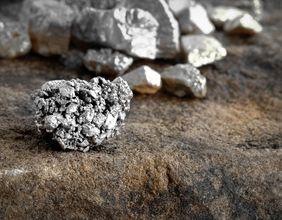
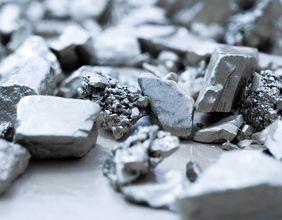


Dinero Ventures Ltd (TSXV:DNO) has successfully completed a drilling campaign at its wholly owned Mt Bisson rare-earth element (REE) property, situated 65 kilometres northwest of Mackenzie, British Columbia. The company extracted 829.6 metres of core from seven drill holes targeting the recently discovered Kolbe zone, confirming multiple parallel REE-bearing zones. These results reinforce ongoing exploration amid strong global demand for rare-earth metals.
Key Highlights
- Dinero Ventures Ltd (TSXV:DNO) concluded Phase-I drilling on the Mt Bisson REE property in northern British Columbia.
- Seven drill holes from two pads recovered 829.6 metres of core focusing on the Kolbe zone.
- Kolbe zone is at least 100 metres wide per 2025 rock sampling, with mineralization linked to feldspar-rich allanite-bearing dykes.
- Six REE mineralized sites identified on the property; Kolbe and Central zones exhibit the highest REE concentrations to date.
Overview and Location of Mt Bisson Property
The Mt Bisson property, owned 100% by Dinero Ventures, spans approximately 11,786 hectares across 15 claims in British Columbia's Stewart district. Located 65 kilometres northwest of Mackenzie, it covers a 3 km by 9 km magnetic anomaly. Full ownership grants Dinero complete control over exploration and development activities.
Positioned within a well-accessible area serviced by logging roads, the property offers logistical advantages for exploration. To date, six REE mineralized localities have been identified: Kolbe, Laura, Bliss (Central), Will #1, Will #2, and the M12000 Road occurrences. Geochemical silt sampling has revealed additional anomalous REE zones yet to be explored, indicating further discovery potential.
Phase-I Drilling Program Outcomes and Core Handling
The Phase-I drilling focused on the newly discovered Kolbe zone identified through earlier rock sampling. Seven drill holes from two pads yielded 829.6 metres of BTW-sized core. All core was logged onsite and cut lengthwise with a diamond blade saw to enable detailed analysis and sampling.
Sampling intervals were based on lithological changes observed in the core. Quality control measures included standards and blanks to ensure analytical accuracy. Unassayed core portions were preserved in core boxes for future reference, adhering to industry best practices in mineral exploration.
Geology and Mineralization of the Kolbe Zone
The Kolbe zone drill core mainly consists of high-grade metamorphic Wolverine Gneiss and intrusive units. Mineralization is associated with feldspar-rich allanite-bearing dykes, which host the REE concentrations. Drilling revealed multiple parallel dykes within the Kolbe zone.
Rock sampling from 2025 indicates the Kolbe zone is at least 100 metres wide. Notable mineralized intervals include drill hole DDH-MB-2026-7, which contains coarse allanite and monazite within a sheared zone at least 5 metres wide at about 45 metres depth, and DDH-MB-2026-1, showing similar minerals in gneissic rocks with a 7-metre-wide zone near 5 metres depth. The discovery of parallel REE-bearing zones along the west side of the magnetic anomaly supports the exploration model.
Multiple Rare-Earth Element Occurrences Identified
Six distinct REE mineralized localities have been identified on the Mt Bisson property. The Kolbe and Central zones (formerly Bliss (Central)) have yielded the highest REE values so far. Other mineralized sites include Laura, Will #1, Will #2, and the M12000 Road occurrence.
Geochemical silt sampling has detected anomalous REE signatures in unexplored areas, suggesting further exploration targets. This widespread mineralization pattern implies a regional-scale REE enrichment process affecting the property.
Market Dynamics and Rare-Earth Element Demand
REEs are vital for technologies such as renewable energy, electronics, defense, and advanced manufacturing. Global demand remains high as economies shift toward electrification and clean energy. Dinero Ventures’ focus on Mt Bisson aligns with this sustained market demand.
Ed Kruchkowski, President of Dinero Ventures, stated, "The demand for rare earth metals has the potential to add great value for both the Company and the shareholders given the opportunities on this property." The Phase-I drilling results establish a geological foundation to evaluate the economic potential of the Kolbe zone and other mineralized areas, though development depends on technical, permitting, and market factors.
Exploration Strategy and Future Plans
Following Phase-I success, the company expressed enthusiasm to advance the project. Confirmation of parallel REE-bearing zones and mineralized intervals in the Kolbe zone supports planning for further exploration. Geochemical silt sampling highlights unexplored anomalous areas as additional targets.
Specific timelines, budgets, or detailed Phase-II plans were not disclosed. Investors should monitor upcoming corporate announcements and filings for updates on exploration priorities and funding.
Qualified Person and Technical Validation
Ed Kruchkowski, P. Geo., President of Dinero Ventures, serves as the qualified person under National Instrument 43-101 overseeing exploration. He reviewed and approved the announcement content. His role as company president is disclosed as per NI 43-101 requirements.
Qualified person oversight ensures exploration results comply with Canadian securities regulations, providing accountability and credibility for investors and stakeholders.
Ownership and Permitting Status
Dinero Ventures holds 100% ownership of the Mt Bisson property, consisting of 15 claims totaling approximately 11,786 hectares, granting full operational and financial control. The announcement does not specify claim tenure status, renewals, or permitting details.
Ongoing compliance with British Columbia’s claim maintenance and exploration regulations is required. Completion of drilling contributes to assessment work obligations, though regulatory specifics were not detailed.
Geological Importance of Magnetic Anomaly
The Mt Bisson property overlays a 3 km by 9 km magnetic anomaly identified in government surveys. This feature has been a primary exploration target, interpreted as indicative of deeper mineralized systems related to REE concentrations. The drilling tested this anomaly’s correlation with mineralization.
Discovery of REE-bearing dykes within the Kolbe zone validates the magnetic survey as an effective exploration tool. Geological interpretations suggest additional mineralized zones may exist beyond those found, supporting further investigation of anomalous geochemical silt sampling areas.
