
 AUS
AUS
 NZ
NZ
 UK
UK
 CA
CA
 USA
USA
 IND
IND





Highlights:
- Anson share price has gained 8.93% on ASX today (at 12:46 PM AEDT).
- In the past 12 months, Anson share price has risen by 235.56%.
- Lithium carbonate prices in China has reached to record high of CNY537,500 per tonne
Shares of Anson Resources Limited (ASX:ASN) were on the rise today (18 October 2022), although the firm shared no price-sensitive news. At 12:46 PM AEDT, Anson shares were spotted trading 8.93% higher at AU$0.30 per share.
Including today’s gain, in the past five trading sessions, Anson’s share price has reported a rise of nearly 6%. In one year, the share price has zoomed 235.56%, and on a year-to-date basis, it has surged 115.71%. However, in a month, Anson shares have dropped 18.38%.
Meanwhile, the benchmark index, ASX 200 Materials (INDEXASX:XMJ) index was up 0.91% to 15,615.00 points. Anson has outperformed its index in terms of yearly and YTD performance, as the index surged by 0.74% in a year and recorded a fall of 8.63% on a YTD basis.
What’s happening with Anson lately?
Recently, the materials company shared an update regarding its Paradox Lithium Project. On 10 October 2022, Anson shared that it had completed the resource expansion drilling program at one of the wells of Paradox Project – Cane Creek week last month.
Reportedly, the drilling targeted numerous clastic zones and Mississippian units, which were around 500 meters below the clastic zones.
The drilling results have returned 25% higher lithium grades than historical results from Mississippian units. In a statement, the company said:
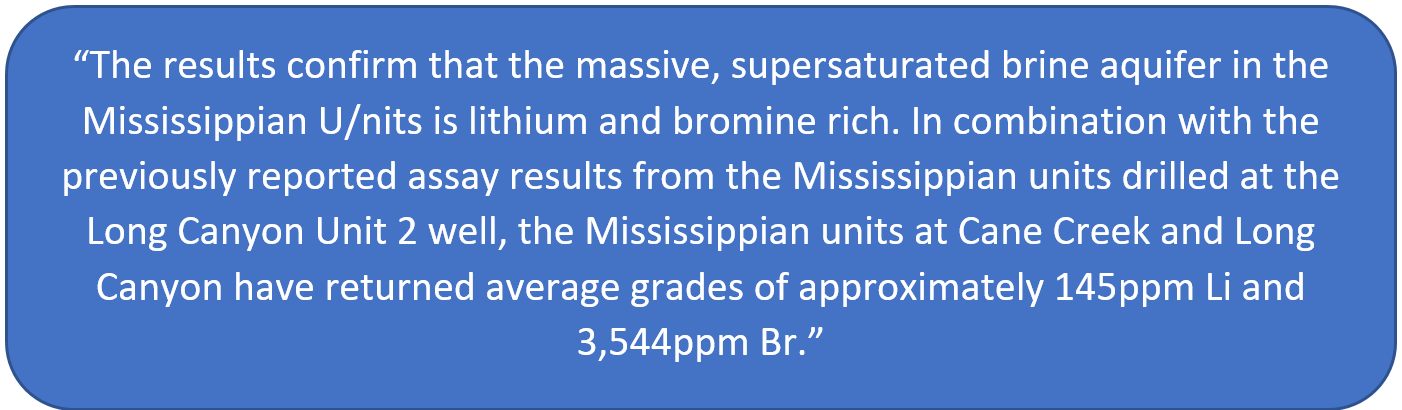
The company reports similarities between grades in the Mississippians Units and Clastic Zones and points towards certain connectivity between Clastic Zones and Mississippian units.
Commodity price
In October, the prices of lithium carbonate in China reached to record high of CNY 537,500 per tonne. On a YTD basis, it has gained nearly 95% as increased demand coincides with limited supply.
According to a media source, strong momentum in electric vehicle sales supported lithium demand in the battery manufacturing industry. The gap between demand and supply expanded as the output in the salt lake system became further slow in China, despite major producing hubs having returned to normal operations with the end of power rationing.
