
 AUS
AUS
 NZ
NZ
 UK
UK
 CA
CA
 USA
USA
 IND
IND





Highlights
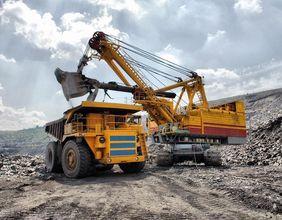
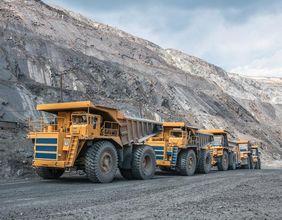
Mining heavyweights drive momentum in the local market
Retail sector shaken by leadership turmoil
Healthcare leader announces fresh global investment
The ASX 200 gained momentum as mining giants (ASX:BHP), (ASX:FMG), and (ASX:RIO) lifted the market, while retail and healthcare faced contrasting challenges shaping investor sentiment.
Introduction
The ASX 200 opened on a stronger note, fuelled by resilience from ASX mining stocks. The spotlight remained firmly on global giants such as (ASX:BHP), (ASX:FMG), and (ASX:RIO), which set the tone for local momentum. Strength in precious metals provided additional support, with (ASX:NST) and (ASX:EVN) reflecting investor appetite for stability amid a shifting global environment.
This optimism, however, was balanced by challenges in the retail and pharmaceutical sectors, where (ASX:SUL) and (ASX:CSL) confronted separate but equally notable developments. With Wall Street’s upbeat lead and central bank decisions looming, the trading day unfolded as a snapshot of global and domestic forces shaping the ASX stock market.
What drove the gains in mining?
Iron ore leaders
(ASX:BHP), a diversified mining leader, continued to command attention with strength across its iron ore operations. The company remains a key barometer of Australia’s resource economy, with its performance influencing market sentiment both locally and globally.
(ASX:FMG), another critical contributor to Australia’s iron ore exports, joined the rally. Known for its large-scale mining projects, the company’s share activity reflected the steady demand that continues to underpin resource-focused stocks.
(ASX:RIO) added further weight to the session’s lift. With operations spanning iron ore, copper, and aluminium, the company reinforced the influence of diversified miners within the ASX stock market.
Gold producers join in
The resilience of gold was equally evident. (ASX:NST), a prominent player in Australia’s gold mining industry, benefitted from stability in precious metal prices. The company remains significant in highlighting how defensive assets support broader market confidence.
(ASX:EVN), another major gold producer, reflected similar momentum. Together, these miners showcased the breadth of Australia’s resource sector, spanning iron ore dominance and precious metals strength, and underscored the importance of ASX ordinaries stocks in the country’s equity story.
Why did retail stocks decline?
(ASX:SUL), the parent company of well-known brands including Rebel Sport, Supercheap Auto, BCF, and Macpac, became the focus of attention in the retail sector. The company faced turbulence following the departure of its senior leadership figure amid governance issues. This development highlighted how quickly corporate challenges can spill into the market and affect investor sentiment.
The retail industry often reacts sharply to internal changes, and in this case, questions around management oversight and organisational stability weighed on confidence. Super Retail Group’s situation served as a reminder that while strong brands can drive revenue, leadership uncertainty can challenge market positioning.
How did healthcare respond to global investments?
In the healthcare space, (ASX:CSL), a global biotechnology leader, announced a significant investment into a European partner working on anticoagulant therapies. This move reflected CSL’s long-term strategy of supporting innovation and maintaining a robust research pipeline.
The decision came during a period of organisational restructuring, with recent job reductions still fresh in the company’s profile. Nevertheless, the announcement reaffirmed CSL’s commitment to international growth and reinforced its standing as one of Australia’s largest listed healthcare groups.
CSL’s actions illustrated the dual nature of the sector: while short-term restructuring can generate cautious responses, long-term global investments remain central to the company’s outlook. As a key representative of the ASX 100, CSL’s influence extends beyond pharmaceuticals into the overall healthcare narrative within the Australian market.
What was the influence from Wall Street?
The Australian session was guided in part by strong cues from Wall Street. Major benchmarks, including the S&P 500, Dow Jones Industrial Average, and Nasdaq, each recorded gains, setting a constructive tone for global markets. The momentum was driven by optimism surrounding upcoming central bank decisions and the resilience of major technology companies.
Tesla, known for its electric vehicle leadership, helped underpin this positivity with fresh confidence in its stock. Meanwhile, Intel, a global semiconductor giant, supported market sentiment through restructuring efforts and changes to its corporate portfolio. Even as companies like Nvidia faced regulatory pressure in China, the overall performance in the United States pointed to a supportive environment for equities.
For the Australian market, the lift from Wall Street underscored the interconnectedness of global sentiment. Technology resilience, regulatory uncertainty, and investment decisions overseas all filtered into local market psychology, reinforcing the dynamic link between the ASX stock market and international benchmarks.
How are global economic factors shaping sentiment?
Central bank focus
Attention remained squarely on the upcoming decision from the United States Federal Reserve. Market participants anticipated that interest rate adjustments could influence not just domestic policy but also global liquidity flows. Such decisions hold particular weight for Australia, where currency markets and capital flows are sensitive to changes in US monetary direction.
Trade and inflation pressures
Beyond monetary policy, trade tensions and inflationary risks continued to influence sentiment. Tariff-related disputes between the United States and China created uncertainty, with potential consequences for resource demand. For Australian companies like (ASX:BHP), (ASX:FMG), and (ASX:RIO), global demand shifts tied to policy actions can directly impact operational performance.
Inflation concerns also remained present. While easing rates can stimulate growth, they may also risk fuelling price increases. This delicate balance kept investors alert, as higher inflation could pressure household spending and corporate margins, affecting sectors from mining to retail.
Which sectors are under pressure?
Not every sector shared in the optimism seen across mining. Retail was under strain, led by (ASX:SUL), where leadership challenges created uncertainty around governance and operational stability. This placed the company in contrast with the stronger momentum of resources.
Healthcare also faced its own balancing act. (ASX:CSL) demonstrated a willingness to expand through global investment but continued to navigate the realities of workforce reductions. While such moves highlighted the company’s commitment to long-term strategy, they also revealed the challenges of adapting to evolving market conditions.
Beyond Australia, international markets showed similar contrasts. Airlines such as Alaska Air Group pointed to higher costs as a limiting factor, while consumer brands like Hain Celestial struggled to stabilise performance. These developments highlighted that sector-specific pressures extend across borders.
How does this shape the outlook?
The day’s activity captured the balance of strength and caution that defines the Australian market. Mining leaders such as (ASX:BHP), (ASX:FMG), and (ASX:RIO) provided stability and growth, while gold producers (ASX:NST) and (ASX:EVN) reminded investors of the defensive qualities within resources.
In contrast, consumer-focused industries and healthcare showed the risks tied to governance changes and international investment strategies. Together, these factors created a mixed picture for the Australian market.
Looking forward, global monetary policy, commodity demand, and corporate resilience will shape how the market performs. The interplay of these drivers ensures that the ASX stock market remains dynamic, influenced by both international and domestic forces.
Conclusion
The session highlighted a dual narrative across Australian equities. On one side, mining and gold stocks reinforced the resilience of ASX ordinaries stocks, providing strength in a globally uncertain environment. On the other, retail and healthcare underlined the challenges of corporate governance and strategic transition.
As Wall Street’s influence, central bank policies, and trade factors continue to evolve, the Australian market remains a reflection of both global connections and domestic priorities. The combination of resource leadership and sectoral challenges defines the current landscape, reminding investors that momentum can often be uneven but remains deeply interconnected.
