
 AUS
AUS
 NZ
NZ
 UK
UK
 CA
CA
 USA
USA
 IND
IND






Highlights
- Deere and Company reflects broader industrial themes associated with the s&p 500 fund
- Expanding equipment capabilities reinforce presence across global production markets
- Structural diversification strengthens alignment with large-scale manufacturing sectors
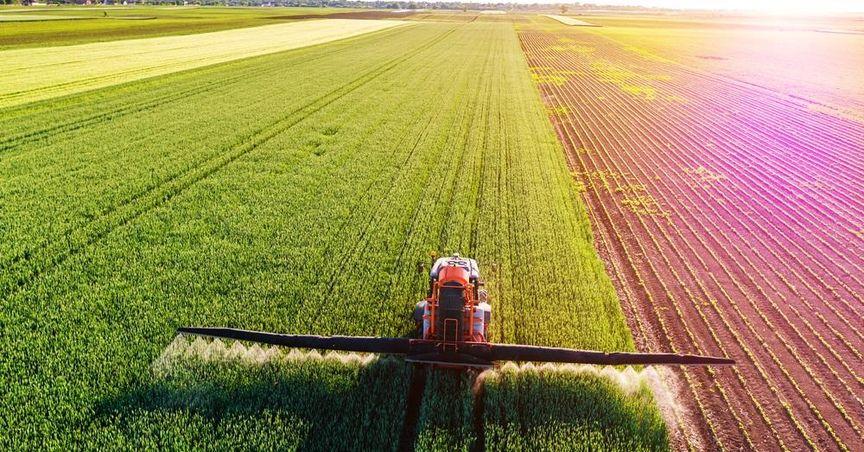
Deere and Company (NYSE:DE) stands among the most established names in heavy equipment manufacturing, serving agriculture, construction, forestry, and turf-care sectors through a wide lineup of machinery, service programs, and precision-driven technologies. The organization’s structure integrates engineering, fabrication, distribution, and financial-services coordination into a unified framework that supports customers across regions. Deere and Company maintains a long history of supplying machinery designed for land management, production advancement, and industrial operations, all supported by a service ecosystem that spans maintenance, connected technologies, and equipment lifecycle programs. These characteristics often place the company within broader conversations regarding industrial participants that influence large-scale manufacturing environments frequently compared with movements reflected throughout the s&p 500 fund, where deep operational roots and diversified service channels reinforce visibility across global markets.
How Does Deere Structure Industrial Operations?
Deere and Company structures its industrial operations through interconnected segments dedicated to agriculture equipment, turf-care solutions, construction machinery, forestry platforms, and financial service coordination. Each segment is supported by engineering centers, precision-technology teams, manufacturing plants, testing facilities, logistics groups, and dealer-network partners that maintain unified performance across regions. The company’s agricultural division delivers machinery for cultivation, harvesting, land preparation, and crop-management support, while its construction and forestry segment provides equipment designed for excavation, material transport, grading, and timber processing. The turf-care segment contributes solutions for land maintenance across recreational and professional spaces. This broad structural layout resembles patterns seen within organizations often compared to those interacting with s&p futures, where multi-layered industrial systems sustain consistency across diverse production channels.
What Shapes Deere’s Machinery Development Approach?
Deere and Company shapes its machinery-development approach through an engineering philosophy rooted in mechanical precision, technological integration, ergonomic design, and environmental adaptability. The company’s engineering teams refine drivetrain systems, hydraulic structures, operator interfaces, guidance technologies, telematics platforms, structural reinforcements, and power-management frameworks that support machinery durability across challenging environments. Development programs incorporate field testing, materials refinement, digital modeling, and collaborative design cycles that adapt to changing industry needs. This engineering depth remains essential for meeting the evolving demands of agriculture, construction, and forestry operations. Such development principles parallel innovation tendencies noted among manufacturers often aligned with trends visible across s&p 500 today, where mechanical refinement and digital integration support broad industrial evolution.
Why Are Deere’s Product Lines Diverse?
Deere and Company maintains product diversity to support varied user groups across agricultural fields, construction sites, forestry operations, and managed grounds. The agricultural line encompasses machinery for planting, harvesting, fertilizing, spraying, tilling, and crop-monitoring support, while the construction and forestry line includes loaders, excavators, haulers, dozers, graders, skidders, and other specialized systems. Turf-care equipment addresses landscaping requirements, recreational-ground upkeep, and professional maintenance activities across large facilities. These divisions operate in unified alignment with dealer networks that manage parts availability, service programs, equipment configuration, and user training. This wide spectrum of equipment offerings reflects the multi-category design philosophy found in industrial organizations often compared with entities referenced throughout s&p 500 futures, where tiered product ecosystems enable sustained presence across many operational sectors.
How Does Deere Maintain Global Reach?
Deere and Company maintains global reach through a distribution ecosystem that includes regional dealerships, manufacturing facilities, technology hubs, logistics centers, and training institutes. Its international presence supports agricultural communities, construction groups, forestry specialists, and turf-care managers across continents through localized product adaptation and service accessibility. Deere and Company tailors equipment for different environmental conditions, regulatory frameworks, crop types, land-management systems, and operator requirements, enabling effective performance across varied regions. The company strengthens global coordination through partnerships, technology-sharing arrangements, and supply-chain frameworks that ensure continuity in equipment availability. This multi-region participation aligns with operational behaviors associated with global industrial enterprises frequently compared with those referenced within the s&p 500 etf, where international adaptability supports long-term relevance across specialized markets.
What Reinforces Deere’s Industrial Identity?
Deere and Company reinforces its industrial identity through longstanding commitment to machinery reliability, precision engineering, operator-focused design, and aligned digital systems. The company integrates connected-equipment platforms, remote-monitoring capabilities, predictive-service features, guidance systems, and fleet-efficiency tools that complement traditional machinery strength. This combination supports production operations that rely on predictable performance and real-time decision enhancement. Deere and Company’s branding emphasizes durability, support availability, product consistency, and broad applicability across field-based and site-based environments. These foundations are comparable to the industrial attributes observed within large manufacturing organizations often associated with the s&p 500 Index, where mechanical strength and technology-forward ecosystems anchor global visibility.
Why Does Deere Prioritize Integrated Technology?
Deere and Company prioritizes integrated technology to support precision-based agriculture, automated construction workflows, advanced forestry operations, and connected-equipment management. Its digital ecosystem integrates data-gathering tools, spatial-analysis systems, automated pathing algorithms, fleet-coordination platforms, and monitoring dashboards that guide decisions related to field operations, material transport, project timelines, and machine efficiency. Precision-technology tools also assist with resource allocation, operator support, land assessment, and digital compliance across production landscapes. These technology-driven advancements reflect modernization patterns frequently associated with broad industrial movements found within the s&p 500 chart, where digital-physical convergence shapes how equipment integrates with large-scale operational planning.
