
 AUS
AUS
 NZ
NZ
 UK
UK
 CA
CA
 USA
USA
 IND
IND


_06_23_2026_07_58_30_182443.jpg)


Highlights
- Deere & Company operates across agriculture, construction, and forestry equipment
- Manufacturing scale supports global equipment distribution ecosystems
- Segment structure reflects diversified industrial operations
Deere & Company (NYSE:DE) operates as a diversified industrial manufacturer serving agriculture, construction, forestry, and turf care markets worldwide. The company’s operational presence aligns with large-scale industrial activity often associated with the s&p 500 etf, where established manufacturers contribute to broader market composition. Deere & Company maintains a multi-segment structure that integrates machinery production, service parts distribution, and equipment support frameworks. Its operations reflect long-standing manufacturing expertise and supply chain coordination across global end-use markets.
How Does Deere Support Agriculture Systems?
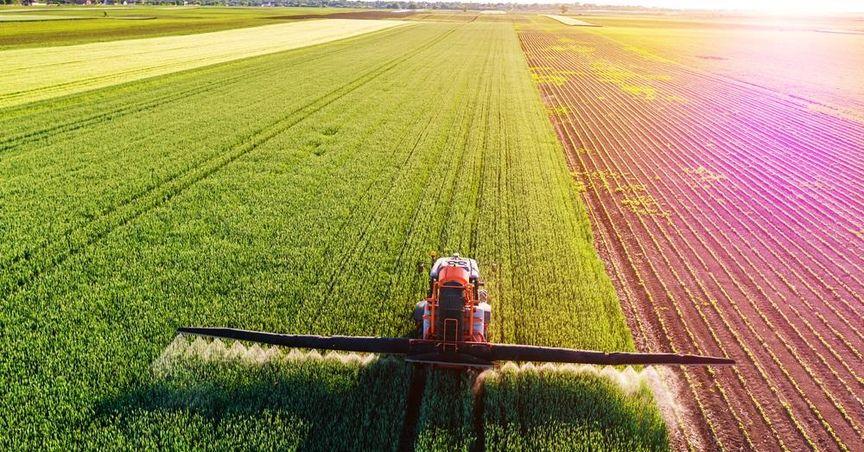
The Agriculture and Turf segment forms the foundation of Deere & Company’s operational identity. This segment focuses on the production and distribution of machinery designed to support planting, harvesting, soil management, and turf maintenance activities. Equipment offerings are engineered to meet productivity requirements across varied agricultural environments. Through continuous refinement of mechanical systems, Deere & Company supports agricultural efficiency within ecosystems represented across the s&p 500 fund. The segment integrates manufacturing precision with service infrastructure, ensuring equipment reliability across operational cycles.
What Defines Construction Forestry Operations?
The Construction and Forestry segment addresses infrastructure development and land management needs through specialized equipment manufacturing. Products include machinery designed for earthmoving, material handling, and forestry management applications. Deere & Company structures this segment to align with industrial demand across construction and resource-based sectors. Equipment durability and adaptability remain central design considerations. Within market landscapes such as the s&p 500 today, industrial manufacturers like Deere & Company reflect the role of physical asset production in economic systems.
How Financial Services Complement Equipment Sales?
Deere & Company operates a Financial Services segment that supports equipment distribution through structured financing solutions. This segment facilitates access to machinery by aligning payment frameworks with customer operational cycles. Financial Services operations remain closely integrated with manufacturing activity, enabling coordinated equipment deployment. This internal alignment enhances transactional continuity across business segments. Within the context of the s&p 500 index, vertically integrated service structures demonstrate operational cohesion among large industrial enterprises.
How Manufacturing Scale Shapes Operations?
Manufacturing scale enables Deere & Company to maintain consistent production standards across diverse product lines. Facilities are structured to support high-volume output while preserving engineering precision. Supply chain coordination ensures material availability and assembly efficiency. Manufacturing scale also supports aftermarket service networks and parts distribution. In broader market compositions such as the s&p 500 chart, scalable manufacturing operations illustrate industrial resilience and logistical coordination.
What Technology Enhances Equipment Functionality?
Technology integration within Deere & Company focuses on mechanical optimization, digital monitoring, and operational efficiency. Equipment systems incorporate advanced control interfaces and data-enabled performance tracking. These technologies support maintenance planning and operational visibility without altering core mechanical reliability. The company’s approach emphasizes functional enhancement rather than experimental deployment. Within the s&p 500 index fund environment, technology adoption within industrial manufacturing reflects measured innovation aligned with operational stability.
How Does Deere Maintain Global Presence?
Global operations allow Deere & Company to serve agricultural and construction markets across multiple regions. Manufacturing, distribution, and service networks extend internationally, supporting diverse customer needs. Regional adaptation ensures compliance with local operational requirements and environmental conditions. Global presence enhances production continuity and market reach. In index-linked market structures such as the s&p 500, multinational operations underscore the global integration of industrial manufacturers.
What Drives Equipment Lifecycle Management?
Equipment lifecycle management at Deere & Company encompasses design durability, serviceability, and parts availability. Machinery is engineered for extended operational use supported by maintenance programs and replacement components. Lifecycle strategies prioritize uptime and operational continuity. This approach aligns product longevity with customer operational planning. Within broader futures-oriented market discussions like s and p futures, lifecycle management illustrates long-term asset utilization frameworks.
How Does Deere Align Market Classification?
Deere & Company aligns within industrial manufacturing classifications that span agriculture, construction, and financial services. The company does not operate as a single-product manufacturer but as a diversified equipment provider. This classification supports inclusion within broad-based indices such as s&p futures, where industrial diversification contributes to sector balance. Market alignment reflects operational breadth rather than reliance on singular demand drivers.
