
 AUS
AUS
 NZ
NZ
 UK
UK
 CA
CA
 USA
USA
 IND
IND






Highlights
- Deere gains focus after strong earnings.
- Precision agriculture supports its growth story.
- Trade and farm-cycle risks remain important.
Strong earnings and automation progress have renewed attention on a major machinery name, while trade costs, farm cycles, and valuation questions remain central to the outlook.
Deere & Company (NYSE:DE) is back in market focus after stronger earnings and fresh index-related attention placed the agricultural machinery leader under a sharper valuation lens. Deere is a global manufacturer of farm equipment, construction machinery, forestry tools, and precision agriculture technology. Its latest update has renewed discussion around whether the company’s earnings strength, automation push, and defensive business profile make its current valuation look reasonable after recent market volatility. The company also remains part of the broader S&P 500, giving its moves wider relevance across large-cap industrial names.
Deere Returns To Focus
Deere’s latest earnings update gave the market a fresh reason to revisit the company’s business fundamentals. The company operates in areas directly tied to agriculture, construction, and land management, making it an important name in industrial stock machinery.
The company’s products are used by farmers, contractors, landowners, and infrastructure operators. Its green and yellow equipment is widely recognized, but the modern Deere story is increasingly about technology as much as machinery. The company has been adding automation, connected equipment, software tools, and data-based farm solutions to its product lineup.
This shift has helped Deere move beyond a traditional equipment-cycle story. Its earnings strength is now viewed alongside its ability to create higher-value products and services for customers managing labour shortages, rising input costs, and productivity demands.
Earnings Lift Confidence
The latest results came in stronger than expected, helping offset some concern caused by recent share-price weakness. A post-earnings pullback had raised questions about whether market expectations had already moved too far ahead, but the company’s operating performance showed that demand and execution remain important support points.
For Deere, earnings strength matters because the farm equipment market can be cyclical. When crop prices, financing costs, and farm income shift, equipment demand can change quickly. Strong results help show how well the company is managing through those conditions.
The company’s scale also matters. Deere has a broad dealer network, a powerful brand, and a wide product base across agriculture and construction. That reach gives it an advantage when customers look for equipment, service support, financing options, and integrated technology.
Precision Agriculture Edge
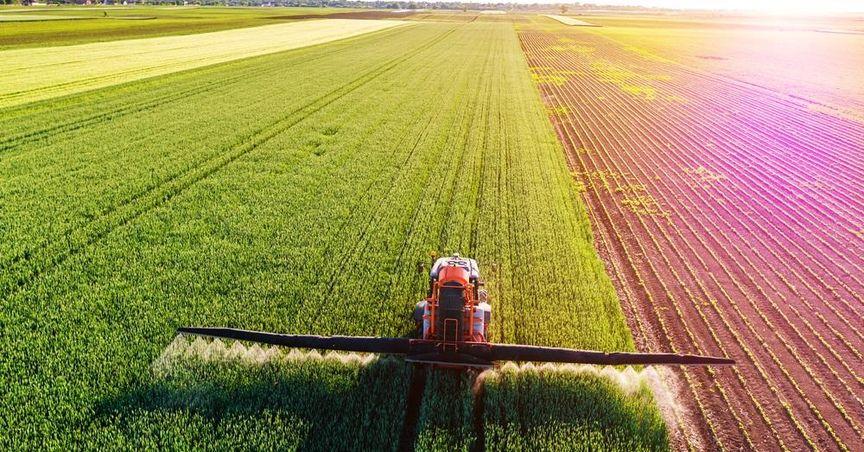
A major part of Deere’s current market story is precision agriculture. This includes tools that help farmers improve planting, spraying, harvesting, equipment tracking, and field management. These systems use automation, sensors, connectivity, and data to make farm operations more efficient.
Deere’s technology offerings include connected equipment platforms, automation features, and advanced spraying tools. These solutions are designed to reduce waste, improve accuracy, and support better farm productivity.
This matters because agriculture is facing long-term challenges. Farmers must produce more with tighter resources, while dealing with weather risk, labour constraints, and changing input costs. Technology-enabled equipment can help address some of those pressures.
For Deere, this creates a stronger business mix. Hardware remains essential, but software and data services may add more recurring engagement with customers over time. That can make the company’s earnings profile more durable if adoption continues across global farming markets.
Value Debate Builds
The valuation debate around Deere is now centred on whether earnings strength and technology progress are already reflected in the stock. The company’s recent momentum has increased attention, but market views remain divided on how much room remains for further rerating.
A fair valuation discussion for Deere must consider several factors. The company has strong brand power, deep customer relationships, and advanced technology investments. It also operates in cyclical markets where demand can shift based on farm income, trade conditions, equipment replacement cycles, and financing costs.
That mix makes Deere different from a simple industrial machinery company. It has qualities of a traditional manufacturer, a farm productivity platform, and a technology-driven equipment provider. The market is trying to decide how much value should be assigned to each part of that identity.
Risks Remain Clear
Deere’s outlook is not without pressure points. Tariffs, trade costs, and global supply-chain issues can affect margins. The North American large agriculture cycle can also be volatile, especially when farm economics weaken or customers delay large equipment purchases.
Higher production costs can create additional pressure. Machinery manufacturing requires materials, logistics, labour, and capital investment. If customer demand slows while costs remain elevated, profitability can face strain.
The company also competes in a demanding market where reliability, product innovation, dealer support, and financing access all matter. Maintaining leadership requires continued investment in equipment quality, digital platforms, and customer service.
What Comes Next?
The next stage for Deere & Company (NYSE:DE) depends on execution across several fronts. Earnings strength has helped renew confidence, but the company still needs to prove that precision agriculture adoption can keep expanding while core equipment demand stays resilient.
Market attention may remain high because Deere sits at the centre of several important themes: farm productivity, automation, infrastructure equipment, and industrial efficiency. Its index visibility adds another reason for large-cap market watchers to track the company.
The key issue is balance. Deere has strong business qualities, but cyclical exposure cannot be ignored. If technology adoption continues and farm equipment demand remains steady, the company’s premium profile may remain supported. If trade costs or agricultural weakness intensify, the valuation debate could become more cautious.
For now, Deere’s story is less about a simple cheap-or-expensive label and more about whether earnings strength, precision agriculture, and industrial leadership can justify the market’s renewed attention.
