
 AUS
AUS
 NZ
NZ
 UK
UK
 CA
CA
 USA
USA
 IND
IND

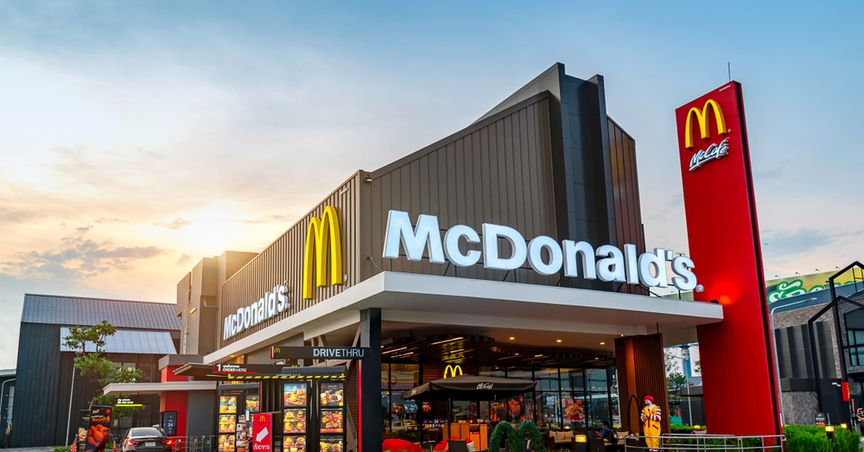





In a surprising turn of events, McDonald's (NYSE:MCD) recently reported its first quarterly sales miss in almost four years. Despite an overall net profit increase of 7% in the fourth quarter, certain challenges in specific markets led to a less-than-stellar performance.
The Quarter at a Glance
McDonald's faced a setback with a quarterly sales miss, attributed mainly to sluggish sales growth in its business division covering the Middle East, China, and India.
Despite the setback, the company's overall net profit saw a commendable 7% rise in Q4. This was attributed to strategic menu pricing adjustments and a decline in raw material costs.
Excluding one-off items, McDonald's posted a per-share profit of $2.95, surpassing analysts' expectations of $2.82 per share.
The International Developmental Licensed Markets segment, which accounts for 10% of McDonald's overall revenue, experienced a meagre 0.7% growth, significantly below the estimated 5.5%.
Market-Specific Challenges
CEO Chris Kempczinski highlighted a "meaningful business impact" in the Middle East and certain regions outside, citing the Israel-Hamas conflict and associated misinformation affecting the brand's perception.
McDonald's, along with other Western brands, faced protests and boycott campaigns due to perceived pro-Israeli stances. This trend mirrors Starbucks' recent struggles in the Middle East, impacting annual sales forecasts.
China, McDonald's second-largest market, continues to experience weak consumer spending despite government support measures. Starbucks echoed similar sentiments, indicating a slower-than-expected sales recovery in China.
Even McDonald's Indian franchisee reported its first revenue decline in three years, signaling challenges in another key market.
McDonald's U.S. business showed signs of weakness, with a significant slump in store traffic. October witnessed a 13% decline, followed by 4.4% and 4.9% decreases in November and December, respectively. While U.S. comparable sales climbed by 4.3% in Q4, just slightly missing estimates, the trend indicates a need for strategic adjustments.
Global Impact on Sales
Global same-store sales increased by 3.4% in the quarter, falling short of the anticipated 4.9%. This represents the slowest sales growth in approximately three years.
Various factors, including geopolitical tensions and changing consumer spending patterns, played a role in the global sales scenario.
Conclusion
McDonald's navigated a challenging quarter marked by geopolitical tensions, consumer sentiment shifts, and market-specific challenges. Despite these hurdles, strategic pricing and cost management contributed to an overall profit rise. The company now faces the task of adapting to evolving market dynamics and reaffirming its position as a global fast-food leader.
