LTV: Understanding Loan-to-Value Ratio

2 min read | March 25, 2025 03:03 AM PDT | By Team Kalkine Media

Highlights

  • Measures Loan Risk: LTV ratio assesses the risk level of a loan based on asset value.
  • Higher LTV Means More Risk: A high LTV ratio indicates greater lending risk for lenders.
  • Crucial for Loan Approval: LTV plays a key role in mortgage and financing decisions.

Understanding LTV (Loan-to-Value Ratio)

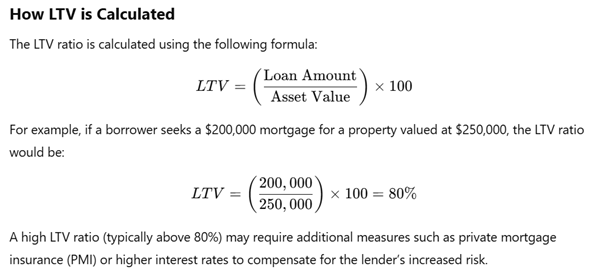
Loan-to-Value (LTV) ratio is a critical financial metric used by lenders to assess the risk of a loan. It represents the proportion of a loan compared to the total value of the asset being financed. Typically used in mortgage lending, the LTV ratio helps determine the borrower’s equity in the property and the lender’s risk exposure. A lower LTV ratio indicates a safer loan for the lender, while a higher ratio suggests increased risk.
Importance of LTV in Lending

  • Loan Approval Factor: Lenders use LTV to decide loan eligibility and interest rates.
  • Affects Interest Rates: Higher LTV ratios often result in higher borrowing costs.
  • Influences Down Payments: A lower LTV may mean a smaller loan and a larger upfront payment.

Conclusion

The Loan-to-Value (LTV) ratio is a crucial metric in lending, determining both risk and loan terms. Borrowers with lower LTV ratios benefit from better interest rates and loan conditions, while higher LTV ratios can lead to additional costs. Understanding LTV helps borrowers make informed financial decisions and secure more favorable loan terms.


Disclaimer

The content, including but not limited to any articles, news, quotes, information, data, text, reports, ratings, opinions, images, photos, graphics, graphs, charts, animations and video (Content) is a service of Kalkine Media LLC (Kalkine Media, we or us) and is available for personal and non-commercial use only. The principal purpose of the Content is to educate and inform. The Content does not contain or imply any recommendation or opinion intended to influence your financial decisions and must not be relied upon by you as such. Some of the Content on this website may be sponsored/non-sponsored, as applicable, but is NOT a solicitation or recommendation to buy, sell or hold the stocks of the company(s) or engage in any investment activity under discussion. Kalkine Media is neither licensed nor qualified to provide investment advice through this platform. Users should make their own enquiries about any investments and Kalkine Media strongly suggests the users to seek advice from a financial adviser, stockbroker or other professional (including taxation and legal advice), as necessary. Kalkine Media hereby disclaims any and all the liabilities to any user for any direct, indirect, implied, punitive, special, incidental or other consequential damages arising from any use of the Content on this website, which is provided without warranties. The views expressed in the Content by the guests, if any, are their own and do not necessarily represent the views or opinions of Kalkine Media. Some of the images/music that may be used on this website are copyright to their respective owner(s). Kalkine Media does not claim ownership of any of the pictures/music displayed/used on this website unless stated otherwise. The images/music that may be used on this website are taken from various sources on the internet, including paid subscriptions or are believed to be in public domain. We have used reasonable efforts to accredit the source (public domain/CC0 status) to where it was found and indicated it, as necessary.


Sponsored Articles


Investing Ideas

Previous Next