
 AUS
AUS
 NZ
NZ
 UK
UK
 CA
CA
 USA
USA
 IND
IND






Highlights
- Agricultural traits and crop solutions form a central pillar of the company’s activity.
- Seed technologies support broad cultivation environments across multiple regions.
- Crop protection materials contribute to season-long field resilience.
Corteva (NYSE:CTVA) operates within the agricultural technology field, focusing on seed development and crop protection resources that support cultivation systems across global landscapes. The company’s activity resides within a broader segment linked to the S & P 500, with ongoing involvement in plant science research, trait development, and distribution networks serving broad-scale farming structures.
How does Corteva structure its seed development framework?
Seed development activity within the company emerges through plant genetics programs that examine environmental adaptation, agronomic characteristics, and varietal resilience. The process generally begins with selection pathways in controlled research spaces, where botanical attributes are documented across multiple stages of growth. Each stage involves evaluation of leaf patterning, stalk strength, root formation, and field uniformity under diverse climate ranges. Results from these examinations direct the selection of promising cultivars suited for wide adoption across large agricultural zones. Traits refined through this framework often align with soil conditions, moisture levels, and regional cultivation traditions, creating seed products designed to function within many farming systems.
What characterizes the company’s crop protection materials?
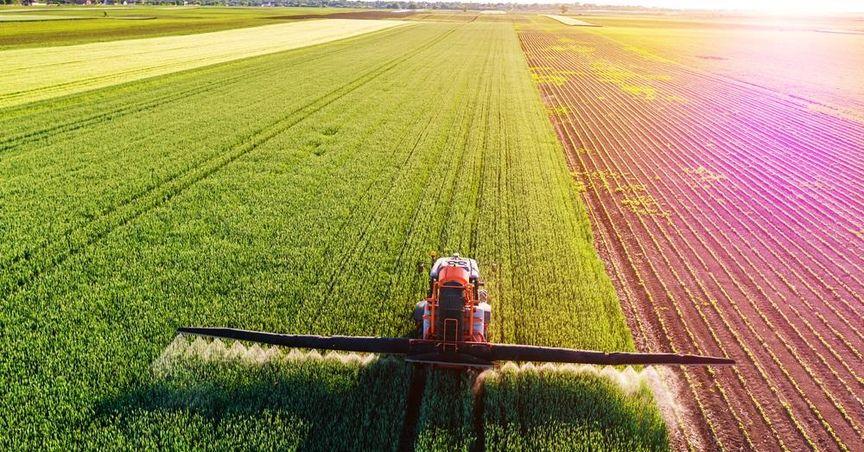
Crop protection materials originate from chemical and biological research initiatives that examine plant responses to environmental stress elements. These materials act within defined agronomic cycles and are formulated for broad compatibility with field operations. Development generally involves laboratory evaluation, greenhouse observation, and field application trials. Observations track leaf coating behavior, dispersion uniformity, and interaction with soil microbiota. Material formulation accounts for spray volume characteristics, droplet retention, and canopy penetration requirements. Product categories often address challenges linked to broadleaf competition, grass infestation, fungal pressure, and seasonal durability. Each formulation aims to maintain field stability across varying temperature ranges and moisture environments without introducing promotional or advisory implications.
How does Corteva support agronomic integration within field systems?
Agronomic integration reflects the alignment of seed varieties and crop protection resources with the operational patterns of growers across regions. Integration programs typically examine planting windows, canopy development timing, and harvest structures. Specialists across research groups document plant height progression, root zone formation, and stem rigidity across different soil compositions. Data from these observations guide the refinement of product deployment sequences. Agronomic integration also incorporates soil texture mapping, residue management approaches, and moisture retention assessments. Through this process, seed traits and field materials function together within long cultivation cycles, supporting continuity across diverse farm management methodologies.
What defines Corteva’s plant science research initiatives?
Plant science research forms a core pillar of the company’s long-range approach to agricultural development. Activities include hybrid design modeling, trait sequencing, genome mapping, and environmental resilience studies. These efforts evaluate how plant structures respond to heat, wind pressure, low moisture conditions, and soil nutrient fluctuations. Research groups monitor leaf chlorophyll levels, cellular integrity, and tissue health under layered environmental stress. Trait sequencing programs regularly examine root health variability, plant density tolerances, and crossbreeding feasibility. Across all research initiatives, focus remains on understanding botanical behavior rather than guiding any action or implying favorable or unfavorable expectations regarding market contexts.
How does Corteva distribute products across wide agricultural regions?
Distribution systems extend through field dealers, agronomic networks, and supply partners positioned across diverse cultivation landscapes. Each distribution channel emphasizes logistical efficiency, with product handling protocols tailored to environmental conditions during storage and shipment. Seed products require humidity control, temperature moderation, and precise packaging integrity. Crop protection materials rely on sealed containment, transport-monitoring processes, and labeling accuracy. Distribution also involves documentation pathways and product traceability systems designed to align with agricultural compliance requirements in multiple jurisdictions. Shipment planning accounts for geographic differences, climatic variability, and region-specific application periods, thereby ensuring consistent access to agricultural resources across production zones.
How does Corteva approach sustainability within agricultural environments?
Sustainability activity incorporates soil health enhancement, biodiversity support, and environmental stewardship practices. Research teams evaluate factors such as nutrient balance improvements, erosion reduction frameworks, and plant residue decomposition patterns. Crop protection programs study application timing, spray drift behavior, and targeted delivery designs aimed at reducing off-field movement. Seed development groups investigate genetic attributes that interact with soil ecosystems in consistent ways. Sustainability initiatives also focus on crop rotation compatibility, habitat preservation near field borders, and practices that support pollinator presence. Across programs, emphasis remains on scientific assessment rather than projected expectations or any advisory tone.
How do Corteva products align with diverse regional cultivation patterns?
Regional alignment involves recognizing climate differences, seasonal patterns, and soil diversity across global agricultural zones. Seed varieties undergo examination across arid environments, temperate fields, and high-moisture ecosystems, ensuring broad adaptability. Crop protection materials are observed under varied humidity levels, canopy densities, and precipitation patterns. Agronomic teams compile extensive documentation on insect population behavior, fungal spread tendencies, and weed species distribution across regions. With these observations, product solutions reflect locally relevant agronomic conditions. Focus remains on neutral, descriptive documentation rather than any form of evaluative guidance or directional commentary.
What role does technology play in Corteva’s operational processes?
Technology enhances research capability, product design efficiency, and distribution coordination. Digital platforms support remote field imaging, soil mapping visualization, and environmental monitoring. Automated laboratory systems facilitate trait isolation, controlled breeding environments, and genetic screening processes. Field machinery integrates with seed placement systems, canopy sensors, and variable-rate application equipment. Data collected from field sensors, satellite imaging, and geographic mapping tools feed into modeling platforms that assess plant growth patterns across multiple climate ranges. Technology also assists with labeling accuracy, traceability documentation, and supply tracking. All references remain strictly descriptive without strategic or advisory indications.
How does Corteva participate in global agricultural partnerships?
Global partnerships involve collaborative programs with agronomic groups, research institutions, and agricultural organizations. Participation centers on field demonstrations, agronomic information sharing, and seed performance observations within varying planting environments. Collaborative initiatives may examine pest pressure patterns, climate adaptation responses, and soil regeneration techniques. Partnership structures allow documentation of results from long cultivation periods across different land management practices. Each collaboration focuses on data exchange, research alignment, and region-specific observations without referencing financial themes or any directional commentary.
How does Corteva maintain product stewardship across its portfolio?
Product stewardship centers on responsible development, handling, and application guidance for seed and crop protection materials. This includes studying environmental compatibility, examining long-term field behavior, and ensuring accurate product labeling. Stewardship programs observe water interactions, drift tendencies, and soil retention patterns. Research also monitors plant compatibility, residue breakdown cycles, and biodiversity interactions near treated fields. Stewardship frameworks incorporate training materials for distribution partners, detailed safety documentation, and adherence to agricultural regulations across regions. These activities position product stewardship as an integral component of the company’s operational foundation without providing promotional or advisory implications.
How does Corteva evaluate long agricultural cycles within its research?
Long agricultural cycles require observational programs that span full planting seasons across varied environments. Researchers examine seed germination progression, early growth stages, canopy expansion, and late-season maturity characteristics. Crop protection studies track disease pressure through entire cycles, observing pathogen behavior, leaf spotting progression, and response to environmental fluctuations. Soil monitoring programs document organic matter formation, compaction tendencies, and nutrient equilibrium patterns. Long-cycle observations often incorporate rotational strategies, intercropping sequences, and vegetation stability near field boundaries. Each evaluation remains grounded in scientific description without referencing performance projection or advisory themes.
How does Corteva address environmental variability in agricultural regions?
Environmental variability includes seasonal temperature changes, precipitation differences, soil structure variation, and shifting pest populations. Research programs examine plant responses to heat stress, cool weather, and prolonged dryness. Seed varieties undergo extensive observation in controlled climate chambers and open-field environments. Crop protection materials are evaluated for durability during high humidity periods, rapid leaf wetness cycles, and extended dry spells. Findings from these programs guide formulation refinements and trait adjustments that accommodate the variability present across global agricultural landscapes. Descriptions remain entirely factual without directional interpretation or implied guidance.
How do Corteva field programs document plant-soil interactions?
Plant-soil interactions involve examining root penetration depth, soil aggregation behavior, moisture retention, and nutrient availability. Research groups monitor microbial populations, organic material accumulation, and soil structural shifts around root systems. Detailed field notes capture root branching patterns, rhizosphere health, and nutrient mobility across soil layers. Observations also assess compaction variations linked to machinery movement, crop residue distribution, and seasonal transitions. Findings assist in understanding how seed traits and crop materials behave within specific soil types. All documentation remains descriptive and avoids advisory indications or comparative language.
What supports Corteva’s long-range product research continuum?
The long-range research continuum encompasses hybrid experimentation, molecular trait evaluation, environmental modeling, and biological compatibility studies. Research facilities analyze gene expression patterns, tissue resilience, and plant metabolic behavior under controlled conditions. Field teams document canopy durability, stalk rigidity, and resistance patterns across extended observation periods. Crop protection research examines compound stability, leaf interaction behavior, and environmental persistence patterns. These collective efforts contribute to sustained agricultural innovation, built on descriptive scientific methodology without any forward-leaning statements, advisory implications, or strategic commentary.
