
 AUS
AUS
 NZ
NZ
 UK
UK
 CA
CA
 USA
USA
 IND
IND


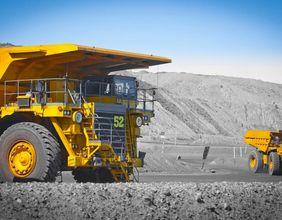
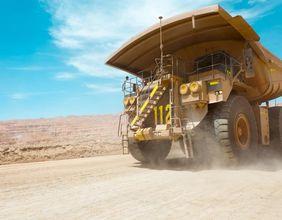



United Rentals, Inc. (NYSE:URI), a premier equipment rental provider, released its second quarter 2026 earnings report on July 22, 2026. The update detailed the company's financial performance across its General Rentals and Specialty segments, covering revenue streams from equipment rentals, new equipment sales, contractor supplies, and ancillary services. Market participants are closely watching metrics such as rental equipment utilization, fleet composition, and segment profitability amid evolving conditions in the construction and industrial equipment rental sectors.
Key Points
- NYSE: URI
- United Rentals reported Q2 2026 results on July 22, 2026, for the three- and six-month periods ended June 30, 2026
- The company operates two main segments: General Rentals and Specialty, with revenues from owned equipment rentals, re-rent arrangements, delivery and pickup services, and ancillary rental income
- Financial disclosures include balance sheet data as of June 30, 2026 and 2025, plus comparative income statements for the periods ended June 30, 2026 and 2025
Overview of United Rentals' Business Model and Equipment Fleet
United Rentals maintains a diversified rental platform structured around two core segments. The General Rentals segment offers a wide range of equipment for construction, industrial, and other applications, while the Specialty segment targets niche markets with specialized equipment categories. Revenue is generated through multiple channels including owned equipment rentals, re-rentals where equipment leased from third parties is subleased to customers, delivery and pickup services, and various ancillary rental-related income streams.
The company’s financials highlight substantial investment in rental equipment assets, distinguishing equipment held for rental from non-leased assets. The balance sheet reflects significant property, plant, and equipment dedicated to supporting the rental business. Additionally, inventory related to new equipment sales and contractor supplies provides supplementary revenue diversification beyond core rental operations.
Revenue Breakdown by Rental and Product Categories
United Rentals’ quarterly results showcase revenue contributions from diverse product and service lines. Equipment rental revenue remains the largest segment, derived from both owned and re-rented equipment. New equipment sales and contractor supplies also contribute meaningfully, serving the same customer base and enhancing higher-margin ancillary sales opportunities.
The company separately reports delivery and pickup revenue, underscoring the significance of transportation and logistics services within its rental business. Ancillary and other rental revenues further broaden income streams beyond equipment provision. This layered revenue model enables United Rentals to capture value at multiple customer touchpoints and adapt to varying demand patterns across equipment categories and customer segments throughout economic cycles.
Segment Performance and Geographic Focus
United Rentals’ General Rentals and Specialty segments operate as distinct units, each catering to different customer groups and equipment types. The company tracks rental revenue, new equipment sales, contractor supplies, and service income separately by segment, facilitating independent assessment of profitability, utilization, and growth trends. This segmentation supports strategic capital allocation aligned with each segment’s market dynamics.
Operating primarily within the United States, United Rentals acknowledges geographic concentration risk tied to regional economic cycles, construction spending, and competitive factors. The quarterly report indicates ongoing monitoring of geographic performance as part of strategic planning, recognizing the cyclical nature of construction and the importance of regional management execution in equipment rental.
Customer Concentration and Credit Risk Oversight
The filing includes disclosures on customer concentration risk, detailing the company’s largest customers relative to total revenue and accounts receivable. This transparency aligns with industry norms where customer concentration can impact revenue stability and cash flow predictability. United Rentals actively monitors customer credit quality and concentration as part of its working capital management.
An allowance for credit losses is reported across multiple periods, reflecting management’s evaluation of receivables collectibility based on historical data and current economic conditions. This credit risk management is critical given the cyclical industries served, such as construction, where economic downturns may affect collections. The inclusion of these metrics demonstrates United Rentals’ commitment to prudent credit practices.
Balance Sheet Composition and Equity Details
Balance sheet disclosures as of June 30, 2026, and comparative periods show stockholders’ equity components including common stock, additional paid-in capital, retained earnings, treasury stock, and accumulated other comprehensive income. These details provide insights into the company’s capital structure, dividend and share repurchase history, and retained earnings evolution. Quarterly equity balances enable tracking of changes influenced by earnings and capital actions.
Treasury stock balances indicate ongoing share repurchase programs affecting shares outstanding and earnings per share metrics. Accumulated other comprehensive income captures unrealized gains or losses on investments and foreign currency transactions where applicable. These equity breakdowns assist investors in evaluating capital allocation decisions and the stability of the equity base supporting rental equipment financing and operational leverage.
Comparative Quarterly Performance and Trend Analysis
The report provides side-by-side comparisons for the three-month periods ended June 30, 2026 and 2025, as well as year-to-date six-month comparisons. This format allows investors to discern growth trends in equipment rental revenue, new equipment sales, and ancillary services on both quarterly and year-to-date bases. Performance changes reflect pricing, volume fluctuations, fleet utilization, and revenue mix shifts between higher- and lower-margin categories.
Inclusion of Q4 2025 data offers context bridging full-year 2025 results and 2026 interim performance. This enables assessment of whether observed trends are seasonal or indicative of fundamental shifts in demand or competitive positioning. Investors can evaluate revenue momentum and margin dynamics relative to prior periods using these comparative insights.
Capital Structure and Debt Considerations
Although the update emphasizes revenue, equity, and receivables, it implicitly reflects a capital-intensive model reliant on significant debt financing to support the extensive rental equipment fleet. Equipment rental companies typically maintain substantial leverage, supported by recurring rental revenues that facilitate debt servicing. United Rentals’ balance sheet and asset base underscore a leveraged ownership and deployment strategy.
Management’s capital allocation balances equipment investment, debt repayment, shareholder returns via dividends and repurchases, and working capital needs, all influencing quarterly financial outcomes and long-term shareholder value. Investors should consider how these decisions impact leverage ratios, interest coverage, and financial flexibility to navigate economic cycles and pursue strategic initiatives such as acquisitions or fleet upgrades.
Industry Position and Competitive Landscape
United Rentals operates within the equipment rental industry serving construction, industrial, infrastructure, and other sectors requiring temporary equipment access. The company’s dual-segment approach addresses diverse rental demand, with general equipment offering volume at lower margins and specialty equipment delivering higher margins to niche markets. This structure enables competitive positioning across customer types and optimized asset utilization.
The industry features stable recurring revenues during expansions, high fixed costs for fleet ownership and upkeep, and sensitivity to construction spending and industrial utilization. United Rentals’ management of fleet utilization, idle equipment minimization, and pricing strategy directly affect profitability and asset returns. Investors focus on utilization rates, fleet age, and the balance between specialty and general equipment to forecast earnings quality and cash flow.
Investor Outlook and Forward-Looking Metrics
The Q2 2026 disclosure offers a snapshot of United Rentals’ operational and financial status as of June 30, 2026, reflecting market conditions, customer demand, pricing, and execution in the first half of the year. Investors should watch upcoming quarterly reports for signs of revenue growth acceleration or deceleration, margin changes, and management insights on demand and competitive dynamics.
Key investor metrics include equipment utilization rates, average rental rates, fleet composition and age, customer mix evolution, and segment performance comparisons. Attention to capital expenditures, debt management, and free cash flow generation is critical to assess the company’s ability to service debt, reinvest in fleet quality, and return capital to shareholders. External factors such as construction spending forecasts, infrastructure investments, and industrial production trends provide context for evaluating United Rentals’ revenue trajectory and market positioning.
