
 AUS
AUS
 NZ
NZ
 UK
UK
 CA
CA
 USA
USA
 IND
IND




Summary
- Offshore wind to power the oil major’s onshore hydrogen plant in Germany
- 90 per cent of the new electricity generation to come from the renewables in 2020
BP plc has partnered with Ørsted A/S for producing hydrogen gas from wind power production. This is the oil & gas giant’s first major project in the fast-growing renewables sector that would play a key role in the world’s transition to a low carbon future.
Using renewables such as wind and sun to produce hydrogen, instead of gas or coal, has the potential to lower global carbon emissions, despite being an expensive proposition. Replacing fossil-based hydrogen with renewables-based hydrogen is the need of the hour, insist the climate change experts.
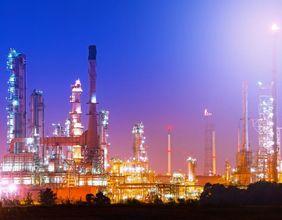
Both the energy companies have joined hands to make a large scale electrolyzer for producing hydrogen. This green fuel would be used at the BP’s Lingen oil refinery in northwest Germany, according to sources.
The plant is expected to draw close to 50 MW power from Ørsted’s North Sea wind farms for producing hydrogen.
Hydrogen would be fulfilling around 20 per cent of the unit’s total energy requirements.
Anders Nordstrom, VP Hydrogen at Ørsted stressed that first the funding needed to fall in place for the project materialisation. The project also needed clarity from the regulators regarding the renewable hydrogen definition, he added.
The Lingen project
The Lingen green hydrogen project in Germany is expected to be the Europe’s largest one if it begins operations as per the target year of 2024. The energy partners have sought financial assistance from the EU (European Union) Innovation Fund that supports low carbon technologies.
The process of manufacturing green hydrogen is expensive at present and is unviable without the government support. It is around thrice the cost of producing grey hydrogen from fossil fuel, as per expert estimates. Grey hydrogen is named so because it leads to carbon emissions, unlike the green one.
Once the financials fall in place, the two energy companies would be taking their final investment call by the beginning of 2022.
The electrolyser would have a capacity to produce 9,000 tonnes of renewable hydrogen per annum. The electrolyser technology-based project would display real life applications of hydrogen, based on wind power.
The process of electrolysis would split up the water molecules into oxygen and hydrogen. After being powered by the renewable energy, green hydrogen would be generated without producing any carbon emissions.
The project shall support the long-term target of building 500 MW of renewable hydrogen capacity at the German plant.
Dev Sanyal, Executive VP, BP said that hydrogen would be having a higher role in meeting the energy needs of decarbonising the globe in times to come.
BP seems to be taking a lead in this emerging sector of green hydrogen. It had recently announced a net zero program to eliminate its carbon footprint by 2050.
Once fully operational, the Lingen plant would speed up emission reduction at the BP refinery, apart from bringing forth an experience of green hydrogen production at a large scale.
Renewables shine
The International Energy Agency (IEA) has estimated the renewable energy installation to hit a record high level in 2020. In its latest report, the IEA noted that around 90 per cent of the new power generation in the world would be from the renewables in the year 2020. Merely 10 per cent of the year’s electricity would be produced using coal and gas.
Further, the growth of renewables in 2021 would accelerate to is highest pace since the past 6 years, said IEA.
At this speed, the green electricity would replace coal as the largest single source to produce power by the year 2025, mentioned the report.
The report emphasised that while other fuels struggled due to the harmful effects of the coronavirus pandemic, the renewables market grew by leaps and bounds.
Solar power would be driving the renewables revolution in times to come, offering power at its cheapest rates in the world history.
Further, the IEA predicted the wind and solar power capacity to double between 2020 and 2025.
It also forecasted that the electricity consumption through hydro, solar, wind, and biomass sources would rise by 7 per cent globally in the year 2020.
BP shares up
The shares of BP plc (LON: BP.) moved to GBX 248.35, up by 2.75 per cent at the day’s opening on 11 November at 8.06 AM, after the hydrogen news came in.
After falling consistently since 8 June (GBX 365.750), the company shares had begun to rise steadily since 6 November (GBX 199.86).
The stock displayed a negative year to date return of 49.73 per cent at the time of reporting. It had a market capitalisation of £48.99 billion with an earnings per share of 0.20 per cent. There was a wide variation seen in its 52-week low/high range noted at GBX 193.44 and GBX 510.80 respectively.
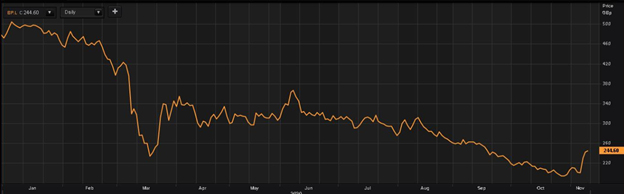
(Source: Thomson Reuters)
