
 AUS
AUS
 NZ
NZ
 UK
UK
 CA
CA
 USA
USA
 IND
IND





Highlights:
- With the fuel prices touching record highs, EVs are gaining quite some interest from motorists.
- Along with being economical, they also have significantly lesser emissions, causing less environmental damage.
The Russia-Ukraine war impacted not just these two countries, but the whole world is dealing with its knock-on effects. Global oil supplies took a hit, pushing the prices to record highs. As a result, fuel prices in most countries soared, leading to a jump in the prices of everything.
In the UK, petrol and diesel prices have been flirting with record highs for quite some time, adding to the woes of motorists. Businesses too, are feeling the heat of high prices as they have led to an increase in transportation costs. This leaves companies with two options, either to bear the extra costs or pass them on to the consumers. Most businesses opt for the latter, thereby forcing consumers to pay more.
Rising oil prices put the focus on electric vehicles
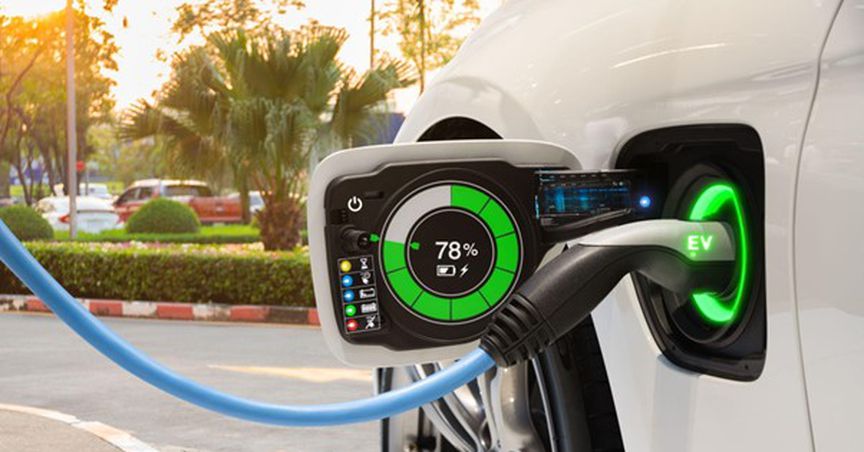
With the rising fuel prices, electric vehicles (EVs) have been gaining much interest. More people are now considering switching to EVs as they are more economical than internal combustion engines and cause significantly less environmental damage. Due to the rising interest, manufacturers are also focusing on EVs.
The shift to EVs is also being promoted to achieve the country's net-zero targets by 2050. More EVs on UK's roads mean the country would reach its decarbonisation goals in time.

©2022 Kalkine Media®
Challenges for the EV market
While EVs have many benefits, they have their fair share of challenges. Several carmakers are planning to switch to zero-emission vehicles, but only a few are progressing in that direction. In May, a report by think tank InfluenceMap claimed that just two manufacturers, Tesla and Mercedes-Benz, are on the path to reaching the net-zero goals. All of Tesla's vehicles produce zero emissions, while 56% of Mercedes-Benz's vehicles will be battery-powered by 2029. On the other hand, car manufacturers including Hyundai, Honda, Nissan, Toyota, and General Motors are unable to keep pace with the transition to zero-emission vehicles.
Another challenge is the fear that the shift to EVs may risk employment in the automobile sector. In June, a joint report by the Society of Motor Manufacturers and Traders (SMMT) and services firm PwC claimed that the shift would put thousands of jobs at risk.
The report warned that the transition to EVs is estimated to create about 10,000 jobs, while petrol and diesel car manufacturing has about 22,000 jobs directly linked to it. This means that thousands of jobs are at risk, as electric cars are considered less complicated to engineer compared to petrol and diesel cars, the report claimed. It added that the workers need to be re-trained as not all skills are transferable.
However, despite the challenges, the demand for EVs has been rising, and EVs are likely to take over internal combustion engines soon.
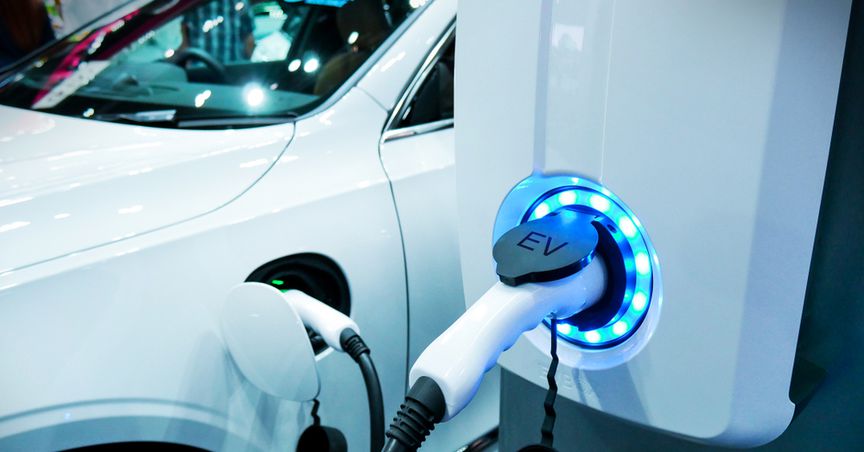
Image source: buffaloboy, Shutterstock.com
In the wake of this information, let us check out some London-listed stocks related to the EV sector and analyse their investment prospects.
AFC Energy Plc (LON: AFC)
AFC Energy manufactures alkaline fuel cells to generate clean energy using hydrogen for off-grid power operators. The AFC stock holds a market cap of £208.51 million. The stock hasn't performed well in the past year, and its value has depreciated by more than half. The EPS also stands in the negative territory at -0.01. As of 11:07 am GMT+1, the share traded at GBX 27.70, down 2.33%.
Ceres Power Holdings plc (LON: CWR)
The fuel cell technology and engineering firm focus on developing power generation and hydrogen tech. The company is listed on the FTSE AIM UK 50 Index, with a market cap of £1,149.43 million. Its 52-week return stands in the negative territory at -44.89%, and the year-to-date or YTD return is at -37.89%. With a Relative Strength Indicator of (RSI) of 51.19, the stock was trading at GBX 623.80, up 3.97% as of 11:16 am GMT+1 on 23 August.
AMTE Power plc (LON: AMTE)
Shares of the lithium-ion battery cells manufacturer rallied nearly 6% on Tuesday after it announced its operational and trading update for the year ended 30 June 2022. It also revealed its plans for a new, state-of-the-art 0.5GWh MegaFactory in Dundee, Scotland, which would be ready within three years. Shares of the AMTE were trading at GBX 98.00 as of 11:22 am GMT+1. The FTSE AIM All-Share constituent has a market cap of £32.60 million, and its 12-month return currently stands at -53.81%.
Pod Point Group Holdings PLC (LON:PODP)
The company provides EV charging solutions and has shipped over 175,000 EV charge points in the UK so far. It develops, installs, and operates electric vehicle charging stations for residences, workplaces or commercial organisations. With a market cap of £131.01 million currently, the stock is listed on the FTSE All-Share index. Over the past few months, the stock has seen a sharp decline, and its year-to-date return currently stands at -69.53%. Shares of the company were trading 0.12% lower at GBX 85.00 as of 11:47 am GMT+1 on Tuesday.
Saietta Group plc (LON:SED)
Saietta Group is a multinational engineering firm that designs and develops complete powertrains for electric vehicles. The company made its London debut last year, and the stock price has slumped over 43% over the past year. The 12-month return currently stands at -33.95%.
Note: The above content constitutes a very preliminary observation or view based on market trends and is of limited scope without any in-depth fundamental valuation or technical analysis. Any interest in stocks or sectors should be thoroughly evaluated taking into consideration the associated risks.
