
 AUS
AUS
 NZ
NZ
 UK
UK
 CA
CA
 USA
USA
 IND
IND






Highlights
Tullow Oil operates in the global oil and gas exploration sector and forms part of the FTSE All-Share Index.
Activity includes field development, drilling operations, energy-distribution systems and international project coordination.
The organisation maintains a presence across multiple regional basins, supported by supply-chain integration and sustainability initiatives.
A comprehensive review of Tullow Oil (LSE:TLW), covering exploration programmes, production networks, environmental initiatives and alignment with the FTSE All-Share Index.
Tullow Oil (LSE:TLW) operates in the international oil and gas exploration and production sector, managing field developments, drilling campaigns, geological assessment, subsea operations and energy-distribution pathways. As a constituent of the FTSE All-Share Index, the company contributes to the broader FTSE environment through its upstream resource activity and long-standing involvement in energy-focused markets. The organisation’s work spans seismic interpretation, reservoir modelling, multi-basin exploration, production optimisation, logistical coordination and environmental-management frameworks.
Its portfolio incorporates operations across African regions and additional international territories, supported by expertise in offshore engineering, reservoir evaluation, drilling-technology application and supply-chain management. The organisation collaborates with governments, regulatory bodies, community representatives, engineering contractors and maritime partners to sustain production stability and ensure responsible operational practice.
Industry relevance positions Tullow Oil within broader market narratives involving exploration firms, production entities, energy distributors and commodity-linked companies. These entities collectively influence market sentiment, international activity cycles and resource-linked discussions across the global energy sector.
Exploration Activities, Subsurface Assessment and Drilling Frameworks
Tullow Oil (LSE:TLW) conducts broad exploration programmes designed to identify hydrocarbon reservoirs and understand subsurface behaviour within targeted basins. The exploration process begins with seismic-survey acquisition, where geoscientists gather deep subsurface images using advanced wave-reflection technology. These images allow teams to examine geological layers, structural traps, fault systems, stratigraphic indicators and reservoir potential.
Subsurface teams model basin behaviour through reservoir simulations, identifying porosity trends, permeability characteristics, fluid distribution, reservoir continuity and pressure conditions. Geological mapping helps evaluate sedimentary histories, tectonic influences and energy-generating formations.
Exploration wells are planned using directional techniques, drilling-fluid strategies, casing designs and engineering analysis. Safety and compliance teams verify all operational frameworks before drilling begins. Drilling crews manage rig installations, bit selection, mud weight regulation, pressure control and core-sample collection during exploratory phases.
If exploration outcomes demonstrate favourable reservoir characteristics, the organisation may progress to appraisal and development planning. Appraisal wells confirm reservoir boundaries, fluid composition, well spacing considerations, compartmental behaviour, productivity potential and field geometry.
Environmental-impact assessments remain central to exploration practice. Marine ecosystems, coastal regions, wildlife patterns, water conditions and seabed characteristics undergo scientific evaluation to ensure operational compatibility.
Through these activities, Tullow Oil’s operations align with the broader organisations referenced in categories connected with FTSE all share classifications, reflecting its presence in UK-linked equity landscapes.
Production Operations, Midstream Integration and Energy Distribution
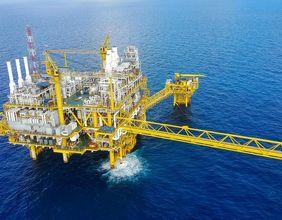
Tullow Oil (LSE:TLW) manages production systems that connect offshore fields and onshore facilities to international energy-distribution channels. Production platforms incorporate equipment such as subsea trees, manifolds, flowlines, risers, floating production vessels, processing units and gas-handling systems.
Operational engineers oversee the separation of hydrocarbons, stabilisation processes, gas treatment, liquid management, crude preparation, reinjection systems and production-flow regulation. Real-time digital tools allow continuous monitoring of pressure, flow behaviour, temperature variation, equipment integrity and pipeline stability.
Midstream integration supports the safe and efficient transportation of hydrocarbons to export terminals, refinery facilities and operational storage points. Export infrastructure includes metering stations, storage tanks, maritime-loading systems, tanker-coordination networks and port-access frameworks.
Energy-delivery routes span global shipping networks, marine channels, pipeline grids and storage hubs. International partnerships help ensure that supply flows align with industrial requirements and contractual arrangements.
Supply-chain and procurement teams coordinate materials, equipment components, rig tools, machinery parts, chemical supplies, subsea technology, safety gear and operational consumables. These teams work across global networks to maintain continuity in all field operations.
Many energy-sector companies included in discussions of FTSE dividend stocks share similar operational characteristics, particularly in relation to production maturity and international infrastructure involvement.
Maintenance teams conduct inspections for corrosion, structural stability, joint security, vibration influence, valve capacity, mechanical integrity, emergency-shut-down readiness and pipeline condition. These inspections reinforce operational resilience while supporting safety requirements and regulatory adherence.
Energy-Market Dynamics, Geopolitical Elements and Sector Conditions
Tullow Oil (LSE:TLW) operates within a global landscape influenced by energy demand, geopolitical conditions, maritime arrangements, industrial consumption, weather patterns and environmental policies. Energy-market behaviour reflects international production levels, global supply stability, shipping-route reliability, strategic partnerships and sector-wide operational cycles.
Industrial consumption drives energy usage across manufacturing, transportation, agricultural activity, construction, logistics networks and electricity generation. Seasonal conditions influence consumption patterns, shifting regional demand profiles during periods of heating or electricity-use variation.
Geopolitical elements shape project licensing, regional policy development, export conditions, maritime access and trade relationships. Energy-sector organisations adapt operational strategies based on international agreements, regulatory reforms and evolving commercial frameworks.
Environmental expectations also affect exploration and production strategy. Regulatory bodies oversee emissions compliance, water-management standards, habitat protections, flaring guidelines, waste-handling rules and operational-reporting responsibilities.
Shipping networks form a central component of international distribution for liquid hydrocarbons. Weather-related disruptions, port-capacity challenges, route closures, maintenance programmes and maritime-security considerations all influence the timing of deliveries.
Broader market narratives involving energy-linked companies frequently incorporate keyword-related contexts such as Indexftse Ukx due to the UK’s integrated market environment, even when companies fall outside the FTSE One Hundred classification.
Technological developments continue to shape the industry. Innovations in drilling efficiency, seismic-data resolution, reservoir-modelling accuracy, inspection robotics, offshore safety systems and automated production tools contribute to improved operational outcomes.
Supply-chain disruptions, labour-market tightening, global-shipping delays, customs clearance processes and international regulatory changes influence material availability and operational planning. Organisations respond through logistical diversification, storage expansion, contingency strategy and supply-chain restructuring.
Sustainability Pathways, Environmental Responsibility and Corporate Governance
Tullow Oil (LSE:TLW) incorporates sustainability considerations into operational frameworks through environmental protection measures, emissions-reduction initiatives, responsible-resource strategies, biodiversity planning and water-management systems. Sustainability programmes aim to align operations with contemporary environmental expectations and international regulatory directives.
Key sustainability-focused areas include:
-
reduced-flaring practices
-
community-engagement programmes
-
responsible drilling methods
-
spill-prevention measures
-
digital monitoring frameworks
-
advanced emissions-tracking systems
-
habitat-protection integration
-
waste-management improvements
-
carbon-strategy planning
Environmental-monitoring systems track air emissions, water usage, marine conditions, environmental-impact indicators and operational footprints across each project region.
Corporate governance structures reinforce ethical conduct, transparent communication, regulatory compliance, board oversight, safety-driven leadership, risk-framework management and responsible-operations culture. Governance teams manage reporting obligations, stakeholder communication and operational-integrity standards.
Community projects involve partnerships with regional organisations, educational institutions, environmental bodies and local authorities. These partnerships aim to support skills development, infrastructure enhancement, employment access and responsible corporate citizenship.
Energy-transition strategies incorporate lower-carbon project assessments, cleaner-technology adoption, renewable-integration considerations, carbon-capture feasibility and operational-efficiency improvements.
Digital transformation enhances operational-responsibility frameworks using predictive-maintenance tools, sensor-based monitoring, automated reporting systems, remote-inspection technologies and real-time performance dashboards. Through these developments, Tullow Oil remains a notable participant in discussions involving evolving energy-sector expectations and broader market trends within the FTSE environment.
