
 AUS
AUS
 NZ
NZ
 UK
UK
 CA
CA
 USA
USA
 IND
IND

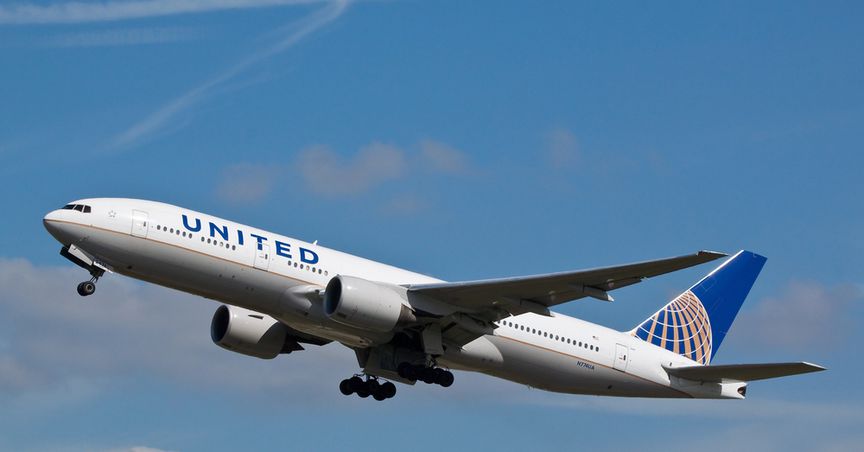




Source: Shutterstock
Summary
- Federal Aviation Administration (FAA) has ordered inspection of all Boeing 777 planes.
- All Boeing 777 planes powered by Pratt & Whitney engines to be inspected.
- Order comes days after a United 777 flight in Denver faced engine failure.
The Federal Aviation Administration (FAA) has called for a detailed inspection of all Boeing Co (LON: BOE) 777s that are powered by Pratt & Whitney PW4000 engines before they can fly again. The order comes days after a United flight in Denver faced an engine failure right after takeoff. The PW4000 engines are used on less than 10 per cent of Boeing’s global fleet.
The FAA has ordered operators to do a thermal acoustic image inspection of the titanium blades placed in front of the engine. A thermal inspection lets inspectors notice cracks that maybe present inside the titanium blades that are otherwise not visible.
Also read: Boeing to pay $2.5 Billion to Settle Charges in 737 MAX Crash probe
The FAA said that the frequency of the blade inspections is not being increased yet, but it would be reviewing the results gradually and it might then come up with a directive on a new inspection interval. The order said that the FAA would revise its directive after getting the initial results and other data it receives from the investigation.
Following the incident, several Boeing 777s worldwide have either been temporarily grounded, withdrawn from service, or banned. Like South Korea’s transport ministry has ordered that all airlines need to inspect the blades every 1,000 cycle. One cycle represents the time taken for one takeoff and landing.
The National Transportation Safety Board (NTSB), which is investigating the Denver mishap, said that metal fatigue led to the crack in a fan blade in the engine. One blade snapped and it dislocated another blade and damaged parts of the engine. A neighbourhood was pelted with debris but there were no casualties on the ground and the plane managed to land safely.
Also read: The Very First Boeing 737 Max Commercial Flight Takes Off In Nearly Two Years!
Robert Sumwalt, chairman of NTSB, had said on Monday that preliminary investigations had found that the broken blade fractured the blade next to it, which resulted in the engine breakage. He also said that the first broken blade was flown to PW headquarters in a private jet for investigation. He said that the NTSB is trying to get hold of the problem so that such mishaps can be avoided in future.
Also read: A new Boeing crash. What’s ailing the Indonesian aviation industry?
The FAA order comes after repeated engine failures of similar nature. In 2018, in a United 777 flight with the same P&W engine faced a fan blade failure. In another incident in December 2020, a Japan Airlines 777 saw a fan blade breakage.
In a statement, P&W said that to conduct the inspection, the fan blades would have to be taken to the company’s FAA-certified repair station to look into the problem. The company also said that it was coordinating with Boeing, regulators, and airline operators for the required inspection.
Boeing, on its part, said that it would work together with its customers to adhere to the FAA guidelines. The United Airlines said that it would go through the process required to make sure that all the 52 of its aircraft impacted by the directive meet the necessary safety standards.
