
 AUS
AUS
 NZ
NZ
 UK
UK
 CA
CA
 USA
USA
 IND
IND






Summary
- British Airways has planned to retire its entire Boeing 747 'Jumbo Jet' fleet because of the Coronavirus impact
- International Consolidated Airlines Group (IAG) had reported a net loss of 1.68 billion Euros ($1.8 billion) in the three months ending March 2020
- The global aviation revenue passenger-kilometres (RPKs) industry-wide decreased by 91 per cent on year-on-year (YoY) basis in May 2020
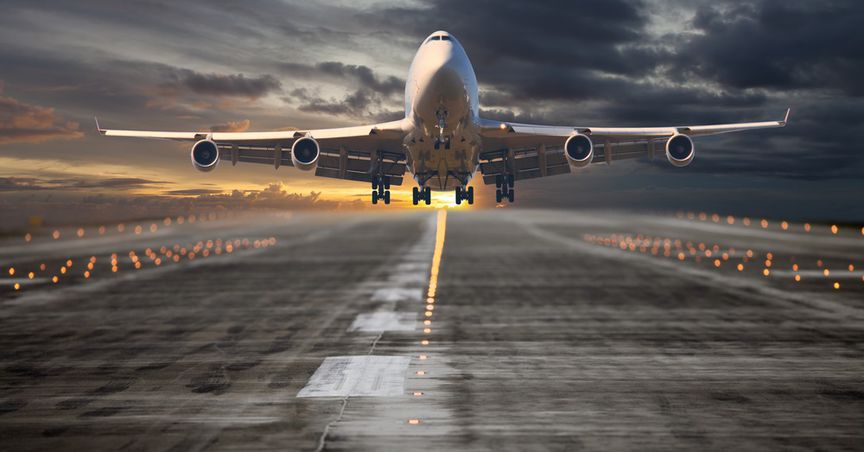
On 17 July 2020, the United Kingdom's flag carrier British Airways decided to retire its entire fleet of Boeing 747 Jumbo Jets, because of a huge hit caused to international air travel business, due to the COVID-19 pandemic. A British Airways spokesperson confirmed that the company has proposed to retire the entire 747 fleets with immediate effect, representing about 10% of the company’s total aircraft. He added that because of the COVID-19 global pandemic which has led to a downturn in the travel, the magnificent 'queen of the skies' will never be able to operate again and provide its commercial services to the British Airways.
Boeing launched its 400-passenger 747 in the year 1970, and celebrated its 50th anniversary in February 2019. The aircraft has dominated the global air travel and cargo over more than five decades. British Airways currently flies more number of planes than any other airline, with a fleet of 31 Jumbos in its service. The British carrier is now turning towards more modern and fuel-efficient models such as Boeing's 787 and the Airbus A350, aiming to achieve net-zero carbon emissions by the year 2050. The Boeing 747 Jumbo Jet was earlier due to retire in 2024.
In May 2020, International Consolidated Airlines Group (IAG), the owner of British Airways had reported a net loss of 1.68 billion Euros ($1.8 billion) in the three months to the end of March 2020.
During June 2020, the British carrier had indulged into fund-raising programs by selling-off the artworks of Damien Hirst, Bridget Riley, and Peter Doig, which was estimated to be worth millions of pounds. Boeing and British Airlines had announced to lay-off 16,000 and 12,000 workers respectively.
Aviation Industry
The International Air Transport Association (IATA) expects the total revenue loss of the global aviation industry between $63 billion to $113 billion (which is between 11 and 19 percent of the total industry revenue) during 2020. This is almost similar to what was experienced during the global financial crisis. Though companies are trying to cut their capacities and total costs, but this is not going to be sufficient, and government support would clearly be required.
The passenger airline segment is the most affected segment of the British aviation industry, among all the sections of the airline sector. Since the airline companies had come to a halt during the lockdown restrictions, they are facing financial crunch because of the high maintenance cost involved. A huge cost is being incurred, and the revenue generated, on the other hand, is negligible. Hence they are cutting down their workforce. Recently, on 30 June 2020, Airbus announced its plans to cut a total of 15,000 jobs. Similarly, EasyJet, Ryanair, and Rolls Royce have also announced job cuts.
IATA Market Analysis of Global Air Passenger Data: In a report released by IATA on 7 July 2020, although the global air travel demand declined to its lowest amidst COVID-19, during the month of May 2020, the annual contraction was marginally smaller than that recorded during the last month of April. A decrease of 91 per cent year-on-year in May 2020 was witnessed in the revenue passenger-kilometres (RPKs), which declined by 94 per cent in April.
Though the aggregate domestic demand (on a global level) was still down by almost 8 per cent year-on-year in May 2020, it slightly improved because of the developments in the domestic markets around the world. International RPKs slumped to nearly 100 per cent year-on-year for the second consecutive month in May 2020. Global passenger demand fell faster than capacity, resulting in the world industry-wide load factor to decline by 31ppts to 50.7 per cent in May 2020, in contrast to its 2019 level.
Stock performance
We have discussed the stock performance of some of the prominent listed companies in the aerospace industry below:
International Consolidated Airlines Group (LON:IAG) is an airline company operating in Ireland, Spain, and the UK. IAG stocks were trading at GBX 219.80 as at 11.13 AM on 17 July 2020, down by 1.87 per cent against its previous closing of GBX 224.10. The stocks 52 weeks low/high range was recorded at GBX 168.20/671.00. The market capitalization (Mcap) of the company was reported at £4,451.21 million, while it has given a negative return of 64.78 per cent on a year to date basis.
Easyjet PLC (LON:EZJ) is a low-cost European airline company operating in Ireland, Spain, Italy, Germany, Netherlands, the UK, and many other countries. EZJ stocks were trading at GBX 637.60 as at 11.22 AM on 17 July 2020, down by 1.69 per cent against its previous closing of GBX 685.20. The stocks 52 weeks low/high range was recorded at GBX 475.00/1,552.00. The market capitalization (Mcap) of the company was reported at £3,129.65 million, while it has given a negative return of 52.08 per cent on a year to date basis.
BAE Systems PLC (LON: BA.) is a defence, security and aerospace company operating in Saudi Arabia, Australia, the UK, the US, Sweden, and other countries. BA. stocks were trading at GBX 486.90 as at 11.38 AM on 17 July 2020, up by 2.10 per cent against its previous closing of GBX 477.30. The stocks 52 weeks low/high range was recorded at GBX 438.90/669.00. The market capitalization (Mcap) of the company was reported at £15,348.85 million, while it has given a negative return of 16.85 per cent on a year to date basis.
Ryanair Holdings PLC (LON:RYA) is an ultra low-fare scheduled passenger airline company operating in the UK, Morocco, Continental Europe, Ireland, and Israel. It is a holding company of Ryanair Limited. RYA stocks were trading at GBX 11.26 as at 11.46 AM on 17 July 2020, down by 1.79 per cent against its previous closing of GBX 11.47. The stocks 52 weeks low/high range was recorded at GBX 8.14/16.10. The market capitalization (Mcap) of the company was reported at £11,337.53 million, while it has given a negative return of 23.18 per cent on a year to date basis.
As a summary, the British Airways has proposed to retire the entire 747 fleets with immediate effect, representing about 10% of the company’s total aircraft. The move was earlier planned to be taken later in the year 2024. The IAG group had reported a net loss of 1.68 billion Euros for Q1 2020. The global airlines industry is undergoing severe financial stress, and seeks government support to come out of the red.
