
 AUS
AUS
 NZ
NZ
 UK
UK
 CA
CA
 USA
USA
 IND
IND




_06_03_2026_21_29_34_162131.jpg)

Highlights
Helium One operates in the natural resources and industrial gas exploration sector.
The company focuses on helium project development in East Africa.
FTSE AIM All-Share inclusion reflects its position within the UK specialist resources market.
Helium One within the helium exploration sector, highlighting project development, industrial relevance, FTSE AIM All-Share inclusion, and UK market context.
Helium One operates within the natural resources exploration sector, concentrating on helium, a specialised industrial gas with essential applications across healthcare, scientific research, aerospace, and advanced manufacturing. This sector differs from traditional mining and hydrocarbon extraction due to helium’s unique physical characteristics and its use in precision-driven environments where safety and stability are critical.
Helium exploration forms a niche segment of the broader extractive industries. Unlike oil, gas, or metals, helium is valued for its inert properties and extremely low boiling point, making it irreplaceable in certain industrial and medical processes. Companies operating in this space contribute to global supply chains that support magnetic resonance imaging, semiconductor fabrication, and controlled laboratory environments.
Within the United Kingdom equity market, Helium One is listed on the Alternative Investment Market and is included in the FTSE AIM All-Share. This index groups AIM-listed companies across a wide range of sectors, offering structural classification rather than directional commentary. Resource exploration companies add commodity-focused exposure to the wider FTSE market structure.
The helium exploration sector operates within a framework shaped by geological assessment, regulatory oversight, and infrastructure development. This environment provides the context for public disclosures related to Helium One’s project activities.
Helium Exploration Activities and Project Development Focus
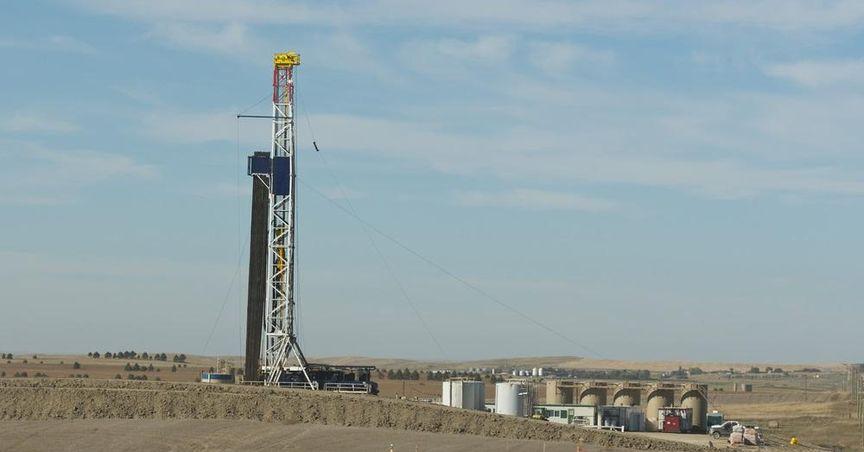
Helium One’s operations centre on the exploration and appraisal of helium-bearing geological systems located in East Africa. The region is recognised for its geological features associated with naturally occurring helium accumulations. Exploration programmes focus on identifying subsurface structures capable of hosting commercially relevant helium concentrations.
Helium exploration differs from conventional energy exploration due to the way helium migrates and accumulates within geological formations. Exploration programmes typically involve surface sampling, geochemical surveys, and targeted drilling designed to evaluate reservoir characteristics. These activities require specialised technical expertise and careful environmental management.
Project development within helium exploration follows a staged process that includes early-stage evaluation, appraisal, and infrastructure preparation. Commissioning activities relate to preparing processing systems and operational facilities necessary for advancing a project through defined development phases. Each stage is conducted within regulatory frameworks governing environmental protection and operational safety.
Operational updates related to project milestones are communicated through formal channels in line with AIM disclosure requirements. These updates provide factual information regarding project status without extending into forward-looking commitments.
Industrial Importance of Helium and Global Supply Context
Helium plays a critical role across multiple industrial and scientific applications. Its non-reactive nature makes it suitable for use in environments where contamination or chemical interaction must be avoided. Medical imaging systems, scientific laboratories, and advanced manufacturing processes rely on helium for cooling and stabilisation.
The global supply of helium is constrained by its geological rarity and extraction complexity. Unlike many industrial gases, helium cannot be synthetically produced at scale, reinforcing reliance on natural sources. Exploration companies contribute to identifying and developing new supply locations to support global industrial needs.
Helium production often requires specialised processing and transportation due to its physical properties. This places helium exploration within an international supply chain that connects remote production sites with end-use markets worldwide. Companies involved at the exploration stage form the upstream foundation of this supply network.
Within the broader natural resources sector, helium exploration represents a highly specialised segment driven by industrial demand rather than consumer consumption. This distinction shapes operational priorities and market positioning.
FTSE AIM All-Share Representation and UK Market Structure
Index membership provides context for understanding a company’s position within the UK equity market. Helium One’s inclusion in the FTSE AIM All-Share places it among a broad group of AIM-listed companies operating across technology, healthcare, resources, and industrial services.
The FTSE AIM All-Share integrates companies of varying sizes and operational stages, offering a comprehensive view of the AIM marketplace. Resource exploration companies within this index contribute exposure to commodities and upstream development activities, complementing representation from innovation-led and service-oriented businesses.
AIM indices operate alongside larger benchmarks such as the FTSE 100 and the FTSE 350, which track established corporates listed on the main market. Through this layered structure, AIM-listed companies are connected to the wider UK equity landscape while retaining a distinct classification aligned with specialist and developing business models.
Within the broader FTSE framework, the AIM All-Share highlights the diversity of companies contributing to the UK market, ranging from early-stage exploration to mature operating businesses.
Capital Allocation and Resource Sector Characteristics
Capital allocation within the natural resources exploration sector reflects the requirements of geological evaluation, technical studies, and regulatory compliance. Companies operating in this space allocate financial resources toward exploration programmes, project preparation, and operational readiness rather than income distribution.
Within the UK equity landscape, income-focused discussions often reference FTSE dividend stocks, which generally include mature companies with established cash generation. Early-stage exploration companies typically exhibit different financial characteristics due to their focus on advancing projects through development stages.
Helium One’s financial communications follow governance and disclosure standards applicable to AIM-listed companies. These communications provide transparency regarding operational progress and corporate matters without extending into commitments about future outcomes.
The resource exploration sector is characterised by extended project timelines and technical complexity. This context influences how capital is deployed and how information is communicated within public markets, reinforcing the importance of regulatory alignment and clear factual disclosure.
