
 AUS
AUS
 NZ
NZ
 UK
UK
 CA
CA
 USA
USA
 IND
IND

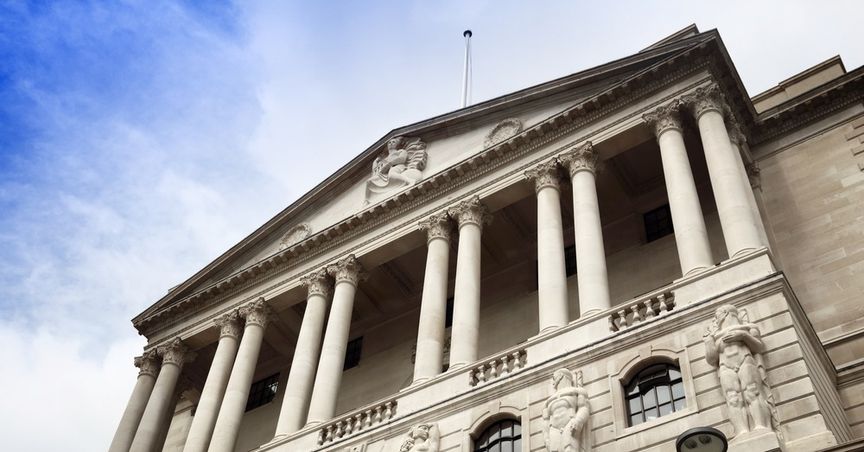





Amidst all the massive stimulus packages and unprecedented liquidity inflow being rolled out by the government and the Bank of England into the British Economy, there is one question that creeps around is what if all this money flow leads to a situation of hyperinflation, culminating in a massive crash of the economy and ending up doing more damage than doing any good. Today we will dwell into that issue from two angles one from the point of the demand and supply dynamics that are at play in the country during the current crisis and the other from the point of view of the overall economy of United Kingdom. The circumstances emanating out of the coronavirus pandemic are unique and provide a rare opportunity to analyse the important economic concepts at extreme ends. The pandemic which is being termed as the worst in recent history has brought the world to a grinding halt in just a few months with the IMF already declaring that the world economy is in a recession that is worse than the situation of the 1930’s.
The current demand-supply dynamics in the UK – In the times of inflation or hyperinflation, supply is unable to meet the demand side forces leading to an increase in prices of commodities, eventually leading to a loss of purchasing power of the people and the currency of the country losing its value. During the current period, the economy is experiencing a demand-side shock because of which producers and suppliers are being forced to curtail production and supplies. One of the primary elements in any country’s basket of commodities that are used for the calculation of consumer price index is energy costs, comprising of both electricity and other transportation fuels. In the past couple of months, the demand for electricity in the United Kingdom has dropped drastically on account of closure of factories, offices and other commercial establishments. The same is also the case with gas, petrol and diesel which has also seen a massive reduction in demand, as the number of vehicles plying on the roads of the country has suddenly come to a drastic low. The Airline industry is almost at a standstill leading to an almost nil demand for aviation turbine fuel. All these factors have led to a significant fall in wholesale prices of these commodities. Except for food and sanitary products, every other industry has been seen a significant fall in demand. In economics, when supply is not able to meet up with demand while other things remain the same, it leads to inflation. In the present situation, the supply factors are fully capable of meeting the demand forces, but the problem is on the other side of factors which are creating hindrances in the full play of demand and supply semblance. If one takes a closure look at the finer details of most of the stimulus that has been rolled out till now, they have a common central agenda, benefiting businesses, which would ensure no jobs are lost during this period so that the demand factors in the country don’t shrink. However, the factor that can put all these efforts being made by the government in jeopardy is the extension of the lockdown period, the longer the lockdown period continues, the more the number of people will report unemployed, and weaker the demand-side forces will become.
The stage of the British Economy – The British Economy is considered as an advanced economy. The characteristics of an advanced economy are near full employment levels, near balanced budget and private investment levels, contributing more towards the growth in the country than is caused by public expenditure. While all the above factors are present, the GDP of the country grows at a lower rate. In these countries, an increase in public expenditure levels will lead to an immediate increase in GDP growth as well as inflation levels, as the country is operating at full employment levels. In contrast, an underdeveloped economy or an emerging economy is the one which is not operating at full employment levels and generally resort to high public expenditure levels to bring more and more of its citizens into employment. Hence, a phenomenon of hyperinflation is observed more in an underdeveloped economy where an increase in public expenditure levels are weakly corelated with the GDP growth levels.
So, what happens to an advanced economy in a situation like the present pandemic threat? The most critical eventuality in such a situation is the fall in employment levels in the economy. Now since the economy is at full employment levels and growing at a low rate, a fall in employment levels will lead to a fall in demand forces leading to scaling down of the supply factors and ultimately resulting in a recession kind of scenario. Emerging economies, on the other hand have high public expenditure levels and high growth levels and do not risk going into a recession as much as a developed country would in such situations. This is the reason why the role of stimulus packages becomes so accentuated for these countries. Secondly, the British pound is one of the strongest currencies in the world being traded aggressively in international markets and is unlikely to lose its value to such an extent that it would lead to hyperinflationary conditions in the country. The British economy is very well integrated with the world economy and is a major exporter of high value good and services to the rest of the world. Given the stage of the British economy the stimulus spending’s are directed more towards protection of employment levels and business activity levels and is less likely to result in hyperinflationary conditions.
The government, on its part, is also taking appropriate actions to stop sellers from charging exorbitant prices from ordinary citizens, taking advantage of the situation. It has also asked banks and other utility services providers to forgo payments for the periods that businesses are suffering in the country due to the pandemic. These and many other initiatives being taken will lead to a situation when costs do not rise in the country and business are able to easily recoup in the aftermath of the pandemic.
Disclaimer
The website has been prepared for informational purposes only and is not intended to be used as a complete source of information on any particular company. The above article is NOT a solicitation or recommendation to buy, sell or hold the stock of the company (or companies) under discussion. Kalkine does not in any way endorse or recommend individuals, products or services that may be discussed on this site.
