
 AUS
AUS
 NZ
NZ
 UK
UK
 CA
CA
 USA
USA
 IND
IND






Highlights
- Transnational rail network connects major North American markets
- Recent revisions by financial institutions reflect evolving perspectives
- Operational scale supported by integrated freight and logistics services
Canadian Pacific Kansas City’s presence in the S&P TSX 60 Index reflects its integrated rail network, cross-border logistics operations, and role in North America’s industrial transportation landscape.
The industrial transportation sector forms a significant component of the S&P TSX 60 Index, encompassing companies that provide essential infrastructure for freight movement and supply chain connectivity. Canadian Pacific Kansas City operates within this space as a major railway network linking Canada, the United States, and Mexico. The company’s system spans key trade corridors, enabling the movement of goods across a unified rail line that connects ports, manufacturing hubs, and distribution centers.
Transnational Rail Network and Operations
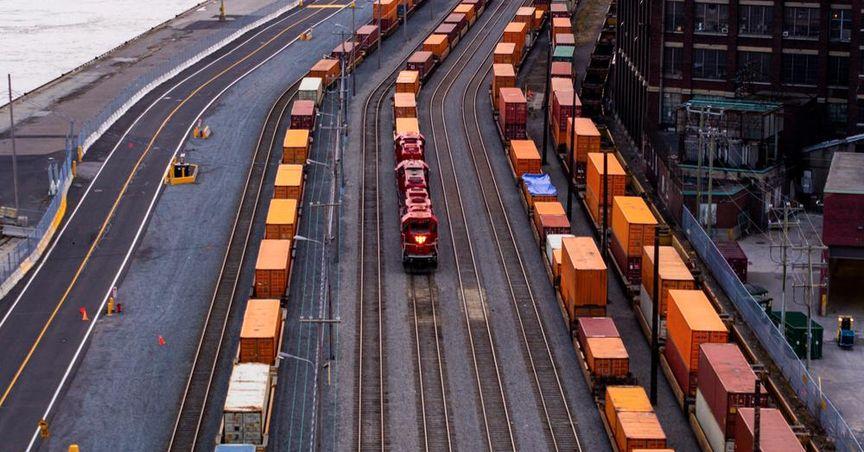
Canadian Pacific Kansas City (TSX:CP) is recognized for its single-line rail network that integrates operations across multiple countries. This structure allows freight to move seamlessly across borders without requiring transfers between separate rail systems. The network connects western and eastern regions of Canada with central areas of the United States and extends into Mexico, forming a continuous transportation corridor.
Freight services encompass a wide range of commodities, including agricultural products, energy resources, industrial materials, and consumer goods. The company also provides intermodal services, combining rail transport with trucking to facilitate efficient movement between ports and inland destinations. This integrated model supports supply chain continuity for various industries.
Market Developments and Institutional Updates
Recent updates from financial institutions have included revisions to valuation benchmarks for Canadian Pacific Kansas City (TSX:CP). Several firms have adjusted their expectations, reflecting changes in broader market conditions and company-specific developments. These revisions have generally trended upward, indicating evolving perspectives on the company’s operational performance and market positioning.
The broader industrial sector often responds to factors such as trade flows, economic activity, and infrastructure demand. Within this context, railway operators are evaluated based on network efficiency, service reliability, and capacity utilization. The adjustments in institutional views align with ongoing developments in these areas.
Trading Activity and Financial Indicators
Market activity surrounding the company’s shares has shown active participation, with trading volumes reflecting consistent engagement. Financial indicators such as valuation multiples, balance sheet structure, and operational metrics provide insight into the company’s scale and financial framework.
Revenue generation is closely tied to freight volumes across different commodity groups. Earnings performance reflects operational efficiency, network utilization, and cost management. The company’s integrated rail system supports consistent throughput, contributing to steady financial outcomes within the transportation sector.
Strategic Position in North American Rail
The North American rail industry includes several major operators, each managing extensive networks across different regions. Canadian Pacific Kansas City distinguishes itself through its transnational reach, which enables direct service across three countries. This structure reduces the need for interline transfers and enhances route efficiency.
Reference to the s and p tsx 60 within this context highlights the company’s presence among large-cap entities in Canada. Inclusion in this index reflects scale, market relevance, and participation in key sectors such as industrial transportation. Companies within this group contribute to national and cross-border economic activity through infrastructure and logistics services.
Supply Chain Integration and Logistics
Supply chain integration remains central to the company’s operations. Rail transport serves as a backbone for long-distance freight movement, while intermodal connections extend service to final destinations. Coordination between rail terminals, ports, and distribution centers supports efficient cargo handling and transit.
Technological systems are used to monitor network performance, manage scheduling, and optimize resource allocation. These systems contribute to operational consistency and enable the handling of diverse freight categories across the network.
Industry Context and Operational Environment
The rail transportation sector operates within a dynamic environment influenced by trade patterns, regulatory frameworks, and infrastructure development. Demand for freight services is linked to industrial activity, agricultural output, and consumer goods distribution.
Canadian Pacific Kansas City (TSX:CP) functions within this landscape by maintaining a network that supports cross-border commerce and domestic distribution. Its operations align with broader trends in supply chain integration and logistics efficiency, reinforcing its role within the industrial sector.
Corporate Activity and Share Movements
Recent disclosures have included transactions involving shares by individuals associated with the organization, reflecting routine corporate reporting requirements. Such activity forms part of standard governance practices and provides transparency regarding ownership changes.
Market movements have also reflected broader sector trends, with fluctuations influenced by external economic factors and company-specific developments. These patterns are typical within the transportation sector, where performance is closely tied to freight demand and operational conditions.
