
 AUS
AUS
 NZ
NZ
 UK
UK
 CA
CA
 USA
USA
 IND
IND

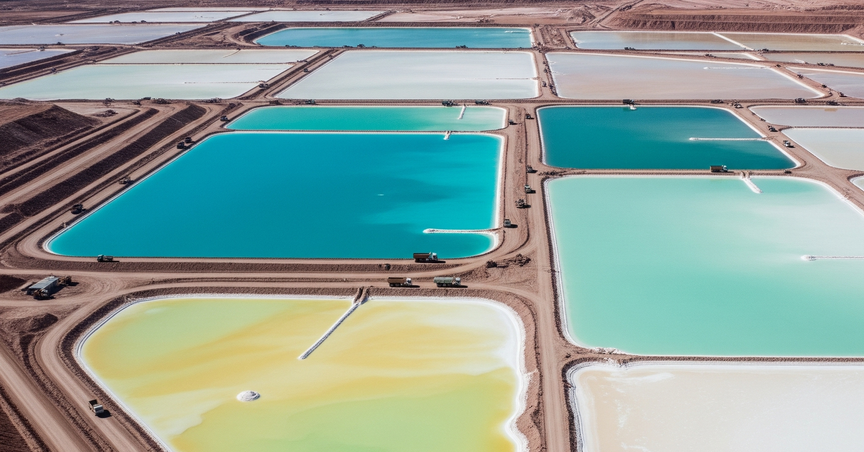



In the vast, ancient landscapes of Western Australia, a modern-day gold rush is underway. But this time, the treasure isn't a yellow metal; it's a silvery-white element, soft enough to be cut with a butter knife, yet powerful enough to fuel a global revolution. This is the story of lithium, the ultralight, highly reactive metal at the heart of the lithium-ion battery, and Australia's meteoric rise to become the world's undisputed leading producer. As the planet pivots towards an electrified future, powered by electric vehicles (EVs) and vast battery energy storage systems (BESS), the red dirt of the Australian outback has become ground zero for the energy transition.
This comprehensive exploration delves into the companies at the forefront of Australia's lithium stocks sector, the geological fortune that underpins their operations, the complex journey from hard rock to high-purity battery chemical, and the powerful market forces shaping the future of this critical industry.
A Geological Stroke of Fortune: Why Australia Dominates Lithium Production
Unlike the lithium "triangle" of South America (Chile, Argentina, and Bolivia), where the metal is predominantly extracted from underground brine reservoirs through a slow evaporation process, Australia's lithium wealth is locked away in hard-rock deposits of a mineral called spodumene. These deposits, primarily found in Western Australia, are hosted within pegmatites, which are igneous rocks formed from the slow crystallisation of magma.
This geological distinction is crucial. While brine evaporation is often cheaper, it can take months or even years to produce lithium. Spodumene mining, conversely, is a more traditional hard-rock mining process involving drilling, blasting, crushing, and processing. What it lacks in operational simplicity, it makes up for in speed and the quality of the final product. Australian spodumene concentrates are highly sought after because they provide a reliable and efficient feedstock for producing the high-purity lithium hydroxide required for the cathodes of modern, high-performance EV batteries. This has positioned Australia as the cornerstone of the global lithium supply chain.
Australia's rise has been nothing short of spectacular. From a niche industry a decade ago, it now accounts for nearly half of the world's total lithium production, a dominance built on a foundation of world-class assets, mining expertise, and proximity to the booming battery manufacturing markets in Asia.
The Titans of the Pilbara and Beyond: Profiling Australia's Key Lithium Miners
The Australian lithium landscape is a dynamic mix of established giants, ambitious mid-tiers, and speculative explorers. At the top of the food chain are a handful of companies that have defined the industry and are now shaping its future.
Pilbara Minerals (ASX:PLS): The Pure-Play Powerhouse
Arguably the most significant pure-play lithium company on the ASX, Pilbara Minerals is a global leader in the provision of lithium raw materials. Its 100%-owned Pilgangoora Project, located in Western Australia's resource-rich Pilbara region, is a behemoth. It is one of the largest independent hard-rock lithium operations in the world, comprising two processing plants—Pilgan and Ngungaju—that produce a highly sought-after spodumene concentrate.
Pilbara Minerals' story is one of rapid growth and strategic foresight. The company successfully navigated the volatile lithium price cycles of the late 2010s and emerged as a dominant force. A key part of its strategy has been the development of its Battery Material Exchange (BMX), an auction platform that has become a vital price discovery mechanism for the global spot market for spodumene concentrate. By selling a portion of its output on this platform, Pilbara Minerals gains real-time market insights and often achieves prices significantly higher than those secured through long-term contracts, maximising shareholder returns. With a clear pathway for staged expansions at Pilgangoora, the company is set to remain a critical node in the global supply chain for years to come.
Mineral Resources (ASX:MIN): The Diversified Giant with a Lithium Heart
Mineral Resources (MinRes) is a unique entity in the Australian resources sector. Led by the charismatic and entrepreneurial Chris Ellison, MinRes is a diversified mining services and production company with major interests in both iron ore and lithium. This diversification provides a level of financial stability and operational expertise that few pure-play companies can match.
MinRes's lithium business is structured around two world-class assets in Western Australia:
- Mt Marion: Operated in a joint venture with one of the world's largest lithium chemical producers, Jiangxi Ganfeng Lithium, Mt Marion is one of Australia's longest-running spodumene mines. MinRes provides its 'pit-to-port' mining services expertise, managing the entire operational chain.
- Wodgina: This is another tier-one asset, a massive, long-life mine also located in the Pilbara. MinRes operates Wodgina in a joint venture with Albemarle Corporation, the world's largest lithium producer. A key feature of this JV is the plan for downstream processing, with the partners developing lithium hydroxide plants in Australia.
MinRes's strategy is not just to dig and ship spodumene. Its vision extends to capturing more of the value chain by moving into the downstream production of high-value lithium battery chemicals. This vertical integration is a central pillar of its long-term ambition.
IGO Limited (ASX:IGO): The Strategic Battery Metals Investor
IGO is a modern mining company with a clear and focused strategy: to be a globally relevant supplier of metals critical for clean energy. After divesting its gold assets, IGO has doubled down on nickel, copper, cobalt, and, most significantly, lithium.
The company's entry into the lithium market was a game-changer. IGO formed a joint venture with Tianqi Lithium, a major Chinese lithium producer, to acquire a stake in the Greenbushes mine in Western Australia. Greenbushes is widely considered the largest, highest-grade, and lowest-cost hard-rock lithium mine on the planet. It has been in operation for decades and is the cornerstone of the global lithium hydroxide industry.
Through this joint venture, IGO also owns a stake in the Kwinana Lithium Hydroxide Refinery, located south of Perth. This state-of-the-art facility takes spodumene concentrate from Greenbushes and processes it into battery-grade lithium hydroxide, marking a crucial step for Australia in moving downstream and capturing more value from its resources. IGO's portfolio gives it exposure to both the best upstream asset in the world (Greenbushes) and the strategically vital downstream conversion process.
Arcadium Lithium (ASX:LTM): The Global Lithium Merger
Formed from the merger of equals between Australia's Allkem and America's Livent, Arcadium Lithium is a new, globally significant lithium chemical producer. The merger created one of the most vertically integrated and geographically diverse lithium companies in the world, with assets spanning the entire production spectrum.
From its Australian roots, Arcadium Lithium operates the Mt Cattlin spodumene mine in Western Australia. While not on the same scale as Pilgangoora or Wodgina, Mt Cattlin has been a consistent and reliable producer, providing crucial feedstock for the broader company.
However, the company's true strength lies in its diverse portfolio, which includes:
- Brine Operations in Argentina: Leveraging Allkem's deep expertise in South American brine projects.
- Downstream Conversion Facilities: Utilising Livent's decades of experience in producing a wide range of lithium chemicals, including hydroxide and butyllithium, in the US, China, and Argentina.
- Hard-Rock Projects in Canada: Providing a foothold in the burgeoning North American EV supply chain.
This strategic combination makes Arcadium Lithium a unique player, able to serve key markets in Asia, North America, and Europe from a diverse and resilient production base.
From Rock to Recharge: The Lithium Production Journey
The process of turning a chunk of spodumene-bearing pegmatite into the high-purity powder that goes into a battery cathode is a complex feat of engineering and chemistry.
- Mining and Crushing: It begins like most hard-rock metal and mining operations. The ore is drilled and blasted from open-cut pits. Massive trucks transport the rock to a primary crusher, where it is broken down into more manageable sizes.
- Concentration: The crushed ore is then fed into a processing plant, known as a concentrator. Here, a multi-stage process involving further crushing, grinding, and floatation is used to separate the spodumene mineral from the waste rock. The goal is to create a spodumene concentrate with a lithium oxide (Li₂O) content of around 6%. This concentrate is the primary export product for many Australian miners.
- Conversion (Downstream Processing): The spodumene concentrate is then shipped to a specialised chemical processing plant, often located overseas in China, but increasingly being built in Australia. This is the most complex and value-adding step. The concentrate is roasted and undergoes a series of chemical reactions to produce either lithium carbonate or lithium hydroxide. Lithium hydroxide is the preferred chemical for the latest generation of high-nickel content EV batteries, as it offers better performance and longevity.
Achieving the purity required for batteries—typically >99.5%—is technically challenging and energy-intensive. The push to build more of these conversion facilities, or "hydroxide plants," on Australian soil is a key focus for both the industry and the government, aiming to move the nation from being just a "rock-in-a-box" exporter to a key player in the high-value battery chemical market.
Market Dynamics: Riding the EV-Powered Supercycle
The fortunes of Australia's lithium miners are inextricably linked to the global demand for lithium-ion batteries, which is overwhelmingly driven by the electric vehicle revolution.
Demand Drivers:
- Electric Vehicle (EV) Adoption: Governments around the world are implementing policies to phase out internal combustion engine vehicles, leading to exponential growth in EV sales. Every EV battery requires a significant amount of lithium, creating a structural, long-term demand profile.
- Energy Storage Systems (ESS): As intermittent renewable energy sources like solar and wind become more prevalent, large-scale battery storage is needed to stabilise power grids. This is a rapidly growing market for lithium-ion batteries.
- Consumer Electronics: While a more mature market, the ongoing demand for smartphones, laptops, and other portable devices provides a stable base of lithium consumption.
Price Volatility
The lithium market has been characterised by extreme price volatility. A supply crunch in 2021 and 2022 saw prices for both spodumene and lithium chemicals soar to astronomical highs, delivering windfall profits to Australian producers. This was followed by a sharp correction as new supply came online and short-term EV demand in China softened.
This boom-and-bust cycle highlights the challenges for the industry. Miners must make multi-billion-dollar investment decisions based on long-term forecasts, while navigating extreme short-term price swings. However, the underlying long-term demand trend remains firmly intact, suggesting that despite the volatility, the need for Australian lithium will only grow.
Geopolitical Significance:
Lithium is now widely recognised as a "critical mineral." As the world electrifies, securing a stable and reliable supply of lithium is a matter of economic and national security. The concentration of downstream processing in China has prompted Western nations, particularly the United States and European countries, to seek to diversify their supply chains. Australia, as a stable and friendly jurisdiction with the world's largest lithium resources, is perfectly positioned to be the supplier of choice for these emerging battery ecosystems.
Challenges and the Road Ahead: Navigating the Path to a Sustainable Future
Despite the enormous opportunity, the Australian lithium sector faces a number of challenges:
- Environmental, Social, and Governance (ESG): Modern mining demands a strong commitment to ESG principles. This includes minimising the environmental footprint of operations (water usage, land rehabilitation), building strong relationships with local and Indigenous communities, and ensuring transparent governance.
- Cost Inflation and Labour Shortages: Australia is a high-cost jurisdiction, and the mining industry faces persistent pressure from labour shortages and inflation in the costs of fuel, equipment, and construction.
- Value-Adding and Downstream Processing: Building complex chemical processing plants in Australia is expensive and technically challenging. Overcoming these hurdles to capture more of the value chain is the industry's single biggest ambition.
- Technological Advancement: The battery technology landscape is constantly evolving. While lithium-ion is the dominant chemistry, research into alternatives like sodium-ion or solid-state batteries is ongoing. Australian producers must remain adaptable to these potential shifts.
The future for Australia's lithium miners is incredibly bright, but not without its complexities. The nation is no longer just a participant in the lithium story; it is the central character. The decisions made by companies like Pilbara Minerals, Mineral Resources, and IGO will not only determine their own fortunes but will also play a critical role in the speed and success of the global transition to a clean energy future. From the red dust of the Pilbara, a new energy paradigm is being built, powered by Australian ingenuity and the remarkable properties of the world's lightest metal.
