
 AUS
AUS
 NZ
NZ
 UK
UK
 CA
CA
 USA
USA
 IND
IND







Highlights
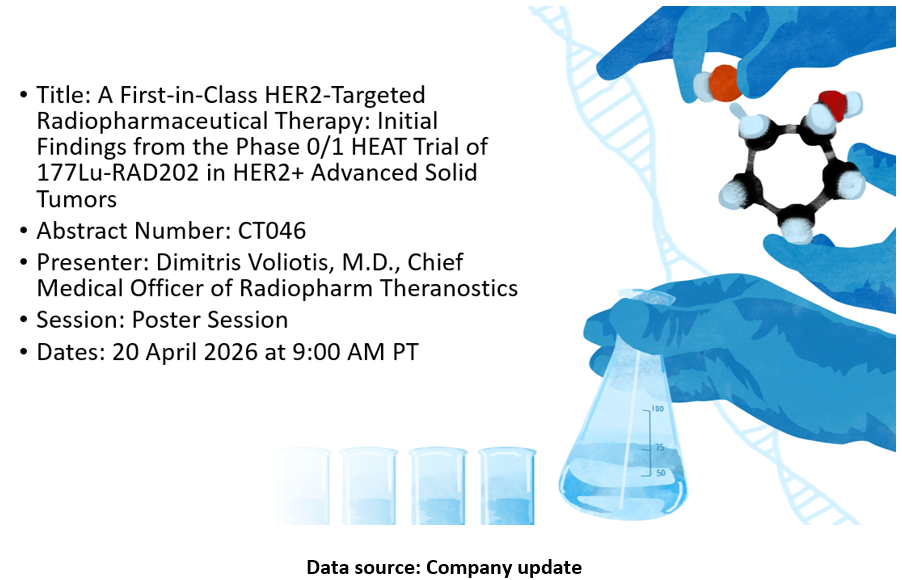
- Radiopharm Theranostics will present early clinical data from its HEAT trial at the American Association for Cancer Research Annual Meeting 2026.
- Initial results from three patients showed tumour uptake of 177Lu-RAD202 at the lowest 30 mCi dose.
- No dose-limiting toxicities or treatment discontinuations reported.
- The trial has been cleared to advance to a higher 130 mCi dose cohort following review by the Data Safety and Monitoring Committee.
Radiopharm Theranostics Limited (ASX:RAD) (NASDAQ:RADX) has announced that new clinical data from its ongoing Phase 0/1 HEAT trial will be presented at the American Association for Cancer Research (AACR) Annual Meeting 2026 in San Diego. The study evaluates 177Lu-RAD202, a HER2-targeted radiopharmaceutical therapy, in patients with advanced solid tumours.
First-in-Human Data to Be Presented
The upcoming poster presentation will feature early clinical findings from the first cohort of three patients enrolled in the HEAT trial. These patients, who have HER2-positive breast and urothelial cancers, had previously undergone multiple metastatic treatments and received the lowest dose of 30 mCi.
Tumour Uptake and Safety Observations
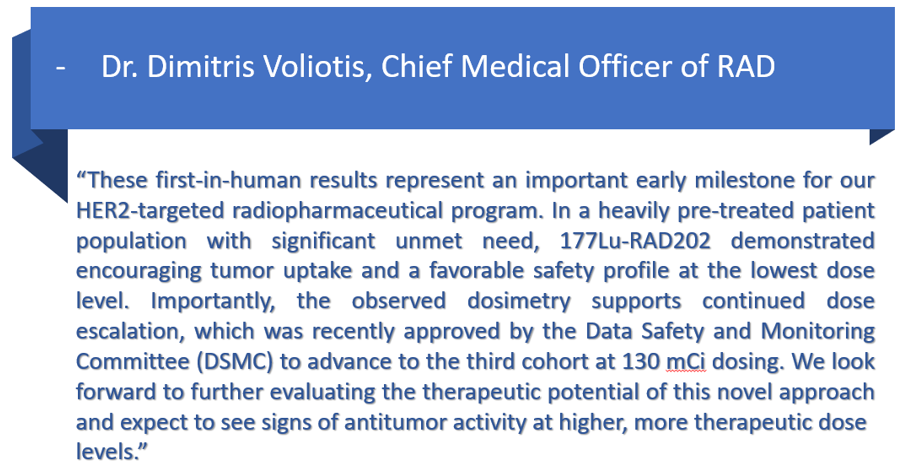
Findings to be presented at the AACR indicated that 177Lu-RAD202 demonstrated visible tumour uptake at the initial and lowest administered dose of 30 mCi, with notable localisation in breast cancer lesions.
In terms of safety, 177Lu-RAD202 was generally tolerated, with most treatment-related adverse events classified as Grade 1 or 2. Furthermore, no dose-limiting toxicities were reported, and none of the patients discontinued treatment due to side effects. Additionally, radiation exposure across organs remained within clinically acceptable limits, allowing the study to proceed with dose escalation.
Trial Advances to Higher Dose Level
Following evaluation by the Data Safety and Monitoring Committee, the trial has been cleared to proceed to the third dose cohort. The next phase will assess the therapy at a dose level of 130 mCi in patients with HER2-positive advanced solid tumours.
The committee’s review focused on potential safety events and provided suggestions regarding the continuation of the trial.
Study Design and Therapy Overview
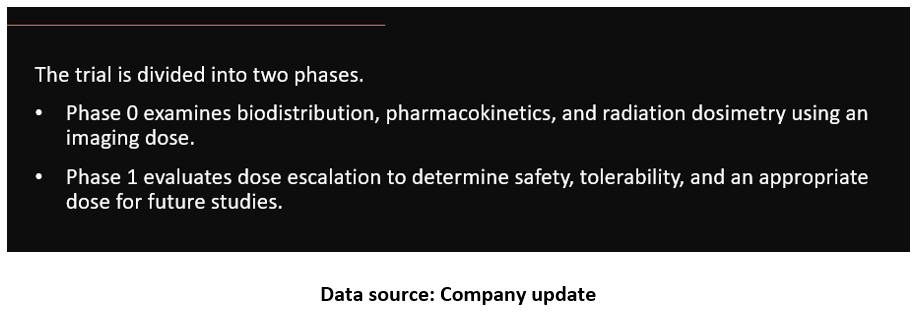
The HEAT trial is a first-in-human, open-label, multicentre study designed to assess 177Lu-RAD202. The therapy is a Lutetium-177–labeled single-domain antibody that targets HER2-expressing tumours.
RAD202 is designed to target HER2, a protein commonly overexpressed in breast cancer and other solid tumours. Earlier diagnostic research involving HER2-positive breast cancer patients demonstrated clinical proof-of-concept, along with observed safety and biodistribution patterns.
RAD shares were trading 2.44% higher at AUD 0.021 per share at the time of writing on 20 April 2026.
