
 AUS
AUS
 NZ
NZ
 UK
UK
 CA
CA
 USA
USA
 IND
IND


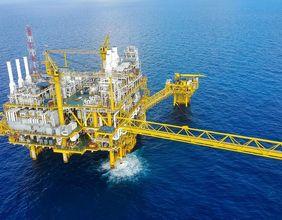



Jupiter Energy Limited (ASX:JPR), an onshore oil exploration and production firm operating in Western Kazakhstan, announced unaudited oil sales revenue of approximately $A3.178 million for the quarter ending 30 June 2026. The company sold about 42,000 barrels of oil exclusively through domestic channels during this period, with production from three licensed oilfields continuing as planned.
Key Points
- Jupiter Energy Limited (ASX:JPR) focuses on onshore oil exploration and production in Western Kazakhstan's Mangistau Oblast.
- Q2 2026 unaudited oil sales revenue reached around $US2.183 million ($A3.178 million) from roughly 42,000 barrels sold.
- Quarterly cash receipts were approximately $A2.388 million, with all sales conducted through domestic channels to major and local mini refineries.
- The company holds $US14.173 million in total debt, interest-free until at least 31 December 2026, and had unaudited net cash reserves of about $A0.553 million as of 30 June 2026.
- Jupiter operates three oilfields—Akkar North, Akkar East, and West Zhetybai—with combined 2P recoverable reserves near 36.5 million barrels.
- Prepaid oil sales agreements with two joint ventures have been secured for Q3 2026 amid strengthening domestic oil prices.
Jupiter Energy’s Production Portfolio and Output Across Three Kazakh Oilfields
Operating within the Mangistau Oblast near Aktau, Jupiter Energy manages three oilfields under full commercial licences. An independent PRMS/SPE audit confirmed combined 2P recoverable reserves of approximately 36.5 million barrels. For the quarter ending 30 June 2026, production was distributed among Akkar North (East Block), Akkar East, and West Zhetybai fields.
Production breakdown included about 9,000 barrels from Akkar North’s well J-50, approximately 24,000 barrels from Akkar East wells J-51, J-52, and well 19, and around 9,000 barrels from West Zhetybai’s well J-58. Several wells underwent temporary shut-ins to complete geophysical studies required for Field Development Plans mandated by the Kazakh Ministry of Energy, aligning with regulatory compliance.
Revenue and Pricing Performance Within Domestic Sales Channels
Jupiter Energy recorded unaudited oil sales revenue (including VAT) of roughly $US2.183 million ($A3.178 million) in Q2 2026, selling approximately 42,000 barrels at an average price near $US52 per barrel. All sales were directed to the Kazakh domestic market via joint ventures with established refineries and direct sales to a local mini refinery. Cash receipts totaled about $A2.388 million, with timing differences between revenue recognition and cash inflows due to prepaid sales amortisation.
Joint venture sales generated approximately $US1.785 million ($A2.597 million) from 32,000 barrels at an average price of $US56 per barrel, supplying Pavlodar and Atyrau refineries, with Jupiter covering storage and transport costs. Mini refinery sales contributed about $US0.397 million ($A0.578 million) from 10,000 barrels at $US40 per barrel, conducted at the wellhead, eliminating logistics expenses. This multi-channel strategy optimizes revenue while managing costs.
Domestic Quotas and Export Market Monitoring
Production is subject to monthly domestic quotas set by the Kazakh Ministry of Energy, limiting oil sales volume through domestic channels. Excess production can be exported; however, during Q2 2026, Jupiter sold all oil domestically with no exports. The company actively monitors export pricing and will consider export sales if netbacks—accounting for discounts, logistics, and taxes—exceed domestic returns.
This strategic sales channel approach reflects prevailing commodity price dynamics. Jupiter’s focus on domestic sales indicates that current pricing and prepaid arrangements offer better economics than export options. The company’s flexible sales strategy ensures revenue stability amid shifting market conditions.
Q3 2026 Outlook and Prepaid Sales Agreements
For the July–September 2026 quarter, Jupiter Energy secured prepaid purchase agreements with two joint ventures amid firming domestic oil prices. This arrangement provides revenue visibility and cash flow certainty during a critical operational planning phase.
The prepaid sales model is central to Jupiter’s funding strategy, converting future production into immediate cash receipts amortised over delivery periods. This explains the timing differences observed in Q2 cash receipts exceeding recognised revenue. Management expects operational funding sustainability based on current and forecasted production scenarios.
Capital Structure and Debt Status as of 30 June 2026
As of 30 June 2026, Jupiter Energy had 1,281,552,188 listed shares, including treasury shares, with no other listed or unlisted options or performance shares. Total debt stood at $US14.173 million, interest-free until at least 31 December 2026, providing financial flexibility.
Unaudited net cash reserves were approximately $A0.553 million. This modest cash position underscores reliance on prepaid sales and operational cash flow to fund activities. The interest-free debt period supports working capital management and operational continuity.
Operational Budget and Cash Flow Management
Jupiter Energy operates under an approved budget funded by net revenues from prepaid oil sales. Management is confident in maintaining operational funding based on current and projected production under varying well scenarios.
During Q2 2026, cash receipts from customers totaled $A2.388 million, production costs were $A1.875 million, staff costs amounted to $A0.438 million, and administrative expenses were $A0.243 million. The company recorded a net cash outflow from operations of approximately $A0.147 million, offset partially by $A0.021 million in interest income. Over the 12 months to 30 June 2026, net cash from operations was about $A0.730 million, indicating positive longer-term cash generation.
Licence Holdings and Regulatory Compliance in Kazakhstan
Jupiter Energy holds a single licence in Kazakhstan—Contracts 2275/4803—with 100 percent ownership as of 31 March and 30 June 2026. This licence covers the three producing oilfields that underpin the company’s operations.
Compliance with Kazakh Ministry of Energy regulations is mandatory, including monthly domestic quotas and Field Development Plans supported by geophysical studies. All production wells hold full commercial licences. The company demonstrates strong local regulatory expertise essential for ongoing operations.
Related Party Transactions and Executive Compensation
In Q2 2026, related party payments comprised consulting fees to Managing Director Geoff Gander and Alexander Kuzev. Specific payment amounts were not disclosed. These consulting arrangements reflect a lean management structure aligned with company scale and governance standards.
No additional material related party transactions were reported beyond these consulting services.
Operational Challenges and Impact of Geophysical Studies
Scheduled geophysical studies required temporary well shut-ins during the quarter to complete Field Development Plans mandated by regulators. Despite these planned interruptions, production remained in line with expectations, reflecting anticipated maintenance rather than production shortfalls.
These studies are critical for regulatory compliance and long-term field development. The company’s proactive approach demonstrates commitment to sustainable operations within Kazakhstan’s regulatory framework.
Export Market Strategy and Netback Evaluation
Jupiter Energy actively monitors export pricing and applies a netback analysis incorporating discounts, logistics, and taxes to decide on sales channels. The company will shift to export sales if netbacks surpass domestic returns. No export sales occurred in Q2 2026, indicating domestic channels offered superior economics.
This disciplined sales strategy enables agility in response to market changes and positions Jupiter to capitalize on potential future pricing shifts between domestic and export markets.
