
 AUS
AUS
 NZ
NZ
 UK
UK
 CA
CA
 USA
USA
 IND
IND


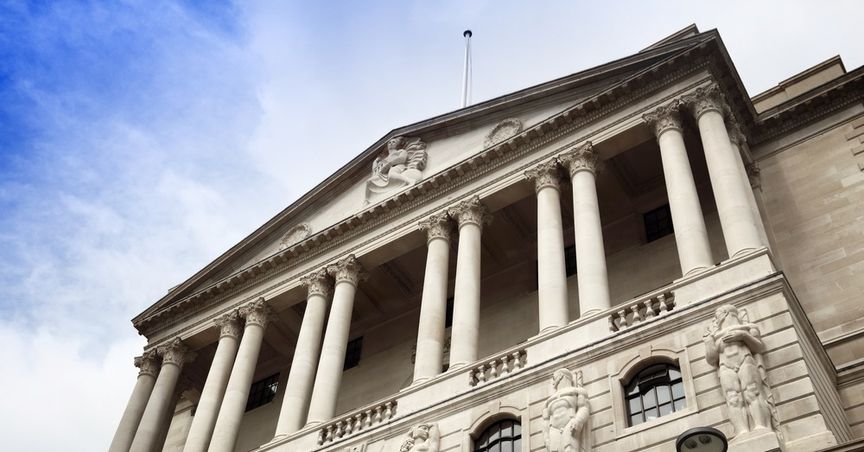




The Bank of England has recently released a discussion paper to assess the opinion of the general public on a proposal of digital currency, opportunities it entails and risks it brings with it. Released for discussion this month, the paper delves on the evolution in business that has been brought about by electronic commerce and the internet age -The fast-paced electronic transactions, the Real?Time Gross Settlement (RTGS) payment service and the risks of data security and digital fraud. The discussion paper has a renewed significance as several of the privately promoted digital currencies like Bitcoin, Gridcoin, Peercoin and several others have now flooded the market and none of which is neither regulated by any central bank nor by any international financial organization.
The advent of the internet has increased the size of the global commerce manifold. The convenience of sitting in one's home and being able to browse through millions of merchandises from vendors spread across the world has brought about a revolution in global production, trade and number of such transactions. The e-commerce business of United Kingdom is the third-largest in the world, after the United States and China. More than 95 per cent of the people in the country have access to the internet, and an increasing number of those people are using it to make online purchases. In the past two decades, several companies in the country have come up to sell merchandise using the online route and have reached sizes of billion of pounds in turnover. Several traditional businesses sensing the competition from the online businesses have also slowly transitioned into digital commerce. The Internet age has also been responsible for large scale employment generation. Bringing down the logistical barriers of reaching out to potential customers, even small scale manufacturers and artisans can sell their products over a large geographical area. Consequently, people are now less accentuated to make a move to cities and other highly populated areas to find employment as economic prosperity has spread to more far-flung areas.
The fast pace of digital trade also brings with it several challenges and risks. As we transition from traditional ways of doing business to digital transactions, new regulations are required to protect businesses and consumers from unscrupulous people who would try to take advantage of several grey areas not covered by traditional commercial laws and regulations. Secondly, as the transactions become fast-paced newer technologies and methodologies would need to be adopted to make transactions safer and create adequate repositories for record-keeping. The objective of Bank of England to open up discussion on the subject is to brainstorm on what kind of currency and payment systems will need to be developed to meet the requirements of an increasingly digital economy. The physical transaction with banknotes is proving inadequate in the digital era and need to be complemented by digital money to address several bottlenecks that have now come to light in the past several years. This is especially important as more and more people are preferring online transactions, which are putting substantial pressure on the existing banking systems that had never been designed to handle a humungous number of such transactions. The reduction in the physical hassles in transporting currency from one place to another also makes the digital currency system less expensive for the country to operate and the economy more responsive to policy measures being taken by the governing council of the central bank
One of the most important areas the discussion paper explores is that of monetary and fiscal stability. Since the days of the advent of paper currency, the world economy has grown by leaps and bounds. Countries have, over the past century, realized the importance of paper currency as an instrument to bring about financial stability and growth. Monetary economics is a specialized branch in economics that specially deals with currencies, their supply in an economy and the ways and means by which it can influence growth and development. In the hands of the central bank, the currency is a powerful tool to balance the many factors that may be impacting an economy at any point of time which, if not carefully regulated, would lead to disastrous consequences. In times of weak economic activity in an economy with a pessimistic business outlook or, if the unemployment rate is rising in the country, the central bank would tend to lower interest rates. This, in turn, will prompt commercial banks in the country to lower their interest rates as a consequence, thereby prompting the business to borrow more which will ensure that the business activity of the whole economy increases. Similarly, when the central banks feel that inflationary conditions are prevailing in the economy, they will increase the interest rates so that the excess purchasing power in the hands of people is curtailed leading to the softening of demand.
Consequently, prices will come down and so with it will inflation. It is the central function of the central banks to constantly monitor the economy and use the monetary tools at its disposal to guide it in the right path. Looking at it from a different angle, a lowering of interest rates would mean surplus funds would flow into a system and hiking of the interest rate would mean surplus funds are being withdrawn from the economic system.
It is of paramount importance for the Bank of England that it can provide the same level of monetary and fiscal stability to the British economy that it has provided for the past three hundred years. The digital economy is a fast-evolving space, with new and increasingly sophisticated problems cropping up each day—the deeper technical understanding of how things could evolve in the future could take shape at the bank. Also important is to explore the possibility if the direction of this evolution can be guided towards a particular area where it is required to result in extended economic stability and prosperity of the country that would best justify the purpose of this discussion.
Internationally, a lot of countries have moved far ahead of the United Kingdom on the matter of digital currencies. Canada has started experimenting with a digital currency called CAD-coin since 2016; the Bank of Canada, along with the country’s five largest banks have started a project called project Jasper. The banks use this digital currency to settle master accounts at the end of each day. Sweden has taken the initiative to replace all of its physical currencies into digital ones since the mid of 2017. Riksbank, the central bank of the country, has stated that the digital currencies will bring down the physical hassles of transportation of currency from one place to another, whereby high costs can be saved. In 2016, Zug in Switzerland started to accept bitcoin for payment of small amounts in city fees, and the railways in the country sell bitcoins at its ticket vending machines.
