
 AUS
AUS
 NZ
NZ
 UK
UK
 CA
CA
 USA
USA
 IND
IND







Source: Johnstocker Production, Shutterstock
In his annual speech to the shareholders, the CEO of world’s fifth largest bank JP Morgan (NYSE:JPM) – Jamie Dimon – highlighted the importance of guarded approach that any financial institution should accord to risk management.
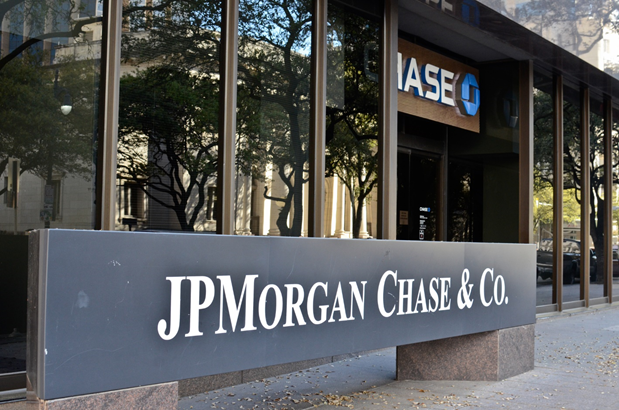
Image Source: © Noamfein | Megapixl.com

Once a bank, or any financial institution, takes a guarded approach towards the risk management, it tends to grow organically.

Read: JP Morgan bets on Bitcoin’s win over Gold, predicts $146,000 level for Bitcoin
While this may seem like a patronising statement, yet many banks across the globe, including the central banks need to take a leaf out of Dimon's book
In 2008, the Global Financial Crisis, was triggered by sub-prime crisis – essentially a situation where American banks sent risk metrics for a toss while lending to homebuyers. Why did they do so? Well, with higher interest rate on sub-prime loans, the banks could earn more. When the housing bubble burst, the banks started collapsing.

Image Source: © Kentoh | Megapixl.com
After the sub-prime crisis, people thought that global banks may become prudent. But that was not to be. A decade later, towards the end of 2018, across the globe, pain points started appearing at India’s fifth largest private lender YES Bank. The bank had almost US$3 billion worth of bad loans to write off, while liquidity was drying fast. There was a run on the bank and fresh capital wasn’t coming in.
Why did it happen at YES Bank? Its former CEO and MD Rana Kapoor, who had over consolidated the power, started lending to every stressed entity in the street in lieu of high returns in the short-term. The result? The stressed entities became bad loans and the bank collapsed.
But in both the Global Financial Crisis of 2008 and ongoing Indian Financial Crisis, we see some common denominators: pursuit for astronomical inorganic behaviour, lack of resolution from the regulators, and idiosyncratic behaviour by the bankers.

Image Source: © Stogafy | Megapixl.com
Also, the recent Archegos Capital Management blow up further proves the point. Many major global banks were left scrambling for an exit. Goldman Sachs and Morgan Stanley were able to exit without major hole in the pocket, however Credit Suisse and Nomura Holdings Inc faced major brunt, with losses running into billions of dollars.
For more read: How The Collapse Of Hedge Fund Archegos Capital Led To Global Banks Losing $6bn
In all this melee of targeting astronomical inorganic growth, the bankers might have been getting fat pay cheques, yet the opportunity cost was way more: it did cost the trust on the financial system. And when we talk of financial system, there is only one principle one should remember: “if trust is lost, everything is lost.”

Image Source: © Ipopba | Megapixl.com
In the current economic scenario, these words by Mr Dimon hold more meaning. The governments and central banks across the globe are pushing for more and more of forebearance measures by the banks, coupled with a policy push towards easier and cheaper credit lines. All this is happening at a time when the income generating capabilities of both individuals as well as corporations have been severely truncated.
There are fears that this policy push might result in the relaxed risk evaluation metrics by the lenders across the globe. And history is testimony to it. The push for cheaper credit by Federal Reserve, post the terror attacks of 9/11, led to the Global Financial Crisis. In India, credit push of 2008 led to the ongoing Banking Crisis.
What is more, is the fact that JP Morgan came out of 2008 crisis pretty well, and continues to be the only American bank among the top five banks across the globe (the remaining four are Chinese). So, if its CEO emphasises on risk management and organic growth, the world must listen.