
 AUS
AUS
 NZ
NZ
 UK
UK
 CA
CA
 USA
USA
 IND
IND






Highlights
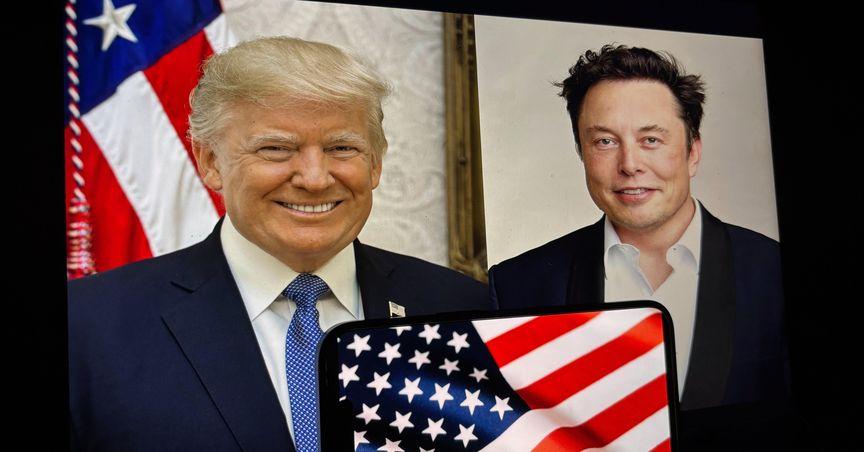
Elon Musk resigns from leadership role at DOGE, citing budget concerns over Trump’s spending bill
Departure follows tensions surrounding the “One Big, Beautiful Bill Act” and its implications
Timeline traces the evolution of Trump-Musk relationship from endorsement to policy disagreements
The electric vehicle and space technology sectors marked a notable leadership development as Elon Musk stepped down from his position at the Department of Government Efficiency (DOGE), citing disapproval of the current fiscal direction of the US administration. The change comes in the wake of financial pressure faced by Tesla Inc (NASDAQ:TSLA), which remains a prominent company in the electric vehicle index. Musk’s exit also follows public comments expressing concern over increasing federal spending.
The departure adds complexity to Tesla's broader market context, particularly in relation to government-linked engagements. Developments within the sector continue to be shaped by shifting dynamics between high-profile executives and federal policymakers.
Musk’s Role at DOGE Ends After Clashes Over Budget Bill
Musk confirmed the end of his tenure as a Special Government Employee leading DOGE, a federal initiative tasked with cutting spending and improving efficiency. His resignation follows his vocal disapproval of the “One Big, Beautiful Bill Act,” which passed through the US House. According to Musk, the legislation undermines the cost-cutting goals DOGE had aimed to implement.
In a message on his platform X, Musk acknowledged the conclusion of his scheduled service and expressed gratitude for the opportunity. He emphasized that the DOGE initiative would remain relevant, despite his departure. His criticisms surfaced publicly during a televised interview, where he outlined the conflict between DOGE’s mandate and the broader spending strategy adopted by the administration.
Timeline of a Political and Business Alliance
The Trump-Musk relationship has undergone significant transformation. Initially, Musk refrained from supporting any candidate, but later offered endorsement and financial support for Donald Trump’s campaign. Shortly afterward, Musk proposed the formation of a commission on government efficiency, which led to his appointment to DOGE following Trump’s election victory.
Their public appearances included campaign rallies and formal events, where Musk echoed themes aligned with Trump’s economic agenda. The collaboration extended to symbolic gestures, such as wielding a chainsaw at a political conference to represent budget cuts, and appearing with Trump during executive announcements targeting federal workforce reductions.
However, differences emerged as Musk advocated for alternative cabinet appointments and expressed dissatisfaction with key fiscal policies. Despite his proximity to power, his suggestions were not always acted upon. The growing divide culminated in Musk’s departure, marked by his public critique of the administration’s financial direction.
White House Responds to Fiscal Debate
Following Musk’s statements, the White House issued clarifications regarding the legislative structure. Officials explained that the spending bill in question was not a budget act, and highlighted that cuts proposed by DOGE would require separate legislation.
Stephen Miller, Deputy Chief of Staff, addressed the controversy through a response on Musk’s social media platform. Without naming Musk directly, Miller reiterated that structural government reforms would follow different procedural channels, distancing the bill from DOGE’s original mandate.
The sequence of developments has sparked debate across political and corporate spheres, with Tesla Inc (NASDAQ:TSLA) remaining at the center due to its association with Musk and its exposure to policy changes.